
Tile Resurfacing vs. Replacement: Which Is Worth It?

By Josh Kaplan
Key Takeaways
Resurfacing costs 50–70% less than full tile replacement and takes 1–2 days vs. a week or more.
Replacement is the right call when tiles are cracked, water-damaged, or structurally compromised underneath.
Grout repair and caulking before resurfacing can extend tile life by years without any major renovation.
Resurfacing does not fix failing grout lines — address grout and caulk issues separately for lasting results.
Bathroom tile renovations can meaningfully improve resale value, making the cost-vs-ROI calculation critical.
Tile Resurfacing vs. Replacement: Which Option Is Actually Worth the Cost?
Tile resurfacing is a refinishing process that applies a new bonded coating over existing tile surfaces, restoring their appearance without demolition. For most homeowners weighing tile resurfacing vs. replacement, resurfacing costs significantly less and finishes in a fraction of the time — but it is not always the right answer. The decision hinges on the condition of your tile, the state of your grout, your budget, and whether you plan to sell your home.
What Is the Real Cost Difference?
Tile resurfacing typically costs between $300 and $1,000 for a standard bathroom, depending on surface area and the number of coats required. Full tile replacement in the same space — including demolition labor, new tile material, adhesive, fresh grout, and caulking — commonly runs $1,500 to $5,000 or more. That means resurfacing can deliver the same visual refresh for roughly 50–70% less than a full tear-out.
The cost gap widens when you factor in indirect expenses. Tile replacement typically requires 5–10 days of inaccessible bathroom or kitchen space, which matters enormously in a single-bathroom home. Resurfacing is usually complete in one to two days, with a cure window of 24–48 hours before normal use. According to Statista, home improvement spending has risen consistently year over year, and bathroom renovations remain one of the top project categories — making smart cost management more important than ever.
Factor | Tile Resurfacing | Full Tile Replacement |
Typical cost (bathroom) | $300–$1,000 | $1,500–$5,000+ |
Project duration | 1–2 days | 5–10 days |
Demolition required | No | Yes |
Addresses subsurface damage | No | Yes |
Lifespan of result | 5–15 years (with maintenance) | 20–30+ years |
Best for resale value boost | Moderate | Strong |
Grout/caulk issues resolved | No (must be done separately) | Yes (full reset) |
When Does Tile Resurfacing Make Sense?
Tile resurfacing makes the most sense when the existing tile is structurally sound but visually outdated or stained beyond what cleaning can fix. Specific scenarios where resurfacing wins on value include:
Surface-only discoloration: Ceramic or porcelain tile that has yellowed, faded, or accumulated mineral staining that professional tile and grout cleaning cannot fully reverse.
Pre-sale cosmetic refresh: A seller who needs to modernize a dated bathroom quickly without the cost or timeline of a full renovation.
Rental property turnover: Landlords refreshing a unit between tenants on a tight budget and schedule.
Solid substrate confirmed: The tile is firmly bonded with no hollow spots, no cracked tiles, and no evidence of water intrusion behind the wall.
The non-obvious truth about resurfacing is this: it is a coating, not a structural repair. A professional epoxy-based tile refinishing product like Rust-Oleum Tub & Tile or a professionally applied acrylic urethane system can look excellent for years — but only if the surface beneath it is clean, dry, and stable. If you apply a coating over deteriorating grout or failing caulk, the coating will crack, peel, or trap moisture at the joints within months.
This is a critical detail most comparison articles skip: resurfacing and grout health are separate problems that must both be addressed. Before any resurfacing project, existing grout lines should be professionally cleaned, and any damaged or missing grout should be repaired. If you are unsure whether your grout has crossed the line from cosmetic wear to structural failure, review the 5 signs your grout needs professional repair before scheduling any surface work. Shower caulking at corners and floor transitions must also be replaced, because old silicone caulk does not bond reliably to new coatings.
When Is Full Tile Replacement the Right Call?
Full tile replacement is the right choice — not just the expensive one — in several specific scenarios where resurfacing would mask a deeper problem:
Cracked or broken tiles: A cracked tile surface signals possible substrate movement or impact damage. Coating over cracks does not seal them; moisture will continue to enter.
Hollow or loose tiles: Tap tiles with a coin or knuckle. A dull, hollow sound means the bond to the substrate has failed. Resurfacing adds zero adhesion to a tile that is already delaminating.
Water damage behind the wall: If grout lines are consistently dark, musty, or powdering, and shower caulk has been failing repeatedly, water may already be in the wall cavity. Refinishing traps that moisture.
Mold in the substrate: Black mold at grout lines that returns within weeks of cleaning is often a sign of mold in the backer board, not just at the surface. This requires demolition, not a new coat.
Full design overhaul: If you are changing the floor plan, adding a niche, or updating to a significantly different tile size or layout, replacement is unavoidable.
Does the ROI Justify the Cost on Resale?
The return on investment calculation shifts depending on whether you are staying in the home or selling it. According to Realtor.com, bathroom renovations consistently rank among the home improvements most likely to increase resale appeal — but the ROI is strongest when the renovation looks complete and high-quality, not merely patched. A professionally resurfaced bathroom can absolutely satisfy a buyer's visual expectations, but savvy buyers or their inspectors may flag a resurfaced surface as a cost deferral rather than an upgrade.
For homeowners planning to stay five or more years, full replacement offers a longer useful life and eliminates the risk of resurfacing failure. For anyone selling within one to three years, a professional resurfacing combined with fresh grout repair and new shower caulking can deliver a compelling visual result at a fraction of replacement cost — and that combination is often the smartest investment available.
If your project budget is large and involves structural bathroom reconfiguration, financing options exist. HUD offers information on Title I Home Improvement Loans and other housing rehabilitation programs that can help fund larger renovation projects for qualifying homeowners.
What About Grout and Caulk — Do They Factor Into This Decision?
Grout repair and shower caulking are not cosmetic afterthoughts in this comparison — they are structural elements of a tile surface's longevity. Grout is the mortar-based filler between tiles that prevents lateral movement and blocks moisture. Caulk at changes of plane (wall corners, floor-to-wall joints, around fixtures) provides flexible waterproofing that rigid grout cannot.
Whether you resurface or replace, the grout and caulk must be addressed. In a replacement scenario, both are completely renewed as part of the install. In a resurfacing scenario, failing grout must be repaired and deteriorated caulk must be replaced before the coating is applied — otherwise the investment in resurfacing is wasted within a year or two. Understanding your options here is worthwhile: grout recoloring vs. replacement is a decision that runs parallel to the tile resurfacing question and is worth evaluating at the same time.
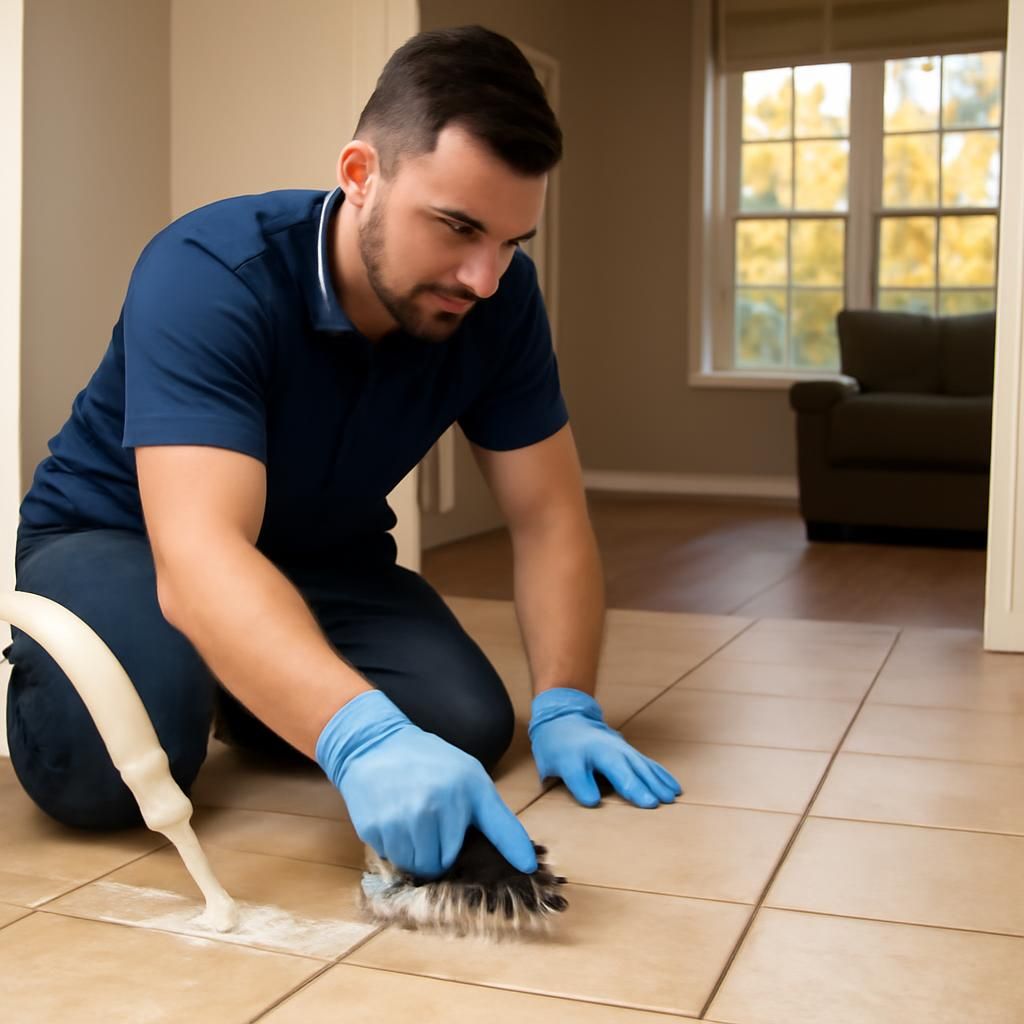
This is where professional tile and grout cleaning becomes a prerequisite, not an optional step. Coatings require a chemically clean, residue-free surface to bond correctly. Grout haze, soap scum, or silicone residue left on the tile will cause the resurfacing product to delaminate prematurely.
Tile Resurfacing vs. Replacement: Common Questions Answered
How long does resurfaced tile last?
Resurfaced tile lasts between 5 and 15 years depending on the quality of the coating system used, the preparation of the surface, and how well the tile is maintained afterward. Professional-grade applications with proper prep outlast DIY kits by a significant margin.
Can you resurface floor tiles as well as wall tiles?
Yes, but floor tile resurfacing requires a coating rated for foot traffic and slip resistance. Wall tile coatings are typically not appropriate for floors. Always confirm the product specification before applying any resurfacing system to a floor surface.
Does resurfacing fix grout problems?
No. Resurfacing coats the tile face and may partially cover grout lines visually, but it does not repair failing, cracked, or moldy grout. Grout repair must be completed as a separate step before resurfacing. If you are weighing whether to regrout or go further, the question of whether to regrout or replace tile deserves its own careful consideration alongside the resurfacing decision.
Is tile resurfacing a DIY project?
Consumer-grade kits such as Rust-Oleum's Tub & Tile Refinishing Kit are available for DIY use, but the results vary widely. Professional applications use commercial-grade two-part urethane or epoxy systems that require spray equipment, ventilation controls, and surface etching — not practical for most homeowners. For a long-lasting result, professional application is strongly recommended.
What happens if I resurface over water-damaged tile?
Resurfacing over water-damaged tile traps moisture behind the coating, accelerating mold growth and substrate rot. The coating will eventually blister and peel, and the remediation cost at that point will be higher than if replacement had been chosen initially.
What to Avoid: Mistakes That Waste Your Investment
Skipping professional grout cleaning before resurfacing: Soap scum and mineral buildup prevent proper coating adhesion. The result peels within months.
Resurfacing over hollow tiles: The coating cannot rebond a delaminated tile. The tile will continue to move and the coating will crack at the edges.
Using wall-rated coatings on floors: Floor applications require specific slip-resistant, high-durability formulations. Wall products on floors wear through quickly and become a slip hazard.
Ignoring the caulk joints: Old silicone in the corners does not accept new paint or coatings. It must be removed entirely and replaced with fresh caulk after any surface work is complete.
Choosing resurfacing purely on price when structural damage is present: If the underlying problem is water damage or substrate failure, resurfacing delays — and increases — the eventual cost of proper repair.
Conclusion: Make the Right Call for Your Tile
The tile resurfacing vs. replacement decision is ultimately a question of what is actually wrong with your tile, not just how it looks. Resurfacing is a smart, cost-effective choice when tile is structurally intact and the goal is cosmetic renewal — especially when paired with professional grout repair and fresh shower caulking to address the joints that a coating cannot fix. Replacement is the honest choice when water damage, hollow tiles, failing substrate, or persistent mold are in the picture, because no surface treatment fixes a structural problem.
Before committing to either path, start with a thorough professional tile and grout cleaning and a careful inspection of every grout line, caulk joint, and tile bond. If water intrusion is part of the picture, knowing how to distinguish a shower pan leak from a grout leak can save you from choosing the wrong repair path entirely. In many cases, that inspection alone will make the right answer clear.
This article is based on real published content from Groutastic, cites authoritative sources, and is reviewed before publication.
Comments