
How Often Should You Seal Grout? A Homeowner's Guide

By Josh Kaplan
Key Takeaways
Seal most cement-based grout every 1–2 years; high-traffic or wet areas need annual sealing.
Epoxy grout is non-porous and does not need sealing — applying sealer to it wastes time and money.
Water beading on grout surface means the sealer is still working; if water absorbs, it's time to reseal.
Grout color, surface texture, and exposure to steam all accelerate sealer breakdown in showers.
Clean grout thoroughly before sealing — sealing over dirt or mold locks in the damage permanently.
How Often Should You Seal Grout? The Direct Answer
Knowing how often you should seal grout is one of the most practical questions any homeowner faces after a tile installation or deep clean. For most cement-based grout in standard household conditions, resealing every one to two years is the baseline — but the real answer depends on where the grout is, how much traffic or moisture it endures, and what type of grout was used in the first place.
Why Grout Porosity Determines How Often You Need to Reseal
Grout is not a single material. According to Wikipedia, cement-based grout — the most common type used in residential tile work — is composed primarily of Portland cement, sand, and water, making it inherently porous. That porosity is the root cause of every sealing problem homeowners encounter: moisture, soap scum, cooking grease, and bacteria all penetrate microscopic channels in unsealed grout and cause staining, discoloration, and eventually structural breakdown.
Epoxy grout, by contrast, is a polymer-based product with a near-zero absorption rate. It does not require sealing at any interval. If your tile installer used epoxy grout — often identifiable by its slightly glossy, very uniform appearance — applying a penetrating sealer accomplishes nothing and is a waste of product. Before establishing any resealing schedule, confirm which grout type you have.
The Water-Bead Test: Your Most Reliable Indicator
The single most useful field test for determining whether grout needs resealing is the water-bead test. Splash a small amount of water directly onto the grout line. If the water beads up and sits on the surface, the existing sealer is still performing. If the water absorbs into the grout within 30 seconds and darkens the surface, protection has degraded and resealing is overdue. Run this test annually on all tiled surfaces, regardless of when you last sealed.
Resealing Frequency by Room and Use Case
The location of grout inside your home is the single biggest factor affecting how quickly sealer breaks down. Here is a practical breakdown by area:
Location | Recommended Sealing Interval | Key Risk Factor |
Shower walls and floor | Every 6–12 months | Daily steam, soap, and standing water |
Kitchen backsplash | Every 1–2 years | Cooking grease, cleaning sprays |
Bathroom floor (high traffic) | Every 12 months | Foot traffic, cleaning chemicals |
Living room or hallway floor | Every 2–3 years | Abrasion from foot traffic |
Outdoor patio or entryway | Every 12 months | UV exposure, rain, freeze-thaw cycles |
Laundry room floor | Every 1–2 years | Detergent residue and occasional flooding |
Shower grout takes the most abuse of any tiled surface in a home. Daily exposure to hot steam — which opens grout pores — combined with body wash, shampoo residue, and hard water minerals means even a high-quality penetrating sealer breaks down faster here than anywhere else. Annual resealing in the shower is not excessive; it is simply practical maintenance.
Does Grout Color or Texture Affect How Often You Should Seal Grout?
Yes, in two distinct ways. First, unsanded grout — typically used in joints narrower than 1/8 inch — has a finer, smoother surface and tends to hold sealer slightly longer than sanded grout, whose coarser texture creates more surface area for wear and chemical attack. Second, light-colored and white grout shows staining almost immediately when protection fails, which means homeowners often discover a sealing problem sooner. Darker grout hides early staining, which can lead to delayed resealing and deeper, harder-to-remove contamination. The implication: if you have dark grout, be more disciplined about scheduling the water-bead test rather than relying on visual cues.
What Type of Sealer Should You Use?
There are two primary categories of grout sealer: penetrating (also called impregnating) sealers and surface (topical) sealers. Understanding the difference between these options is important — you can find a detailed breakdown in this guide to penetrating vs. topical grout sealers to help you choose the right product for your specific surface.
Penetrating sealers soak into the grout pores and protect from within. They are invisible, do not alter the appearance of grout, and are the standard recommendation for most residential applications. Brands like Aqua Mix Sealer's Choice Gold use a water-based fluoropolymer formula that is low-odor and safe for most tile types.
Topical/surface sealers form a film on top of the grout. They can add a gloss or sheen but are prone to peeling, especially in wet areas. They are generally not recommended for shower grout or outdoor use.
For most homeowners dealing with standard sanded or unsanded cement grout, a penetrating sealer applied with a small applicator bottle or foam brush gives the most consistent, durable results. According to Family Handyman, penetrating sealers should be applied in two thin coats, allowing the first coat to absorb fully before applying the second, for maximum protection depth.
What to Avoid When Sealing Grout
Several common mistakes can make resealing ineffective or actively harmful to your tile and grout.
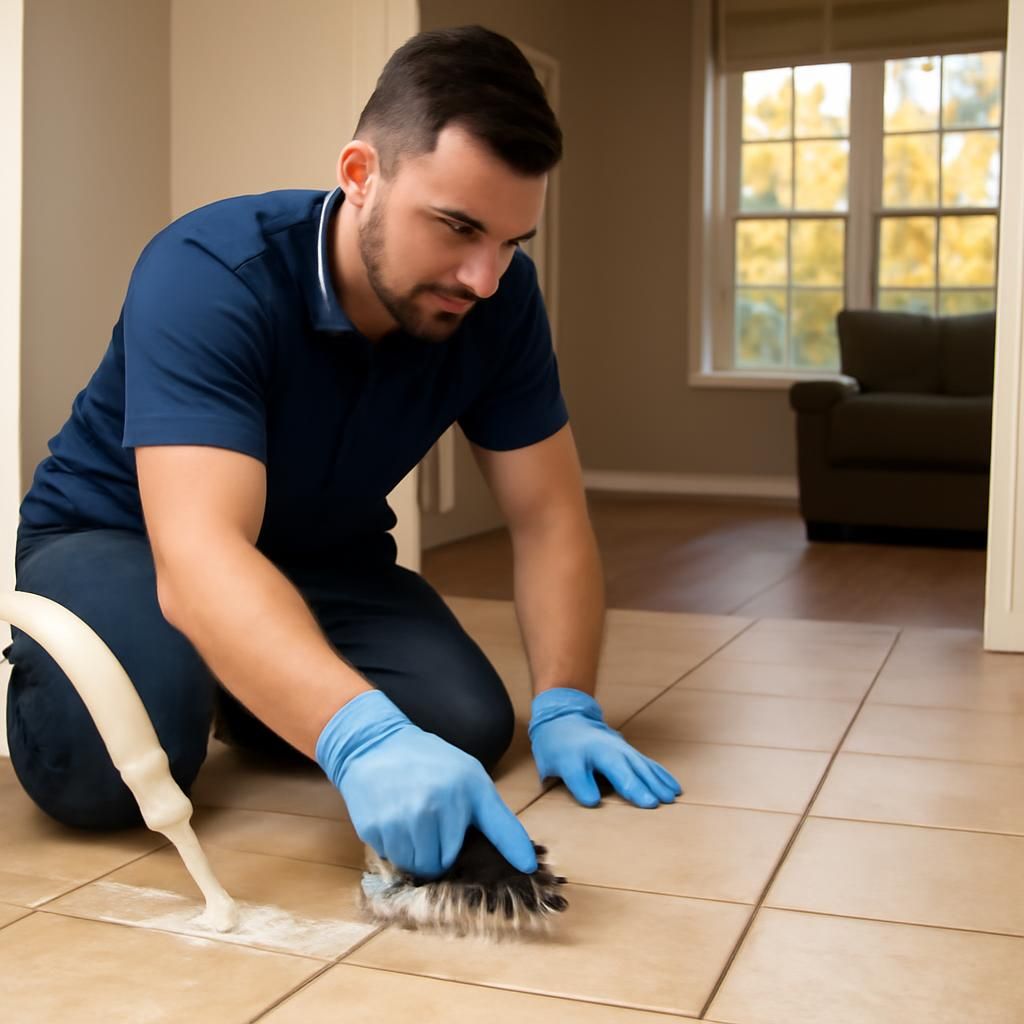
Sealing over dirty or moldy grout: This is the most damaging error. A penetrating sealer locks in whatever is on and in the grout surface. Mold spores, soap scum, and mineral deposits sealed beneath the surface will continue degrading the grout from inside. Always clean grout thoroughly and allow it to dry completely — typically 24 to 48 hours — before any sealer application.
Sealing new grout too soon: Freshly installed cement grout needs 48 to 72 hours minimum to cure before sealing. Sealing before curing traps moisture in the grout body, which can cause efflorescence (white powdery mineral deposits) or crack the grout as it finishes hardening.
Applying sealer to glazed ceramic or porcelain tile faces: Penetrating sealers are designed for porous materials. Applying them to the glossy face of ceramic or porcelain tiles leaves a hazy residue that is difficult to remove. Carefully apply sealer only to the grout lines, or wipe excess off tile faces within a few minutes of application.
Using the wrong sealer for the surface: Natural stone tiles — marble, travertine, slate — require a sealer rated for stone and grout simultaneously. Using a grout-only product on these surfaces can leave the stone itself unprotected.
Skipping resealing after professional cleaning: A professional hot-water extraction or steam cleaning removes not just soil but often the remaining sealer as well. Plan a reseal within a day or two after any deep cleaning service.
When Should You Call a Professional Instead of DIY Sealing?
Routine resealing is a manageable DIY task for most homeowners. However, certain situations call for professional intervention before — or instead of — simply applying more sealer.
Cracked or crumbling grout: Sealer cannot bond properly to grout that has physically degraded. Grout repair or full regrout must happen before any sealing makes sense. Learn more about the signs your grout needs professional repair so you know when a DIY reseal isn't enough.
Active mold growth: Surface mold can be scrubbed away, but mold that has penetrated the grout body requires professional tile and grout cleaning with appropriate antimicrobial treatment before resealing.
Failed shower caulk: If the caulk bead at the base of your shower walls or around the shower pan is cracking or pulling away, water is already bypassing the grout entirely and reaching the substrate. Shower caulking replacement is needed urgently — no amount of grout sealing addresses this.
Widespread staining that cleaning cannot resolve: Some staining — particularly from iron minerals in hard water, or from colorant-based products — penetrates too deep for DIY removal. Professional tile and grout cleaning services use higher-concentration products and mechanical agitation tools that are not available to consumers.
Groutastic's services cover professional tile and grout cleaning, grout repair, and shower caulking replacement — all situations where the right professional service restores the surface to a condition where new sealer will actually perform as intended.
Frequently Asked Questions About Sealing Grout
Can you apply new sealer over old sealer?
Generally, yes — if the old sealer has simply worn thin rather than failed with contamination underneath. If the old sealer is peeling or the grout is visibly stained, strip or clean first. For penetrating sealers, a fresh coat bonds well to a clean, lightly depleted surface.
How long does grout sealer take to dry?
Most penetrating sealers are touch-dry within one to two hours. However, full cure — meaning the sealer has fully bonded into the grout pores — typically takes 24 to 72 hours. Avoid wetting the surface during this curing window.
Does sealing grout change its color?
Standard penetrating sealers are color-neutral and do not alter grout appearance. "Color-enhancing" sealers are a separate product category designed to deepen or enrich the shade of natural stone and grout — use these only if you want a visual change.
Is grout sealing necessary for porcelain tile floors?
The tile itself does not need sealing — porcelain is vitrified and non-porous. But the grout joints between porcelain tiles are still cement-based in most installations and still require sealing on the same schedule as any other cement grout.
How do I know if my shower grout has never been sealed?
Run the water-bead test. If water absorbs immediately and the grout darkens, either it was never sealed or the original sealer is long gone. In either case, clean the grout thoroughly and seal as soon as possible. If you notice discoloration alongside poor absorption, it may also be worth reviewing common causes and fixes for yellow, orange, and pink grout stains, which are common signs of long-term sealer neglect.
Conclusion: Build a Simple Grout Sealing Schedule
The clearest takeaway on how often you should seal grout: once a year for showers and outdoor tile, every one to two years for most indoor floors and kitchen surfaces, and every two to three years for low-traffic areas — with the water-bead test as your annual override check. Cement-based grout left unsealed will stain, absorb bacteria, and eventually deteriorate structurally; a basic resealing routine is the single most cost-effective preventive maintenance step a tile homeowner can take.
If your grout is already cracked, deeply stained, or showing mold that cleaning alone won't fix, sealing is the last step — not the first. Start with a professional tile and grout cleaning, grout repair, or shower caulking service from Groutastic to restore the surface to a condition where fresh sealer can actually do its job. Once the surface is ready, follow our step-by-step guide to sealing grout to apply your sealer correctly and get lasting results.
This article is based on real published content from Groutastic, cites authoritative sources, and is reviewed before publication.
Comments