
Tile & Grout Cleaning Restoration in Bohemia, NY

By Josh Kaplan
Key Takeaways
Grout is porous and absorbs grime fast; professional cleaning restores surfaces other ranking services overlook entirely.
Seasonal humidity on Long Island accelerates mold and mildew in tile grout — address it before it spreads.
Shower caulk should be inspected every season; cracked caulk causes water damage behind walls, not just cosmetic issues.
DIY grout cleaning removes surface dirt only; professional restoration reaches deep stains and structural grout failure.
Tile restoration in Bohemia, NY is more cost-effective than full retiling when grout and caulk are repaired early.
Tile and Grout Cleaning Restoration in Bohemia, NY: What Local Homeowners Need to Know
Tile and grout cleaning restoration is the process of removing deep-set stains, repairing damaged grout lines, and resealing surfaces to extend tile life and prevent water infiltration. For homeowners in Bohemia, NY and surrounding Suffolk County communities, summer humidity and heavy shower use make this mid-season the highest-risk window for grout deterioration — and the best time to address it before minor issues become expensive structural problems.
Why Grout and Tile Deteriorate Faster in Summer on Long Island
Grout deteriorates faster in summer on Long Island because the region's humid subtropical climate traps warm, moist air inside bathrooms and kitchens for weeks at a time. Grout is a cement-based material and is naturally porous, which means it absorbs moisture, soap film, and airborne mold spores continuously — not just when it's visibly wet.
During the peak summer months, homes in Bohemia and nearby communities like North Bay Shore and North Bellport often run air conditioning that creates sharp temperature differences between tiled rooms and the rest of the house. That thermal cycling causes grout to micro-crack over time, widening the channels through which water penetrates the substrate. The result: dark streaks, crumbling grout edges, and — in showers — water migrating behind the tile wall itself.
What most general cleaning and restoration guides don't discuss is that standard household mold sprays and scrub brushes only address the top millimeter of grout surface. The organic matter feeding mold colonies lives deeper in the grout's open cell structure. Without a professional hot-water extraction or rotary machine clean — both of which are standard parts of Groutastic's tile and grout cleaning process — surface scrubbing provides a cosmetic fix that lasts weeks, not months.
What Does a Full Tile Restoration Service Actually Include?
A full tile restoration service includes four distinct stages that work together: deep cleaning, grout repair, color sealing or regrouting, and caulk replacement. Most homeowners searching for "tile cleaning service" or "grout cleaning service" in Suffolk County are only familiar with the first stage — and skip the others until a serious problem forces the issue. For a detailed breakdown of what professional service entails, see this grout cleaning service on Long Island guide covering what to expect.
Stage 1: Deep Tile and Grout Cleaning
Professional tile and grout cleaning uses high-pressure, high-temperature water extraction to flush contaminants from inside grout lines — not just off the surface. Alkaline cleaning agents are applied to break down soap scum and body oils, which are the primary food source for mildew. This stage alone restores most tile floors and shower walls to near-original appearance.
Stage 2: Grout Repair and Regrouting
Grout repair addresses cracked, crumbling, or missing sections of grout by removing the compromised material and packing fresh grout in its place. This is distinct from regrouting, which involves removing all existing grout and replacing it entirely — a step needed when grout has failed across a large area. The right choice depends on the extent of damage: spot repair works well when fewer than 20% of lines are affected; full regrouting is more efficient and cost-effective beyond that threshold.
Stage 3: Color Sealing
Color sealing applies a pigmented penetrating sealer directly into the grout line, simultaneously restoring a uniform color and blocking future moisture absorption. Unlike paint or surface coatings, a quality color sealer bonds inside the grout matrix. This is one of the most underused services in tile restoration — and one of the most effective for Long Island bathrooms where grout has grayed or stained unevenly over years of use. If you're weighing your options, this overview of grout color sealing on Long Island costs and what to expect is worth reading before scheduling service.
Stage 4: Shower Caulk Replacement
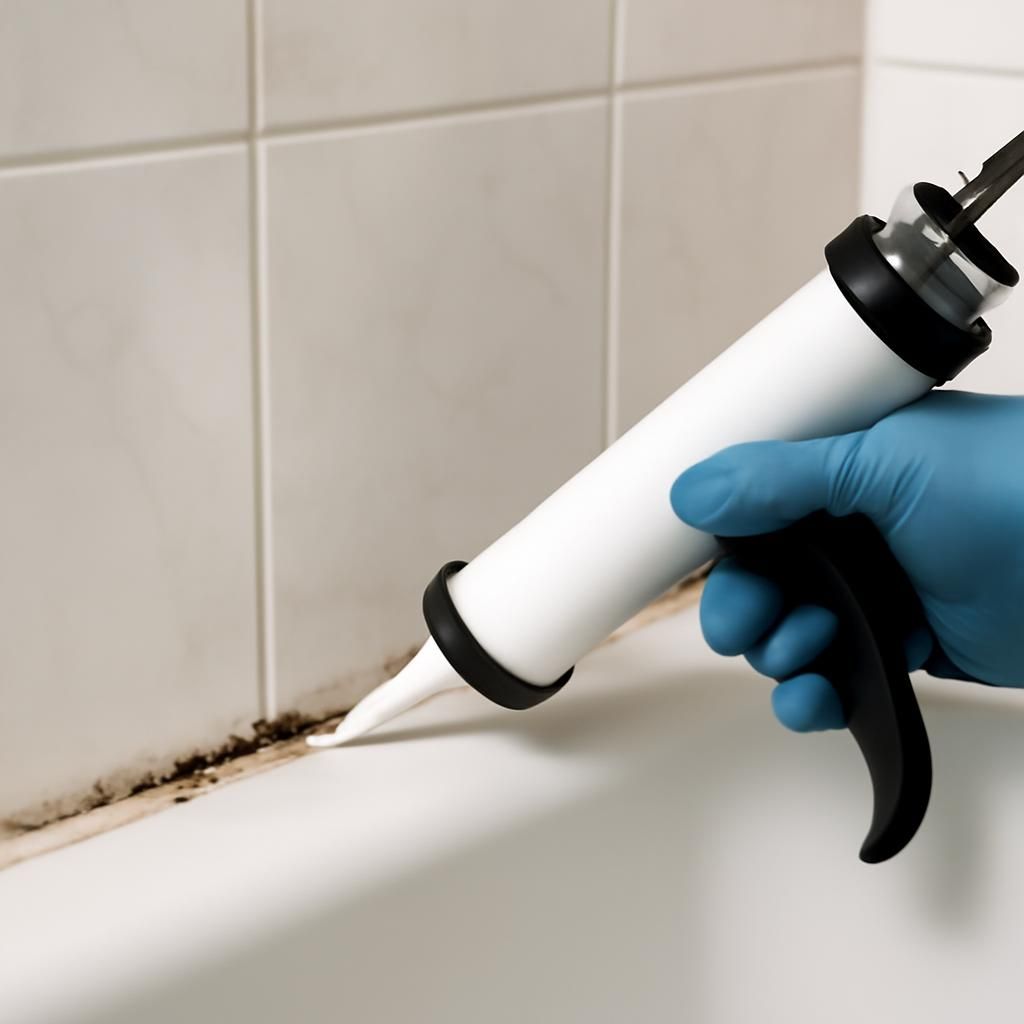
Shower caulking is the flexible sealant applied at the junctions where tile meets a tub edge, shower pan, or wall corner. Unlike grout, caulk is designed to flex with building movement — but it degrades, shrinks, and cracks within 2–5 years under normal use. When shower caulk fails, water enters the gap and saturates the substrate behind the tile. This is the most common hidden cause of wall damage in Suffolk County bathrooms and the one most often caught too late.
Tile and Grout Cleaning vs. Full Restoration: Which Do You Need?
Condition | Recommended Service | Why |
Grout is dingy or gray but structurally intact | Professional deep clean + seal | Surface and subsurface contamination only; structure is sound |
Grout is cracking or crumbling in spots | Deep clean + spot grout repair | Targeted repair prevents water intrusion from spreading |
Grout has failed across most of the floor or shower | Full regrouting service | Spot repair would be labor-intensive and produce uneven results |
Caulk is cracked, peeling, or discolored at tile corners | Shower caulk replacement | Failed caulk is a waterproofing failure, not a cosmetic issue |
Tiles are chipped or loose | Tile repair before grout/caulk work | Loose tiles signal substrate damage; address root cause first |
Mid-Season Warning Signs to Watch Right Now
The following are specific, actionable warning signs that indicate your tile and grout need professional attention before the issue deepens — particularly relevant for Bohemia, NY homeowners mid-summer when bathrooms see peak use from family activity and humidity is highest.
Dark or black grout lines that don't lighten after cleaning — a sign of deep mold colonization inside the grout, not surface staining.
A musty smell in the bathroom even after cleaning — mildew is living inside grout or behind caulk, not just on surfaces.
Caulk that has pulled away from the tub edge even slightly — a 1mm gap at a shower corner allows enough water ingress to damage drywall in weeks during heavy summer use.
Grout that feels soft or crumbles when you press it — the cement binders have broken down; this grout no longer resists moisture.
Tiles that sound hollow when tapped — the adhesive has failed, often because water has been entering through compromised grout or caulk nearby.
Stained or uneven grout color across a tile floor — usually years of soap residue and mineral deposits, and a clear signal that no sealer remains in the grout.
If several of these apply to your shower or bathroom floor, reviewing the 5 signs your grout needs professional repair can help you determine how urgently to act.
What to Avoid: Common DIY Mistakes That Make Tile Worse
Several common DIY approaches actively damage tile and grout rather than restore them — and knowing which to avoid saves money and prevents early tile replacement.
Using bleach directly on colored grout: Bleach oxidizes the pigments in sanded or polymer-modified grout and leaves permanently faded patches. Use it only on white uncolored grout, and only diluted.
Applying new caulk over old caulk: Layering caulk traps moisture between the layers and accelerates mold growth. Old caulk must be fully removed — a utility knife and oscillating tool are the right tools for this, not a new bead on top.
Using vinegar or acidic cleaners on natural stone or cement-based grout: Acidic solutions dissolve the calcium carbonate in both materials. On marble or travertine tile, even diluted vinegar causes etching that cannot be reversed without professional polishing. For specifics on caring for natural stone floors, the marble floor cleaning and restoration Long Island guide covers this in detail.
Sealing grout before it's fully clean: Sealer locks in whatever is in the grout at the time of application. Sealing over stained or moldy grout traps the contamination inside and accelerates structural breakdown.
Power-washing indoor tile: Residential pressure washers used indoors force water under tile edges and into grout at angles that worsen cracking and can dislodge tiles from their setting bed.
Frequently Asked Questions: Tile Restoration in Suffolk County
How long does professional grout cleaning take?
A standard bathroom tile and grout cleaning service — covering a shower surround plus floor — typically takes 2–4 hours depending on the tile area and degree of staining. Grout repair and caulk replacement add time and are usually scheduled as part of the same visit to minimize disruption.
How often should grout be professionally cleaned and sealed?
Grout in a heavily used household shower should be professionally cleaned and sealed every 12–18 months. Kitchen tile floors in active households benefit from service every 18–24 months. The right frequency depends on foot traffic, cleaning habits, and whether the existing sealer remains intact — a simple water-bead test tells you if it does (water beads up = seal is holding; water absorbs = it needs resealing). For more guidance on timing, see this homeowner's guide on how often you should seal grout.
Is tile restoration worth it compared to retiling?
Professional tile restoration is almost always more cost-effective than full retiling when the tiles themselves are structurally sound. Retiling requires demolition, new materials, and fresh installation — a significantly larger project. Restoration — cleaning, grout repair, color sealing, and caulk replacement — addresses the actual causes of deterioration at a fraction of that cost, and when done properly, extends tile life by many years.
Can you regrout a shower without removing old grout?
No — applying new grout over old grout produces a weak bond that fails quickly. Old grout must be removed to a minimum depth (typically 2–3mm) using a grout saw or oscillating tool before new material can be packed in. Skipping removal is the single most common reason DIY regrout jobs crack within months.
Does Groutastic serve areas near Bohemia, NY?
Yes — Groutastic provides tile and grout cleaning, grout repair, and shower caulking services across Suffolk County, including communities near Bohemia such as North Babylon, North Lindenhurst, North Bay Shore, North Great River, and North Bellport.
When to Call a Professional Instead of DIYing
DIY grout cleaning is a reasonable starting point for light maintenance — a good pH-neutral cleaner and a stiff brush handle surface buildup between professional visits. However, several situations clearly call for professional tile and grout restoration rather than continued DIY effort:
Grout lines are crumbling, hollow, or missing sections — structural failure requires proper removal and repacking, not surface treatment.
Mold returns within weeks of cleaning — the colony has established inside the grout body or behind caulk, and surface cleaners cannot reach it.
Caulk has separated from the tile edge at any point in the shower — this is an active waterproofing failure and should be addressed within days, not weeks.
Grout color is uneven or permanently stained despite multiple cleaning attempts — color sealing by a professional is the correct resolution, not repeated scrubbing.
Any tile has become loose or sounds hollow — loose tiles require substrate assessment before any grout or caulk work proceeds.
Groutastic specializes in exactly these situations: professional tile and grout cleaning, grout repair, and shower caulk replacement for
This article is based on real published content from Groutastic, cites authoritative sources, and is reviewed before publication.
Comments