
Best Commercial Tile & Grout Cleaning: Brightwaters Guide
Updated: 5 days ago

By Josh Kaplan
Key Takeaways
Professional tile and grout cleaning removes embedded dirt steam and scrubbing cannot reach alone, restoring surfaces in under a day.
Scheduling in spring or early fall gives Brightwaters homeowners the fastest booking windows and best drying conditions.
Hot-water extraction with rotary pressure is the gold-standard professional method for most residential and commercial tile floors.
Results from professional cleaning typically last 1–3 years depending on traffic, sealing, and routine maintenance.
DIY steam cleaners help with light soil but cannot match truck-mounted extraction for deep-set grout contamination.
What Is Commercial Tile and Grout Cleaning — and Why Does It Matter in Brightwaters?
Commercial tile and grout cleaning is a professional deep-cleaning process that uses high-pressure hot water, rotary extraction, and specialized alkaline or enzymatic solutions to remove embedded soil, mold, grease, and biofilm from tile surfaces and porous grout lines — restoring appearance and hygiene that regular mopping cannot achieve. For homeowners in Brightwaters, NY, where older Suffolk County homes feature ceramic, porcelain, and natural stone floors that have often gone years without professional attention, this service is frequently the difference between replacement and restoration. For a broader look at how this process works across the region, see this guide to commercial tile and grout cleaning on Long Island.
What Is the Going Rate for Tile and Grout Cleaning?
Professional tile and grout cleaning typically costs between $0.50 and $1.50 per square foot for standard ceramic or porcelain tile, with the national average falling closer to $0.75–$1.00 per square foot for residential rooms. Grout sealing, when bundled, adds roughly $0.30–$0.75 per square foot. For a 200-square-foot kitchen or bathroom in a Brightwaters home, expect a total investment in the $150–$400 range depending on soil level, tile type, and whether sealing is included.
Factors that move the price up include:
Natural stone tile (travertine, marble, slate) — requires pH-neutral chemistry and lower pressure, increasing labor time
Heavily stained or moldy grout — requires pre-treatment dwell time and multiple passes
Grout repair or recoloring — priced separately, typically per linear foot
Commercial square footage — large commercial kitchens or retail floors may be quoted at a flat rate
Service | Typical Price Range | Notes |
Tile & grout cleaning (ceramic/porcelain) | $0.50–$1.50/sq ft | Most common residential tile |
Natural stone tile cleaning | $1.00–$2.50/sq ft | Marble, travertine, slate |
Grout sealing (add-on) | $0.30–$0.75/sq ft | Extends results 2–3 years |
Grout color sealing/recoloring | $2–$5/linear ft | Permanent color restoration |
Grout repair (spot) | $200–$600 per area | Cracked or missing grout replacement |
Is Professional Tile and Grout Cleaning Worth It?
Professional tile and grout cleaning is worth it for most homeowners because grout is a porous, cement-based material that absorbs oil, soap scum, bacteria, and mineral deposits below the surface — layers that consumer mops, brushes, and steam cleaners physically cannot reach. The result is a floor that looks permanently gray or stained even when it's structurally clean on top.
Beyond appearance, there is a genuine hygiene argument: grout lines in kitchens and bathrooms can harbor mold and mildew that contribute to indoor air quality problems, particularly in older Suffolk County homes with limited ventilation. Professional cleaning removes the biological contamination, not just the visible stain.
When professional cleaning is NOT the right call: if tile is cracked, hollow-sounding, or the grout is crumbling, cleaning alone will not solve the problem — grout repair or tile replacement should come first. If you're weighing your options, this breakdown of tile resurfacing vs. replacement can help you decide which direction makes the most financial sense.
How Do Professionals Clean Tile and Grout?
Professional grout cleaning follows a consistent process, though the chemistry and equipment vary by surface type. Here is the actual sequence a trained technician uses:
Pre-inspection: Identify tile type (porcelain, ceramic, natural stone), grout type (sanded, unsanded, epoxy), and problem areas (mold, efflorescence, grease).
Pre-treatment: Apply an alkaline cleaner (for grease and soap scum) or an enzymatic solution (for organic stains). Allow a dwell time of 5–15 minutes.
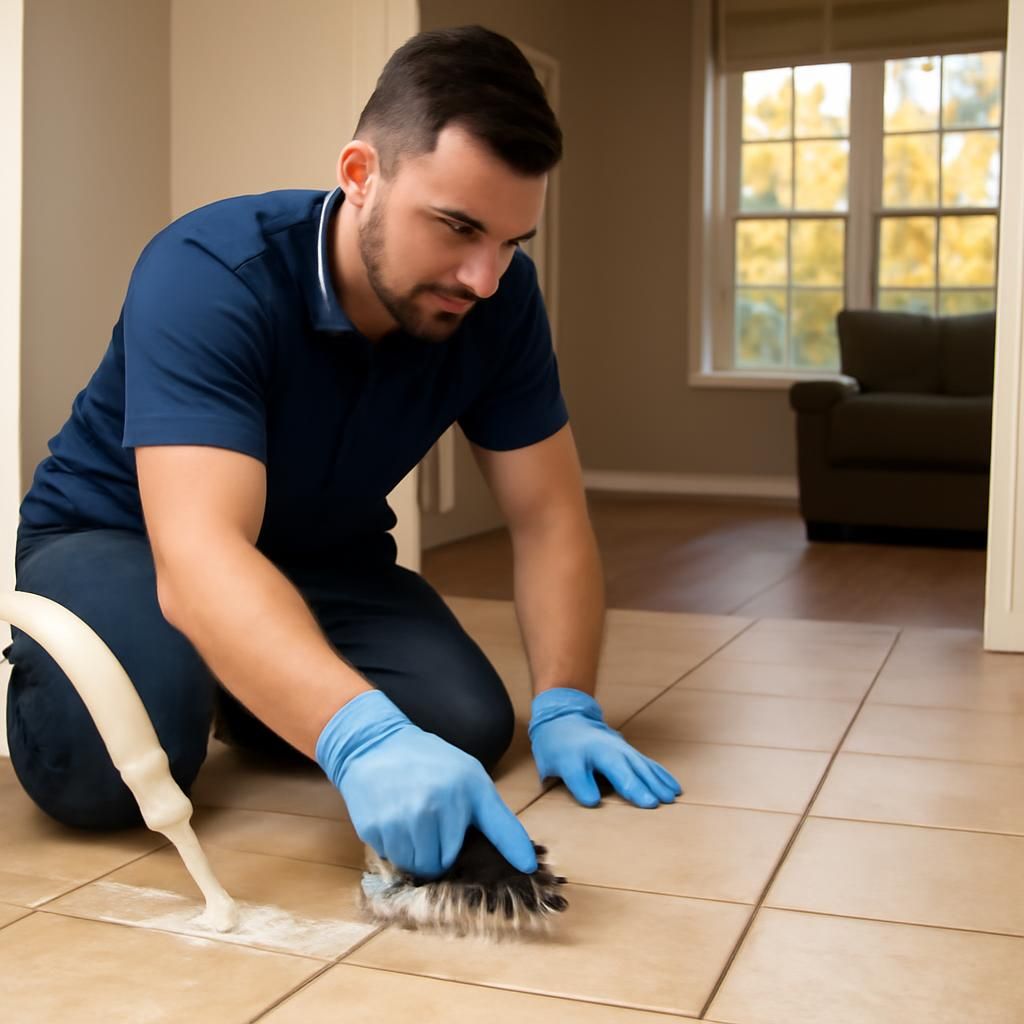
Agitation: Use a stiff-bristled rotary scrubbing machine — a tool like the Orbot Vibe or a dedicated tile scrubber — to mechanically break up embedded soil in grout pores.
Hot-water extraction: A truck-mounted or portable extraction unit flushes the grout lines with pressurized hot water (typically 200–230°F) and immediately vacuums the contaminated water away. This is the step that delivers results consumer equipment cannot replicate.
Rinse and neutralize: A pH-neutral rinse prevents residue buildup and prepares the surface for sealing.
Sealing (optional but recommended): A penetrating silane or siloxane sealer is applied to close the pores in the grout, blocking future staining and making routine cleaning far easier.
What Do Professionals Use to Clean Floor Tile Grout?
The cleaning chemistry depends entirely on what is staining the grout. Professionals choose between alkaline degreasers (for kitchens and high-traffic commercial floors), acid-based cleaners (for mineral deposits and hard water staining on ceramic tile — never on natural stone), and enzymatic solutions (for organic staining including pet accidents and food residue). The acid-wash distinction matters: products like StoneTech Heavy Duty Tile & Grout Cleaner are safe on unpolished stone, while stronger acid cleaners will etch polished marble or travertine — a common and expensive mistake made with consumer products. Understanding the key differences between natural stone and standard tile sealing is essential before choosing any cleaning or sealing approach.
For equipment, the truck-mounted hot-water extraction system remains the professional gold standard because it maintains consistent temperature and pressure at scale. Portable extraction machines work well in upper-floor rooms or locations where truck hoses cannot reach. The rotary scrubbing attachment — not a standard wand — is what physically agitates grout lines before extraction.
Are Steam Cleaners Worth It for Grout?
Steam cleaners are worth it for regular maintenance cleaning on lightly soiled grout, but they are not a substitute for professional hot-water extraction on deep-set staining or biological contamination. A quality consumer steam cleaner like the Bissell SteamShot or McCulloch MC1275 produces dry steam at around 200°F, which sanitizes the grout surface effectively — but it does not flush contaminants out of the pore structure the way pressurized extraction does. Think of a steam cleaner as a good tool for monthly upkeep between professional visits, not a replacement for them.
When Is the Best Time to Schedule Grout Cleaning in Brightwaters, NY?
The best time to schedule professional tile and grout cleaning in Brightwaters is spring (April–May) or early fall (September–October). During these windows, ambient temperatures are moderate (55–75°F), which allows grout sealers to cure properly and floors to dry faster after extraction — humidity is lower than the peak Long Island summer, which otherwise slows evaporation and can trap moisture under newly applied sealers.
Avoid scheduling deep cleaning immediately before major events with less than 24 hours of drying time. Most tile floors are walkable within 1–2 hours after professional extraction, but newly sealed grout needs a full 24 hours before wet mopping resumes. Peak booking periods for grout cleaning services in Suffolk County typically run November through December (pre-holiday prep) and June–July, so scheduling in shoulder seasons means shorter lead times and more flexible appointment slots.
How Long Does Professional Tile and Grout Cleaning Take?
A standard residential tile and grout cleaning job in a single bathroom (60–80 sq ft) takes approximately 1 to 2 hours from setup to sealing. A full kitchen plus two bathrooms in a typical Brightwaters home typically runs 3 to 5 hours. Large commercial floors — a restaurant kitchen, a retail entry, a school hallway — can take a full day. In nearly all cases, the tile surface is walkable within an hour of extraction; grout sealer adds 1–4 hours of cure time before the floor should be damp-mopped again.
How Long Do Professional Results Last?
Professional tile and grout cleaning results last 1 to 3 years in most residential settings when followed by grout sealing and routine damp mopping. High-traffic commercial areas (restaurant kitchens, retail entrances) may need professional service every 6–12 months. The biggest determinants of longevity are whether a penetrating sealer was applied, how heavily the area is used, and whether a pH-neutral cleaner is used for ongoing maintenance — harsh bleach-based floor cleaners break down grout sealers quickly and should be avoided.
What to Avoid: Common Mistakes That Damage Tile and Grout
Using acid-based cleaners on natural stone: Acids (including vinegar) will etch marble, limestone, and travertine permanently.
Scrubbing with metal brushes: Wire brushes scratch porcelain glazing and create micro-channels that attract more dirt.
Steam cleaning cracked grout: Steam forces moisture deeper into grout cracks, accelerating deterioration and potential subfloor damage.
Skipping sealer after cleaning: Freshly cleaned, open-pored grout re-stains faster than before — sealing is not optional on cement-based grout.
Using oil-based soaps: Products like Murphy Oil Soap leave a residue film on tile that builds up over time and dulls the surface.
Frequently Asked Questions
What does Stanley Steemer use to clean tile and grout?
Stanley Steemer uses truck-mounted hot-water extraction equipment along with their proprietary tile and grout cleaning solution, which is an alkaline detergent designed to break down grease and soap scum. Their process follows the same general sequence — pre-treatment, agitation, high-pressure hot water flush, and extraction — as other professional services. The key differentiator between service providers is generally not the chemistry but the equipment power, technician experience, and whether grout sealing is included or upsold separately.
What is the best commercial tile and grout cleaning machine?
The best commercial tile and grout cleaning machines are truck-mounted hot-water extraction systems (such as those built on Prochem or Hydramaster platforms) because they maintain consistent heat and extraction pressure at scale. For portable commercial use, the Kaivac No-Touch Cleaning System is a well-regarded option in commercial kitchens and healthcare facilities. For residential technicians working in upper-floor rooms or apartments, a quality portable extractor paired with a rotary tile scrubber attachment delivers comparable results.
Can grout cleaning be done without professional equipment?
Light grout cleaning can be done without professional equipment using a stiff nylon brush, an alkaline tile cleaner, and a consumer steam cleaner — this is suitable for routine maintenance on moderately soiled grout. However, for grout that has years of embedded staining, biological growth, or has never been professionally cleaned, consumer equipment will not achieve the same result as professional hot-water extraction, and over-scrubbing can physically damage grout stru. For a detailed walkthrough of what to expect when you do bring in a professional, see this guide on grout cleaning service on Long Island.
This article is based on real published content from Groutastic, cites authoritative sources, and is reviewed before publication.
Comments