
Porcelain vs. Ceramic Tile: Which Is Easier to Clean?

By Josh Kaplan
Key Takeaways
Porcelain tile is easier to clean than ceramic because its denser, near-zero-porosity surface resists stains and moisture absorption.
Unglazed ceramic tiles stain most easily — avoid harsh scrubbing; professional restoration often reverses the damage.
Use a neutral-pH cleaner on both tile types; acidic or oil-based cleaners cause long-term surface and grout damage.
Grout lines, not the tiles themselves, are the hardest part of any floor to keep clean regardless of tile type.
For deep-set stains or haze buildup in Suffolk County or Nassau County, professional tile and grout cleaning delivers results DIY can't match.
Porcelain vs. Ceramic Tile: Which Is Easier to Clean?
Porcelain tile is easier to clean than ceramic tile in most real-world situations — but the gap between them depends on one key variable: porosity. Understanding why each tile behaves the way it does under daily grime, spills, and cleaning products will help you make smarter choices whether you're selecting new tile, maintaining what you have, or deciding when a professional cleaning is worth it.
Feature | Porcelain Tile | Ceramic Tile |
Water absorption rate | ≤ 0.5% (vitreous) | Up to 3% or higher (semi-vitreous to non-vitreous) |
Stain resistance (unglazed) | Excellent — dense body resists penetration | Poor — porous body absorbs spills readily |
Stain resistance (glazed) | Excellent | Good — glaze protects, but chips expose porous body |
Daily cleaning effort | Low — wipe and go | Low to moderate — glaze helps, but grout absorbs more |
Sensitivity to wrong cleaners | Moderate — large-format and matte finishes react to oil-based cleaners | Moderate — glaze can etch with acidic products |
Grout line depth / width | Often narrower (rectified edge) | Often wider, collecting more debris |
Professional cleaning needed | Less often | More often, especially in high-traffic areas |
Why Porosity Is the Real Deciding Factor
The Tile Council of North America (TCNA) classifies tile by water absorption: porcelain must absorb 0.5% or less by weight, while standard ceramic can absorb significantly more. That number translates directly into cleaning behavior. A tile that absorbs less water also absorbs less cooking grease, pet urine, mop water residue, and cleaning product film — the four main reasons tile floors become progressively harder to clean over time.
Porcelain achieves its low porosity because it's fired at higher temperatures (typically around 2,300°F vs. ceramic's roughly 1,900–2,100°F) using finer, denser clay bodies. The result is a tile that is vitrified — essentially glass-like throughout its body. This matters especially when the surface glaze gets scratched or chipped: an unglazed porcelain tile still resists staining because the body itself is dense. An unglazed or chipped ceramic tile, by contrast, becomes a sponge.
What Type of Tile Is Easiest to Keep Clean?
Glazed porcelain in a polished or satin finish is the single easiest tile type to maintain in daily use. Its glass-smooth surface releases dirt with a damp mop and a neutral cleaner. The tradeoff: polished porcelain shows footprints and water spots more readily than a matte finish, requiring more frequent (though quick) wiping in busy households.
Matte and textured porcelain finishes — popular in wet areas for slip resistance — trap fine grit and soap scum in their micro-texture. They're still more stain-resistant than ceramic, but they require a soft-bristle brush during regular mopping, not just a flat mop head, to dislodge debris from the texture.
Glazed ceramic lands in the middle. The glaze acts as a sealed surface just like porcelain glaze, so daily cleaning is nearly as easy — until the glaze wears or chips. After that, the exposed porous body beneath stains within days in a kitchen or bathroom environment.
The Part Everyone Forgets: Grout Lines
Whether you choose porcelain or ceramic, the grout joints between tiles are almost always the hardest surface to keep clean — and they're equally present regardless of tile type. Sanded grout is inherently porous and will absorb spills, harbor mold in wet areas, and gray out from foot-traffic grime even when the tile itself looks spotless.
One non-obvious point: porcelain tiles are often cut to a rectified edge (machine-ground to precise dimensions), which allows for very narrow grout joints — sometimes as thin as 1/16 inch. Narrower joints mean less grout surface area exposed to staining. Standard ceramic tiles typically require wider joints (1/8 to 3/16 inch) due to slight size variation in manufacturing, creating more grout area to maintain. This is one concrete maintenance advantage of porcelain that most comparison guides overlook.
Sealing grout annually is the most effective single step you can take to reduce cleaning effort on either tile type. Penetrating silicone or epoxy-based grout sealers reduce absorption significantly, making routine mopping far more effective.
What's the Best Cleaning Solution for Porcelain and Ceramic Tile?
A neutral-pH cleaner (pH 6–8) is the right choice for both tile types in routine maintenance. It cleans effectively without attacking the glaze, the grout, or any sealer you've applied. Look for products specifically labeled "safe for glazed tile" or "neutral pH tile cleaner."
The Environmental Protection Agency - Safer Choice Program evaluates cleaning product ingredients for both effectiveness and safety — a useful reference when choosing between the many tile cleaners on the market, especially if you have children or pets in the home.
What Professionals Use to Clean Tiles
Professional tile and grout cleaners typically work in two stages. First, an alkaline pre-spray (pH 10–12) is applied to emulsify grease and body oils that have built up in grout pores — the kind of buildup a neutral mop cleaner cannot reach. Second, a hot-water extraction or steam machine rinses the dissolved soil out of the grout, rather than just spreading it around. This two-stage method is why a professional cleaning can transform grout that looks permanently dark: the soil is genuinely extracted, not just bleached or masked.
For tile surfaces specifically, professionals often follow with a pH-neutralizing rinse to prevent alkaline residue from dulling the finish over time — a step most homeowners skip, which is why DIY cleanings sometimes leave tile looking streaky or hazy.
What You Should Never Use on Tile Floors
The wrong cleaner can be more damaging than skipping cleaning entirely. Here are specific products and situations to avoid:
Acidic cleaners (vinegar, lemon juice, acid-based grout haze removers): Effective for mineral deposits, but they etch cement-based grout and can dull the surface of unglazed or matte tiles over repeated use. Use only for a one-time targeted application if needed, then rinse thoroughly and stop.
Oil-based soaps (Murphy's Oil Soap, pine-oil cleaners): Murphy's Oil Soap is formulated for wood, not tile. On porcelain, it leaves an oil residue that attracts dirt and creates a progressive buildup — each cleaning makes the floor dirtier over time. It's a common mistake and one of the harder residues to strip.
Bleach on colored or epoxy grout: Bleach can fade pigmented grout and degrade epoxy grout's resin binders. It's appropriate only for white cement grout with confirmed mold, and should be rinsed immediately.
Steam mops on existing grout without sealed joints: Sustained steam drives moisture into unsealed grout, promoting mold growth beneath the surface. Seal grout before using steam.
Abrasive scrubbers on glazed tile: Steel wool or stiff plastic bristles scratch the glaze permanently, creating microscopic valleys that trap grime going forward.
Is Dawn Dish Soap Good for Cleaning Tile Floors?
Dawn is a common household choice, but it's a poor tile floor cleaner in practice. Dish soap is designed to be rinsed off under running water — on a floor, even a thorough mop rinse leaves a thin soap film. Over time this film builds up, dulls the tile's sheen, and makes the surface feel slightly sticky, which attracts more foot-traffic grime. For occasional spot-cleaning a small area, a tiny amount diluted heavily in water can work. As a regular floor cleaner, it's not recommended.
The Best Way to Clean Tile Floors: A Practical Routine
Dry sweep or vacuum first. A flat mop pushed over grit grinds particles into grout and scratches glazed surfaces. Remove loose debris before any wet cleaning.
Mop with a neutral-pH cleaner diluted per the manufacturer's instructions. Wring the mop until it's damp, not wet — excess water sits in grout joints and under tile edges.
Work in sections and change mop water when it turns gray. Mopping with dirty water redeposits soil.
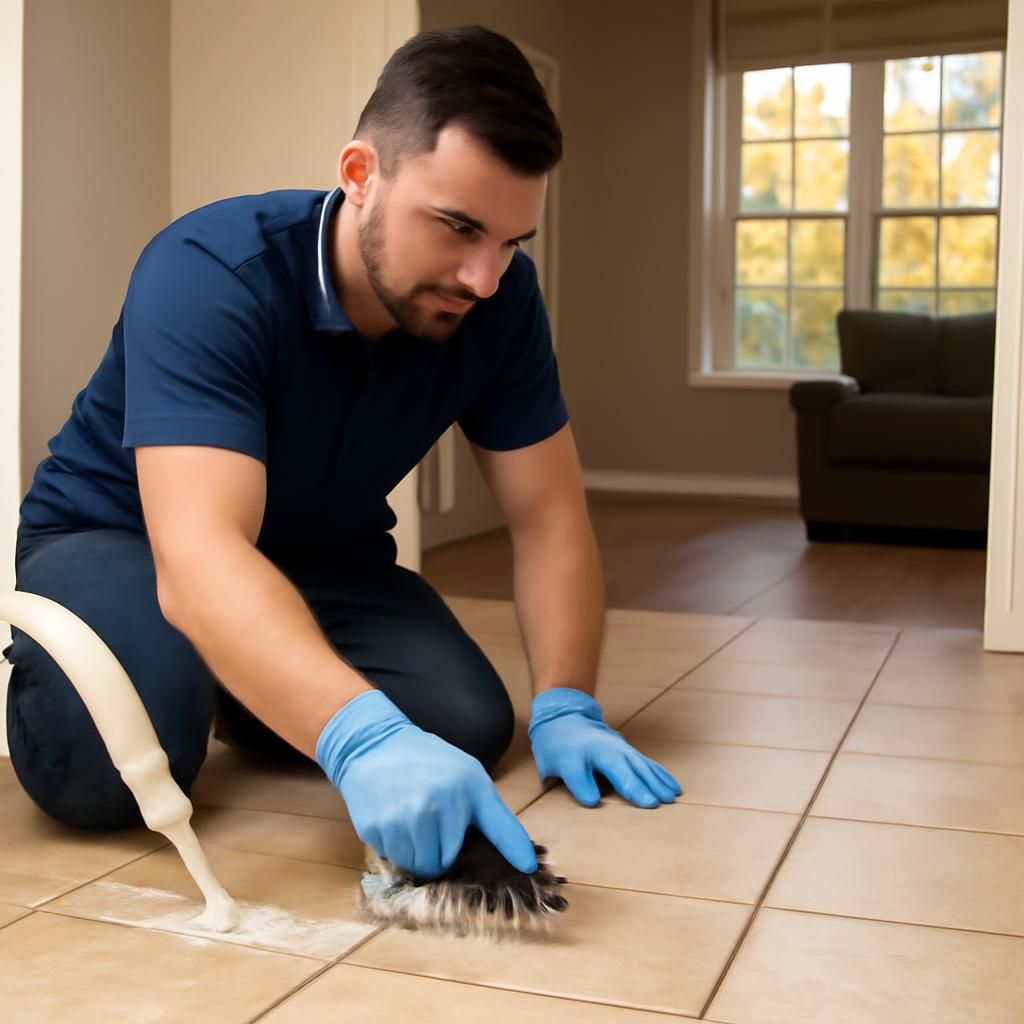
Scrub grout lines with a soft-bristle grout brush if they look dingy — a flat mop head doesn't make contact with the recessed joint surface.
Rinse with clean water if your cleaner leaves any visible residue or the label recommends it.
Dry the surface in wet areas or high-humidity rooms to prevent water spots on polished tile and mold development in grout.
For disinfection needs — such as bathroom floors or food-preparation areas — the Centers for Disease Control and Prevention - Environmental Health recommends using EPA-registered disinfectants and allowing adequate contact time on hard surfaces before wiping. Check that any disinfectant you choose is labeled safe for glazed tile before applying.
Should You Get Porcelain or Ceramic Tile?
For areas with heavy foot traffic, moisture exposure, or greasy cooking residue — kitchens, entryways, bathrooms — porcelain is the lower-maintenance choice. Its denser body means spills sit on the surface longer before they can penetrate, giving you more time to wipe them up, and routine mopping is more effective because soil doesn't reabsorb into the tile body.
Ceramic tile is a practical and cost-effective choice for lower-traffic spaces: a guest bedroom accent wall, a laundry room with light use, or a bathroom that sees occasional traffic. In those applications, the porosity difference is less relevant day-to-day, and glazed ceramic cleans easily if the glaze stays intact.
The honest caveat: neither tile type eliminates the grout maintenance problem. If you want the easiest possible floor to clean, choose the largest format tile you can accommodate (fewer grout joints), have grout sealed at installation, and re-seal annually.
When to Call a Professional Tile and Grout Cleaner
Routine mopping maintains clean tile — it does not restore it. Once grout has absorbed years of soil, once a hazy cleaner residue has built up on polished porcelain, or once mold has established itself in bathroom grout, DIY cleaning reaches its practical limit. Signs it's time for professional help:
Grout has darkened uniformly despite regular scrubbing
Tile surface looks hazy or dull even after mopping
Black or pink mold reappears within days of bleaching
Grout is crumbling or cracked, allowing moisture underneath
The floor was last professionally cleaned more than two to three years ago in a high-traffic space
Groutastic provides professional tile and grout cleaning and restoration services throughout Suffolk County and Nassau County, NY. A deep cleaning paired with a fresh grout seal resets the surface to a condition that routine mopping can actually maintain — making your tile, whether porcelain or ceramic, genuinely easier to keep clean going forward.
Frequently Asked Questions
Does polished porcelain tile show dirt more than ceramic?
Yes — polished porcelain's high-gloss surface reveals footprints, water spots, and smudges more readily than a matte or textured finish. It cleans in seconds, but you'll need to wipe it more often in busy areas to keep it looking clean.
Can I use the same cleaning routine on both porcelain and ceramic?
Generally yes: dry sweep, neutral-pH damp mop, grout brush as needed. The main difference is that unglazed or matte porcelain may need a soft brush during mopping to dislodge debris from its texture, while polished glazed surfaces (porcelain or ceramic) respond well to a flat microfiber mop.
How often should grout be professionally cleaned?
In kitchens and main bathrooms with daily use, a professional cleaning every one to two years keeps grout from reaching the point where it can't be restored. In lower-traffic areas, every two to three years is typically sufficient. Annual grout sealing between professional cleanings extends that interval considerably.
Published by Groutastic.
Comments