
Fall Tile & Grout Cleaning Guide for Lloyd Harbor, NY

By Josh Kaplan
Key Takeaways
Fall is the best season to deep-clean and seal grout before cold, damp conditions trap moisture inside porous joints.
Unsealed or cracked grout allows water infiltration that can lead to mold growth and costly substrate damage over winter.
A professional deep clean removes embedded soil that routine mopping leaves behind, making sealer more effective and longer-lasting.
Grout repair and resealing done in fall protects tile surfaces through the freeze-thaw cycle and into spring.
Lloyd Harbor homeowners in Suffolk County can schedule seasonal tile restoration with Groutastic before winter demand peaks.
Why Fall Is the Right Time to Clean and Seal Your Tile and Grout
Fall is the single most practical window to deep-clean, repair, and reseal tile and grout throughout your home. The reason is mechanical: grout is a porous cementitious material. Once temperatures drop and moisture from rain, tracked-in mud, and condensation increases, any soil or biofilm already embedded in the grout locks in and becomes significantly harder to extract. Cleaning before that happens — and sealing once the grout is clean and dry — creates a protective barrier before your surfaces face their hardest months.
For homeowners and property managers across Lloyd Harbor, NY and the broader Suffolk County area, a fall tile maintenance appointment accomplishes three things at once: it resolves the summer's accumulated grime, it sets up a sealed surface before winter, and it reveals any cracked or failing grout that should be repaired before freeze-thaw cycles widen the damage.
What Happens to Grout Over Summer — and Why It Matters by Fall
Through spring and summer, tile surfaces collect layers of soap scum, hard-water deposits, body oils, sunscreen residue (in bathrooms and pool areas), cooking grease (in kitchens), and foot traffic grime. Standard mopping pushes diluted soil into the grout joint rather than extracting it. By the time fall arrives, grout lines that look merely dingy often contain embedded organic material — the exact food source that mold spores need to colonize.
The National Institute of Environmental Health Sciences - Mold notes that mold can grow on virtually any surface given sufficient moisture and an organic food source. Grout lines that hold soap residue and skin cells satisfy both conditions once fall humidity rises indoors from heating systems cycling on and off.
Sealing grout over dirty joints is a common and costly mistake. The penetrating sealer bonds to whatever is on the surface — if that surface is contaminated, the sealer traps the contamination in place and provides almost no protection. This is why the cleaning step must come before the sealing step, not as an optional upgrade.
The Fall Tile and Grout Maintenance Sequence
Step 1 — Deep Cleaning
A true deep clean uses hot-water extraction or rotary scrubbing equipment — tools that generate enough mechanical agitation and heat to break the bond between embedded soil and the grout's porous surface. This is categorically different from consumer steam mops, which deliver low-pressure vapor that softens surface grime but cannot extract it. Hot-water extraction (the same technology used in professional carpet cleaning) flushes loosened soil out of the joint rather than redistributing it.
For heavily stained grout — common in kitchens, mudrooms, and entryways after a full summer — an alkaline pre-treatment is applied, dwells for several minutes, and is then agitated with a stiff-bristle rotary head before extraction. This two-stage approach is what reliably restores grout to something close to its original color rather than merely lightening it.
Step 2 — Grout Repair
Once the joints are clean, the condition of the grout becomes visible for the first time. Hairline cracks, crumbling sections, missing grout at transitions, and failing caulk at corners and perimeters all stand out. Fall is the right moment to address these because:
Water entering a cracked joint over winter expands when it freezes, widening the crack from a cosmetic issue into a structural one.
Open joints adjacent to a shower pan or tub surround allow water to reach the substrate (typically cement board or a mortar bed), where it causes long-term damage that eventually requires tile replacement rather than just grout repair.
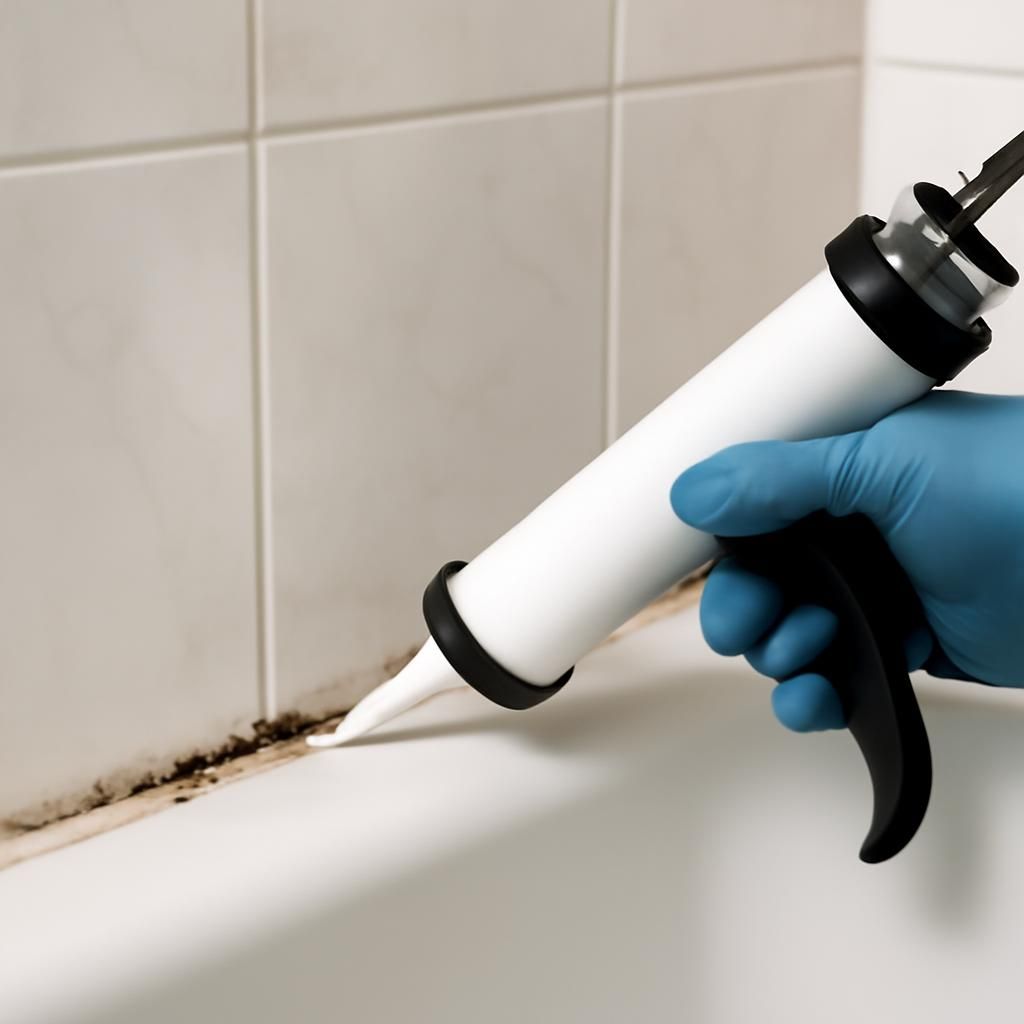
Silicone caulk at corners — which must flex independently of the grout — typically needs replacement every few years. Fall is the correct application season because silicone needs a stable temperature window (generally above 40°F) to cure properly.
Step 3 — Sealing
After cleaning and any repairs, a penetrating grout sealer is the final step. Penetrating sealers — sometimes called impregnating sealers — work by filling the microscopic pores of the grout with a fluoropolymer or siloxane compound, blocking liquid absorption without leaving a film on the surface. The result is a surface that beads water and resists staining from spills.
Topical sealers (which form a surface coating) are sometimes used on unglazed tile but are generally not recommended for grout joints in wet areas because they can trap moisture underneath the film, leading to the very mold problem you are trying to prevent. Penetrating sealers avoid this risk and are the professional standard for bathroom, kitchen, and entryway grout.
A well-applied penetrating sealer on professionally cleaned grout typically remains effective for two to five years depending on traffic and cleaning frequency. Fall application means the sealer is fully cured before winter moisture conditions arrive.
Surfaces to Prioritize This Fall
Surface / Location | Primary Fall Risk | Recommended Action |
Bathroom floor and shower grout | Mold colonization during low-ventilation winter months | Deep clean + penetrating seal |
Kitchen backsplash and floor | Grease-embedded grout traps odors and bacteria | Alkaline deep clean + seal |
Entryway and mudroom tile | Tracked-in fall debris and moisture accelerate staining | Deep clean + seal before leaf season peaks |
Outdoor pavers and stone | Freeze-thaw cracking in unsealed joints | Clean + paver sealing before first frost |
Basement floor tile | Rising humidity from heating system onset | Deep clean; inspect for efflorescence |
Outdoor Pavers: The Fall Deadline Is Real
Paver sealing has a hard seasonal cutoff in a way that indoor grout sealing does not. Most penetrating paver sealers require a substrate temperature above 50°F and no rain forecast for 24–48 hours after application. Once November arrives in the Lloyd Harbor and Cold Spring Harbor areas of Suffolk County, consistent application windows become unreliable. Scheduling paver cleaning and sealing in September or October is not early — it is appropriately timed.
Unsealed pavers entering winter are vulnerable to spalling, a process where absorbed water freezes in the pore structure and physically fractures the surface of the paver. Once spalling starts, sealing can slow further damage but cannot reverse what has already occurred. This is one of the clearest cases where preventive seasonal maintenance is genuinely less expensive than deferred repair.
What to Avoid When Cleaning Tile and Grout in Fall
Several common DIY approaches cause damage that is either invisible at first or requires professional remediation later:
Bleach on colored grout: Sodium hypochlorite (household bleach) is an oxidizer. On white or light grout it can appear to "clean" by stripping pigment — a bleaching effect rather than actual soil removal. On charcoal, tan, or brown grout, repeated bleach use fades the color permanently and is not reversible without regrouting.
Vinegar or acidic cleaners on natural stone: Travertine, marble, and limestone tile are calcium carbonate-based. Acidic cleaners etch the surface, leaving a dull patch that requires honing to correct. This applies to the tile face, not just the grout — use only pH-neutral cleaners on natural stone.
Wire brushes or abrasive scrubbers on soft grout: Older, softer grout (pre-1990s installations often used sanded grout with lower Portland cement ratios) can be physically abraded by aggressive scrubbing, widening joints and creating a rougher surface that holds more soil.
Sealing grout that is not fully dry: Grout must be completely dry before a penetrating sealer is applied — typically 24–72 hours after any wet cleaning. Sealing damp grout traps moisture inside the joint. In a shower environment, this creates ideal mold conditions directly beneath the sealer layer.
The EPA - Mold Cleanup in Your Home recommends addressing both the moisture source and the contaminated material — not just surface treatment — when mold is already present. If grout shows black spotting that does not respond to cleaning, the issue may have penetrated the substrate and warrants professional assessment before sealing.
When to Call a Professional Instead of DIY
DIY tile cleaning is reasonable for routine surface maintenance — wiping down glazed tile, spot-cleaning fresh spills, reapplying a consumer-grade sealer on a recently professional-cleaned floor. It is not a practical substitute for professional service in these situations:
Grout has not been professionally deep-cleaned in more than two years
Grout color is uneven, dark in joints, or visibly stained despite regular mopping
Any section of grout is crumbling, missing, or cracked
Caulk at tub or shower corners is peeling, discolored, or pulling away from the surface
Outdoor pavers show efflorescence (white powdery deposits) or surface pitting
You can see or smell mold in grout joints and routine cleaning has not resolved it
Groutastic provides residential and commercial tile and grout cleaning, grout repair, and sealing services across Lloyd Harbor, Nassau County, and Suffolk County, NY. Fall scheduling fills quickly as homeowners recognize the seasonal window — booking in September or October gives you the best availability before the pre-winter rush.
Getting the Most from a Professional Fall Cleaning
To make a professional appointment as productive as possible:
Clear the area of rugs, furniture, and personal items before the technician arrives — access to the full tile field matters for consistent results.
Note any specific problem areas (a corner with recurring pink mold, a section of grout that crumbles when you touch it, caulk that has pulled away) so the technician can assess them directly.
Plan to keep foot traffic off sealed floors for at least two hours and avoid wet cleaning for 24–48 hours post-sealing to allow full cure.
Ask about the sealer being used — a reputable company will name the product and explain whether it is a penetrating or topical formula, and give you a realistic expectation for resealing frequency.
Maintaining your tile and grout on a seasonal schedule — particularly with a fall deep clean and seal — extends the life of the installation, keeps surfaces hygienic through the months when indoor air quality is most affected by reduced ventilation, and avoids the compounding repair costs that follow from deferred maintenance. For homeowners across Lloyd Harbor and Suffolk County, fall is not the time to put it off — it is exactly the right time to act.
Published by Groutastic.
Comments