
Fall Grout Sealing in Huntington, NY: Seasonal Guide

By Josh Kaplan
Key Takeaways
Fall is the ideal season to seal grout before winter moisture and freeze-thaw stress damage tile joints.
Unsealed grout absorbs water, leading to mold growth, staining, and costly grout repair or replacement.
Penetrating sealers outlast surface sealers and work best on porous, sanded grout in high-traffic areas.
Professional grout cleaning before sealing is essential — sealer locks in dirt if applied to uncleaned grout.
Outdoor pavers and tile need sealing just as urgently as indoor surfaces, often more so.
Why Fall Is the Right Time to Seal Your Grout in Huntington, NY
Sealing grout in autumn — before the first hard freeze — is one of the most protective steps a homeowner or facility manager can take for tiled surfaces. Grout is a cement-based material that is naturally porous. Without a sealer, it absorbs water, cleaning products, cooking grease, and foot-traffic grime year-round. Winter compounds every one of those problems: moisture trapped in unsealed grout joints can expand as it freezes, widening microcracks, loosening tiles, and creating a direct pathway for mold behind walls and under floors.
Groutastic serves homeowners and commercial property managers throughout Huntington, NY, and the wider Suffolk County and Nassau County areas with professional tile and grout cleaning, sealing, and restoration. The guidance below applies to virtually any tiled surface — but the seasonal timing advice is specifically calibrated for our Long Island service area.
What Happens to Unsealed Grout Over Winter
Understanding the risk makes the maintenance decision straightforward:
Freeze-thaw cycling: Water that has soaked into porous grout expands roughly 9% in volume when it freezes. Repeated expansion and contraction gradually fractures the grout, eventually crumbling it or separating it from the tile edge.
Mold and mildew: Damp grout — especially in bathrooms, kitchens, and entryways — is an ideal surface for mold colonization. The EPA - Mold Moisture Control guidance emphasizes that controlling moisture at the surface level is the primary defense against mold establishment. A quality penetrating sealer reduces that moisture absorption substantially.
Stain locking: Fall brings mud, tracked-in leaves, and wet boots. Unsealed grout absorbs those organic materials deeply. By the time you notice the discoloration, surface scrubbing alone often cannot reverse it.
Outdoor paver damage: Unsealed natural stone and concrete pavers — common in Long Island driveways, patios, and pool surrounds — face the most acute freeze-thaw risk. Paver sealing before winter is arguably more urgent than interior grout work.
Types of Grout Sealer: Choosing the Right One
Not every sealer suits every application. The two primary categories behave very differently, and choosing the wrong one wastes both time and money.
Sealer Type | How It Works | Best For | Not Ideal For | Typical Reapplication |
Penetrating (impregnating) | Soaks into the grout matrix and repels water/oil from within | Sanded grout, natural stone tile, floor grout, high-traffic areas | Polished tile surfaces (can dull the finish if over-applied) | Every 1–3 years depending on traffic |
Topical (surface/coating) | Forms a film on top of the grout surface | Decorative or low-traffic installations, short-term protection | Floors, wet areas, anywhere abrasion or heat is present — film peels | Every 6–12 months; more often in wet areas |
For most residential and commercial applications in Suffolk County and Nassau County — including bathroom tile, kitchen backsplashes, entryway floors, and outdoor pavers — a penetrating silicone- or fluoropolymer-based sealer is the professional standard. The Tile Council of North America publishes installation and maintenance standards that guide professional sealing choices; their guidance consistently favors penetrating formulas for sanded and unsanded cement grout in areas subject to moisture exposure.
One Specific Scenario Where Sealer Choice Goes Wrong
A common DIY mistake: applying a topical coating sealer over old, dirty grout on a bathroom floor. The sealer traps existing stains and biological growth underneath a film that will peel within months under foot traffic and mop water. When the film peels, it takes surface grout particles with it, accelerating damage. The correct sequence is always: clean thoroughly, repair any cracked joints, then seal with a penetrating product matched to your grout type. This is precisely why professional cleaning before sealing is not optional — it is what makes the sealer effective.
The Correct Fall Grout Sealing Process, Step by Step
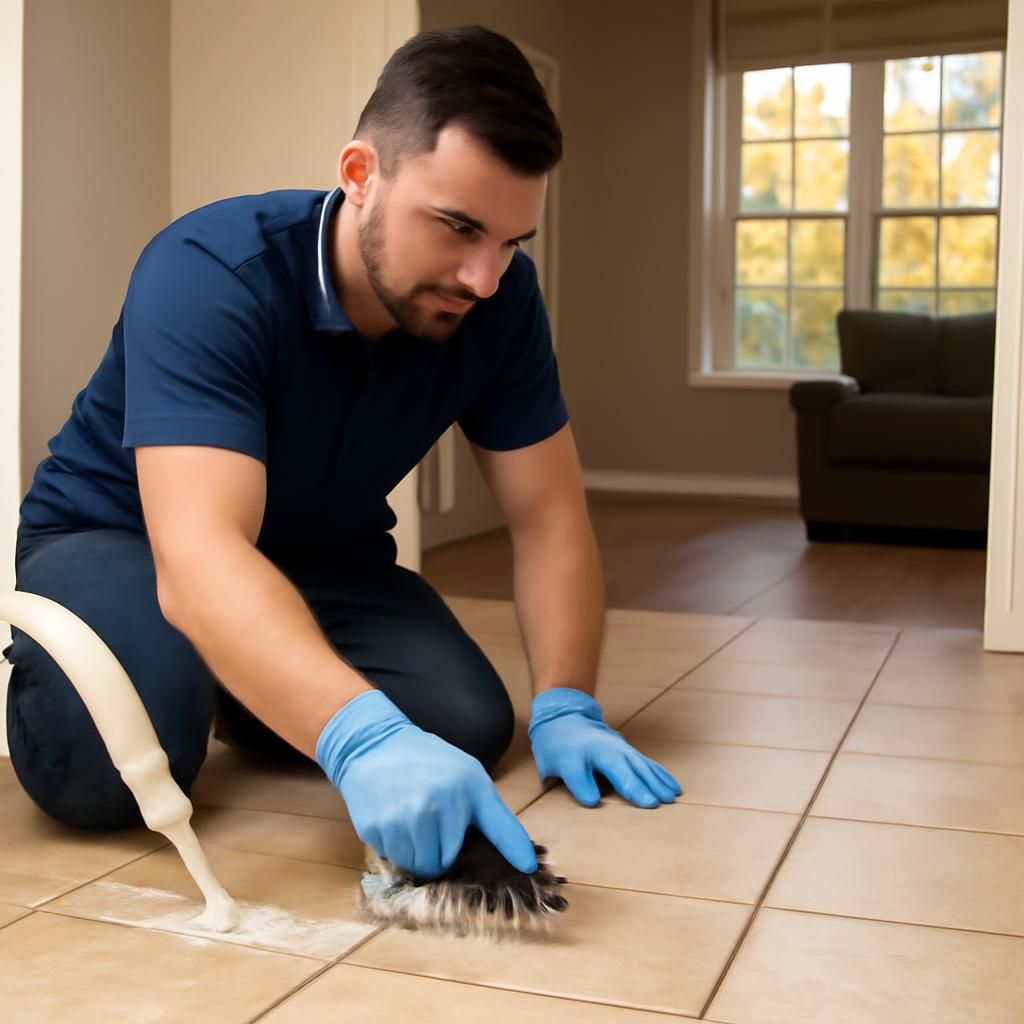
Deep clean all grout lines. Remove biological growth, soap scum, mineral deposits, and embedded soil. For heavily stained grout, this step often requires professional hot-water extraction or steam cleaning. Surface mopping does not penetrate grout pores deeply enough to prepare them for sealing.
Repair damaged or missing grout. Cracked, crumbling, or missing grout cannot be sealed back to health — it must be removed and re-grouted. Applying sealer over damaged grout traps moisture and accelerates structural failure.
Allow complete drying. Grout must be fully dry before sealer is applied — typically 24 to 48 hours after wet cleaning. Sealer applied over damp grout bonds poorly and clouds or streaks.
Apply sealer in thin, even coats. Penetrating sealers are applied with a small foam brush, applicator bottle, or sprayer, working in manageable sections. One thin coat is usually sufficient for freshly installed or previously unsealed grout; a second coat applied after a 5–10 minute wait improves coverage on especially porous material.
Wipe excess immediately. Any sealer that sits on the tile face (rather than in the grout joint) must be wiped away before it hazes over. On natural stone, this step is critical — dried sealer residue on polished surfaces requires professional removal.
Allow full cure before water exposure. Most penetrating sealers require 24–72 hours before the surface should contact water. Avoid mopping, showering, or rain exposure during this window.
Outdoor Paver Sealing: A Fall Priority
Paver sealing in areas like Cold Spring Harbor and across Suffolk County deserves its own attention. Unlike interior grout, outdoor pavers — concrete, brick, and natural stone — face ultraviolet light, freeze-thaw cycles, vehicle load, and organic growth (algae, moss) simultaneously. Fall sealing before the ground freezes:
Fills microscopic surface pores to prevent water infiltration and subsequent freeze damage
Inhibits weed germination in paver joints through the winter and into spring
Makes spring cleaning faster and less abrasive, preserving paver surface texture
Refreshes color in faded concrete and clay pavers without painting or replacement
Pavers that have not been sealed in two or more years typically need a professional clean-and-brighten treatment before resealing. Applying new sealer over oxidized or algae-laden pavers produces an uneven, blotchy finish that traps organic matter.
What to Avoid When Sealing Grout
These are not vague cautions — each describes a specific, recoverable-but-costly mistake:
Sealing in temperatures below 50°F: Most penetrating sealers require ambient temperatures above 50°F to cure correctly. Applying sealer on a cold fall day when temperatures will drop overnight prevents proper bonding and requires reapplication.
Using a sealer incompatible with your tile type: Solvent-based sealers can darken or stain some natural stones permanently. Always confirm compatibility with the tile manufacturer's specification, not just the sealer label's general claim.
Skipping grout repair before sealing: Cracked joints allow water to bypass the sealer at its weakest point. The repair step cannot be deferred.
Sealing epoxy grout: Epoxy grout is non-porous by nature. It does not need sealing, and applying penetrating sealer to it accomplishes nothing and wastes product. If you are unsure of your grout type, a professional can identify it before recommending a sealing approach.
Over-applying topical sealer on floors: Excess topical sealer on a floor surface becomes slippery when wet — a genuine slip-and-fall hazard in bathrooms and entryways.
When to Call a Professional Instead of DIY
DIY grout sealing is reasonable for small, straightforward installations with grout that is already clean, intact, and recently installed. Move to professional service when:
Grout is visibly stained, darkened, or has not been cleaned in more than two years — sealing over it will lock in the damage permanently.
Any cracked, crumbling, or missing grout is present — repair requires grout saw work and re-grouting, not just sealer.
The tiled area is large (full bathroom, commercial kitchen, retail floor) — inconsistent application across a large area produces visible sealing lines and uneven protection.
Mold is present in grout joints or suspected behind tile — sealing over active mold does not eliminate it. The EPA - Mold Moisture Control guidance is clear that surface treatment alone cannot address mold that has penetrated a substrate.
Outdoor pavers have not been sealed in several years and show efflorescence (white salt deposits), cracking, or significant biological growth.
Groutastic provides professional tile and grout cleaning, repair, and sealing throughout Huntington, NY, Suffolk County, and Nassau County — including grout repair in Nassau County and tile and grout cleaning across Long Island. A professional assessment takes the guesswork out of product selection, surface prep, and sealing sequence, and ensures the result lasts as long as the manufacturer's window allows.
Frequently Asked Questions
How often should grout be sealed?
Penetrating sealers on floor grout in moderate-traffic areas typically last one to three years. Shower grout in daily use may need resealing annually. A simple water-bead test tells you when it is time: drip water on the grout line. If it soaks in rather than beading, the sealer has worn through.
Can I seal grout myself if I just bought a house?
Only after inspection. Unknown grout age, type, and prior sealing history mean you cannot safely apply sealer without first verifying the grout is clean, intact, and compatible with the product you plan to use. A professional evaluation is worthwhile before investing in materials.
Does grout color affect which sealer I need?
Grout color itself does not determine sealer type, but some penetrating sealers are available in "color-enhancing" formulas that deepen the grout's appearance. These are useful for natural stone and darker grouts but can make light-colored grout appear unintentionally darker. Confirm the visual effect on a test area before full application.
Is paver sealing in fall different from spring sealing?
The process is identical; the timing is what differs. Fall sealing protects pavers through the most damaging season (freeze-thaw cycling in winter). Spring sealing is a reasonable alternative but means the pavers have already survived one winter unprotected. For pavers showing any wear, fall is the higher-priority window.
Published by Groutastic.
Comments