
Fall Grout Sealing in Lake Grove, NY: A Seasonal Guide

By Josh Kaplan
Key Takeaways
Fall is the ideal time to seal grout before winter moisture and freeze-thaw cycles stress tile installations.
Ask any provider about their specific sealer type (penetrating vs. topical) — the answer reveals their expertise level.
Grout must be fully clean and dry before sealing; skipping this step causes the sealer to trap dirt and fail early.
A reputable contractor will offer a clear warranty on sealer performance, not just on the labor itself.
Unfinished or crumbling grout lines should be repaired before sealing — sealer cannot fix structural damage.
Why Fall Is the Right Time to Seal Grout in Lake Grove
Sealing grout in autumn is a practical decision, not just a scheduling convenience. In Suffolk County, temperatures typically drop into the 30s and 40s by late November, and the freeze-thaw cycle that follows is one of the most damaging forces tile grout faces outdoors and in poorly insulated areas. Moisture that has worked its way into unsealed grout expands when it freezes, widening micro-cracks and accelerating deterioration.
Indoors, fall brings its own challenge: the shift from air conditioning to heat reduces relative humidity quickly, and grout that already holds moisture from summer humidity can begin cracking as it dries unevenly. Sealing before those extremes arrive — ideally in September or October — closes the grout's pores while conditions are still moderate and the sealer can cure properly.
The EPA - Mold Moisture and Your Home makes clear that moisture intrusion through tile and grout is a primary pathway for mold growth in bathrooms and kitchens. Sealing grout before the damp, closed-window season of winter is one of the most direct preventive steps a homeowner can take.
The Questions Every Lake Grove Homeowner Should Ask Before Hiring
The existing search results for grout services near Long Island are dominated by directory listings and supplier pages — none of them help you evaluate a provider once you're on the phone with them. This section fills that gap. The questions below are specific to grout sealing work, not generic contractor vetting. For each, you'll find what a confident, knowledgeable answer sounds like versus an evasive one.
1. "What type of sealer will you use, and why is it right for my tile?"
This is the single most revealing question you can ask. There are two fundamental sealer categories:
Penetrating (impregnating) sealers absorb into the grout matrix and repel water and oil from within. They don't alter the appearance of the grout and are the correct choice for most ceramic, porcelain, and natural stone installations. Brands like Aqua Mix Sealer's Choice Gold and StoneTech BulletProof are professional-grade penetrating sealers widely used in residential work.
Topical (coating) sealers form a film on the grout surface. They can be appropriate in very specific applications but peel, discolor, and trap moisture if used incorrectly — particularly problematic in wet areas like showers.
Good answer: The provider names the specific product, explains whether it's solvent- or water-based, and connects that choice to your tile type and location (bathroom, kitchen, exterior paver, etc.).
Evasive answer: "We use the best professional sealer" or "it's a commercial-grade product" with no product name or reasoning. This is a red flag.
2. "How do you prepare the grout before sealing?"
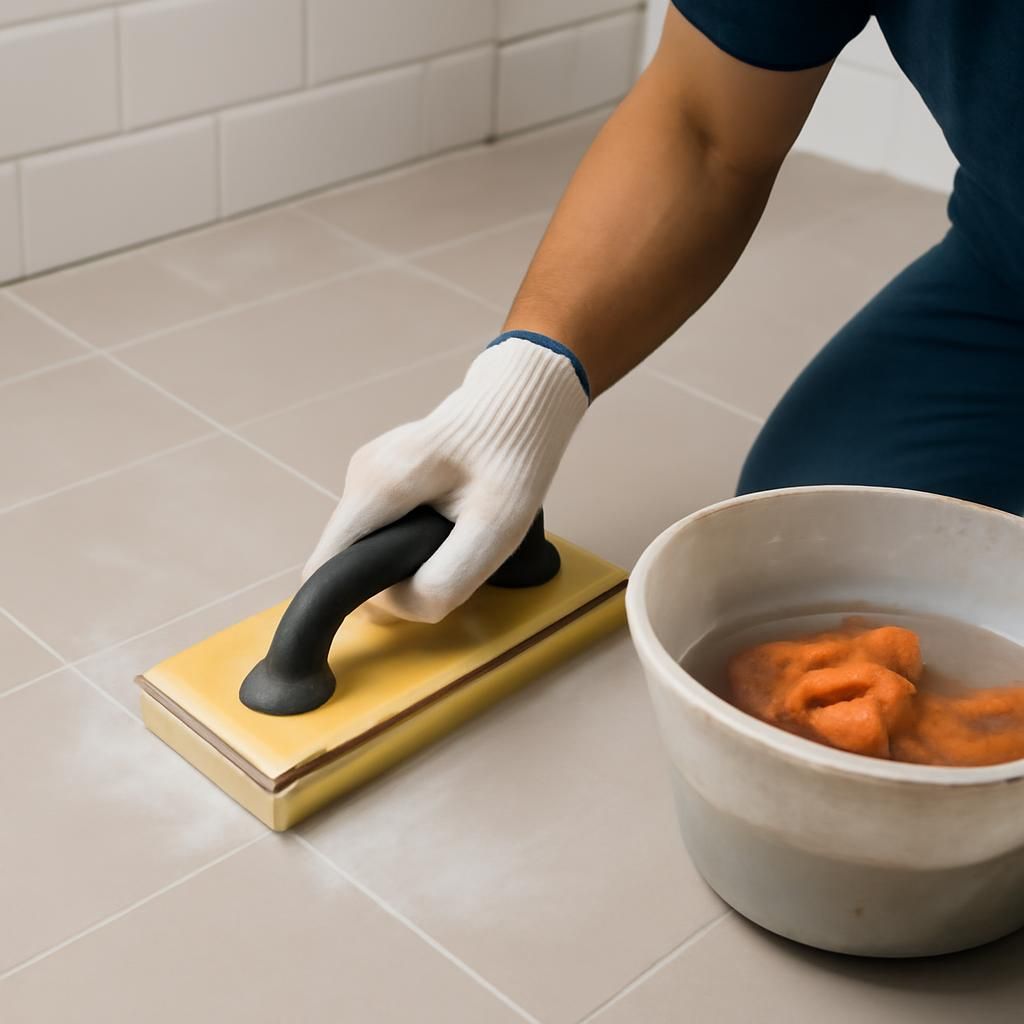
Sealer applied over dirty, stained, or still-damp grout is a common and costly mistake. The sealer will lock in the contamination and bond poorly, shortening its life dramatically. Proper preparation involves cleaning the grout thoroughly — often with a pressurized tool and an alkaline cleaner — then allowing it to dry completely. In fall conditions in Lake Grove, drying times can be longer than in summer due to lower ambient temperatures and reduced airflow.
Good answer: The provider explains a multi-step clean-then-seal process, mentions a minimum dry time (typically 24–72 hours after cleaning, depending on porosity and humidity), and asks about your ventilation situation.
Evasive answer: "We clean and seal in the same visit, usually in a few hours." Same-day clean-and-seal is sometimes workable for lightly soiled grout, but a blanket "a few hours" answer suggests they're not checking moisture levels before applying sealer.
3. "Will you repair damaged grout lines before sealing, or is that a separate service?"
Sealer is not a structural product. It cannot bridge cracks, fill voids, or re-adhere grout that has crumbled away from the joint. Applying sealer over damaged grout lines simply seals in the damage and makes it harder to address later.
The Tile Council of North America sets the industry standard that grout lines must be sound, fully cured, and free of defects before a sealer is applied. Any provider who skips an inspection of your grout's condition before starting work is cutting corners.
Good answer: The provider walks through the installation, identifies cracked or missing sections, and either includes minor regrouting in the scope of work or clearly prices it separately before starting.
Evasive answer: "We'll seal what's there" without any mention of a condition assessment.
4. "What's the expected lifespan of the seal, and what does your warranty cover?"
Penetrating sealers in residential interior applications typically last anywhere from one to five years depending on traffic, cleaning habits, and the grout's porosity. Exterior applications — pavers on a patio in Shirley or a pool deck near Setauket — face more UV and moisture stress and may need resealing more frequently.
A warranty on sealer performance is different from a warranty on labor. Ask specifically: if the sealer shows signs of failure within the warranty window (water is no longer beading on the surface), what does the contractor do?
Good answer: A clear, written statement of what's covered — product failure, application error, or both — with a defined process for follow-up.
Evasive answer: "We stand behind our work" with nothing in writing. Verbal assurances are difficult to enforce.
5. "How will you handle cleanup, and will sealant residue be left on the tile faces?"
Sealer overspray or excess product left to dry on tile faces causes a hazy, whitish film that is difficult to remove after it cures. A professional application involves careful edging and buffing of any excess sealer off the tile surface before it sets. This matters most with glazed porcelain or polished stone, where residue is most visible.
Good answer: The provider describes a buffing or wiping step as part of their standard process, and explains how soon after application they perform it.
Evasive answer: No mention of post-application cleanup, or "the tile will look great" without addressing the process.
What to Avoid: Mistakes That Damage Tile and Grout Installations
Beyond choosing the right provider, be aware of these specific risks during fall grout sealing work:
Sealing in cold or damp conditions: Most penetrating sealers require substrate temperatures above 50°F and low ambient humidity to penetrate and cure correctly. In late October or November in Lake Grove, verify that the area being sealed has been heated to a workable temperature if it's a garage, sunroom, or addition.
Using acid-based cleaners on colored grout before sealing: Acidic cleaners (such as those containing muriatic acid) can leach pigment from colored grout lines, leaving them faded or patchy before the sealer is even applied. An alkaline cleaner is almost always the correct choice for pre-seal cleaning.
Sealing over efflorescence: The white, chalky mineral deposits that appear on grout — especially on exterior pavers after summer rain — must be removed before sealing. Sealing over efflorescence traps the salts inside and the problem will worsen beneath the sealed surface.
Applying multiple coats without allowing penetration: With penetrating sealers, more coats are not better. The grout can only absorb what its pore structure allows. Excess sealer that doesn't penetrate sits on the surface, creates a sticky residue, and attracts dirt.
When to Call a Professional Instead of DIY Sealing
DIY sealing is a reasonable option for a small, accessible bathroom floor with intact grout in good condition. It becomes a poor choice — and an expensive one — in several common scenarios:
Large or complex surfaces like whole-home tile floors, patterned installations, or exterior paver areas where even coverage is difficult without professional equipment.
Grout that needs cleaning and repair before it can be sealed. Improper pre-treatment is the leading cause of premature sealer failure.
Natural stone tile — travertine, marble, slate — where the wrong sealer chemistry can etch, cloud, or permanently stain the stone face, not just the grout.
Commercial spaces where foot traffic volume and liability concerns make professional-grade application and documentation essential.
Groutastic provides professional grout cleaning, sealing, and restoration services for both residential and commercial properties in Lake Grove and across Suffolk County. If your grout is overdue for a seasonal inspection and seal, getting an expert assessment before winter sets in is the lowest-risk approach.
The EPA - A Brief Guide to Mold, Moisture and Your Home recommends that homeowners address moisture entry points — including gaps in tile and grout — before the heating season, when homes become more sealed and moisture problems intensify.
FAQ: Fall Grout Sealing in Lake Grove
Can grout be sealed outdoors in November in Suffolk County?
It depends on temperature. Most sealers require surfaces above 50°F. If the pavers or exterior tile have already dropped below that threshold, sealing should wait until spring. Applying sealer to a cold, possibly frost-carrying substrate means it won't penetrate correctly and may peel.
How do I know if my grout actually needs resealing?
The water bead test is simple and reliable: drop a few teaspoons of water on the grout line and watch. If water beads and sits on the surface, the sealer is still active. If water absorbs into the grout within a few seconds and darkens the joint, the sealer has worn away and resealing is due.
Is colored grout harder to seal than standard white grout?
Not harder, but it requires more care during cleaning and sealer selection. Some sealers can slightly alter the sheen of pigmented grout, particularly epoxy-tinted formulations. Confirm with your provider that the sealer they use is compatible with your grout color before application begins.
Do I need to stay off the sealed surface after application?
Yes. Most penetrating sealers require 24 hours of foot-traffic avoidance after application, and full cure (including water exposure) typically takes 48–72 hours. Ask your provider for the specific cure requirements of the product they're using, since timelines vary by formulation and ambient temperature.
Published by Groutastic.
Comments