
Best Grout Cleaning Near Me: Center Moriches Guide
By Josh Kaplan
Key Takeaways
Professional grout cleaning removes deeply embedded dirt that DIY scrubbing and dish soap cannot reach.
Grout cleaning in the East Moriches/Center Moriches area typically costs $224–$1,200+ depending on surface area and condition.
Sealing grout after cleaning extends results significantly and prevents rapid re-soiling.
Dawn dish soap and acidic cleaners can degrade grout over time — choose pH-neutral or grout-specific products.
If grout is crumbling, cracked, or discolored beyond surface staining, repair or regrouting may be needed before cleaning.
Best Grout Cleaning Near Center Moriches, NY: Your Complete Decision Guide
Professional grout cleaning is the most reliable way to restore tile surfaces to near-original condition, removing years of embedded dirt, soap scum, and mold that routine mopping and scrubbing simply cannot reach. If you're searching for the best grout cleaning near me in the Center Moriches, NY area, this guide walks you through exactly what to expect — from honest cost ranges and DIY limits to what professionals actually use and when it's smarter to call for help.
Is Professional Grout Cleaning Worth It?
Yes — professional grout cleaning is worth it when grout has visible discoloration, dark staining, or mildew growth that has persisted through repeated DIY attempts. Grout is a porous cement-based material. Over time, it absorbs oils, minerals, cleaning product residue, and biological growth below the surface layer — not just on top of it. Surface scrubbing with a brush moves debris around but rarely extracts what's locked inside the pores.
Professional services use truck-mounted or portable hot-water extraction systems combined with high-pressure rotary tools — such as the Turbo Hybrid or similar spinning jet heads — that blast pressurized water and commercial-grade alkaline cleaners directly into grout channels, then vacuum the emulsified grime out immediately. This is a fundamentally different mechanism than scrubbing: it pulls contamination out rather than pushing it deeper.
The result most homeowners notice: grout lines that were charcoal-gray return to their original beige, white, or tan — not because the surface was bleached, but because the material inside the pores was actually removed.
How Much Does Grout Cleaning Cost Per Square Foot?
Grout cleaning costs vary based on tile type, grout condition, and whether sealing is included. Based on regional pricing data for the East Moriches and greater Suffolk County area, total project costs typically fall between $224 and $1,202, with many standard residential jobs landing in the $536–$744 range. For a detailed breakdown of what drives these numbers, see this tile and grout cleaning cost guide for Long Island. Per-square-foot pricing generally runs from roughly $0.75 to $3.00 or more, depending on:
Tile type: Natural stone (travertine, marble, slate) requires gentler chemistry and costs more than ceramic or porcelain
Grout width and depth: Wider, deeper grout channels hold more contamination and take longer to clean
Condition: Heavily soiled or mold-affected grout requires pre-treatment dwell time and multiple passes
Sealing: Penetrating sealer application after cleaning adds cost but is strongly recommended and often priced separately
Area size and accessibility: Small bathrooms, backsplashes, and awkward layouts may carry a minimum service charge
Always ask for a written quote that separates cleaning from sealing, and clarify whether the quote covers just floors or also includes shower walls and niches.
DIY vs. Hiring a Pro: How Do You Know Which Situation You're In?
DIY grout cleaning is appropriate for lightly soiled surfaces where staining is recent and hasn't penetrated deep into the grout body. A professional is the smarter call when staining is old, widespread, or biological — or when you've already scrubbed multiple times without meaningful improvement.
When DIY Works
Surface-level dust, light soap scum, or a few months of buildup
Small areas like a single bathroom or laundry room
Grout is structurally sound (no cracking, crumbling, or missing sections)
You're comfortable with proper ventilation and safety when using alkaline cleaners
When a Professional Is the Right Call
Years of discoloration that hasn't budged with repeated scrubbing
Black or pink mold present in shower grout (a health concern requiring proper extraction)
Large areas — full kitchen floors, open-plan living spaces, commercial tile
You're preparing to seal or recolor grout, which requires a truly clean base
The property is being listed, rented, or sold
Center Moriches homeowners with older homes — common in this part of Suffolk County — often discover that grout was never sealed after installation, which accelerates staining dramatically. In these cases, a professional clean-and-seal is almost always more cost-effective than repeated DIY attempts over months.
What Is the Best Way to Deep Clean Grout?
The most effective deep cleaning method combines a pH-appropriate pre-treatment cleaner, adequate dwell time, mechanical agitation, and full extraction of the loosened debris. Here's how professionals approach it, and how to adapt it for DIY:
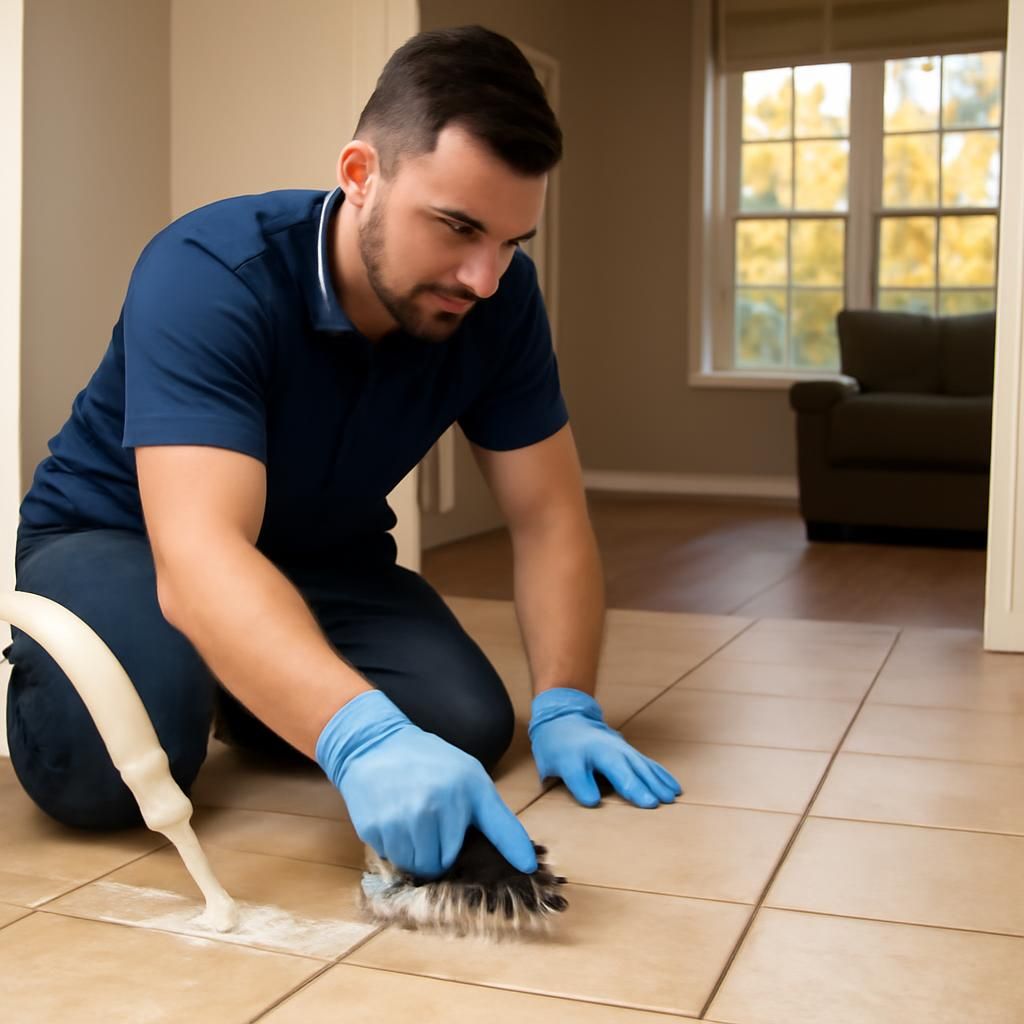
Clear and sweep the surface — Remove loose debris so it doesn't interfere with the cleaning solution
Apply a grout-specific alkaline cleaner — Alkaline chemistry breaks down grease and organic material; allow 5–10 minutes dwell time
Agitate with a stiff-bristled nylon brush — A drill-mounted grout brush speeds this up significantly for large areas; use linear strokes along the grout channel, not circular
Rinse thoroughly — Residual cleaner left in grout attracts dirt faster; professionals use hot water extraction; DIY should rinse twice with clean water
Allow to dry completely — 24–48 hours before applying sealer; damp grout won't accept penetrating sealer properly
Apply penetrating sealer — Wipe into grout lines, allow penetration per product instructions, and buff excess from tile face
What Do Professionals Use to Clean Grout?
Professional grout cleaners rely on a combination of equipment and chemistry that isn't typically available at retail stores. The core tools are truck-mounted or portable hot-water extraction machines paired with rotary pressure heads that deliver water at temperatures up to 230°F — hot enough to kill mold spores and liquefy grease without damaging most tiles. The chemistry side typically involves:
High-alkaline pre-sprays (pH 10–13) for grease, soap scum, and organic staining on standard cement grout
Enzyme-based treatments for biological growth and odor in shower grout
Oxygen-based brighteners (similar to OxiClean chemistry) as a secondary treatment for stubborn discoloration
Neutral pH solutions for epoxy grout or polished stone tile, where high-alkaline products could etch or dull the finish
After cleaning, reputable professionals apply a penetrating fluoropolymer or silicone-based sealer — not a topical coating — that soaks into the grout body and repels both oil-based and water-based staining at the molecular level. If you want to understand what the full professional process looks like before booking, this overview of what to expect from a grout cleaning service on Long Island covers it step by step.
What Should You NOT Use to Clean Grout?
Several common household products damage grout or tile and should be avoided even though they're widely recommended online:
Vinegar and lemon juice: Acidic cleaners dissolve the calcium compounds in cement grout over time, weakening the structure and making it more porous — which causes faster re-soiling. Never use on natural stone tiles.
Bleach as a routine cleaner: Chlorine bleach disinfects but doesn't extract debris; it can also degrade colored grout pigment and should be limited to mold-kill situations, not general cleaning
Dawn dish soap (and similar surfactants): Dish soap won't damage grout chemically, but it leaves a surfactant film that residually attracts and traps dirt — making grout get dirty faster after cleaning. It is not an effective grout cleaner.
Steam mops on unglazed stone: High-moisture steam can force water into unsealed natural stone and cause interior damage or efflorescence
Steel or metal brushes: Scratch ceramic and porcelain glaze permanently; always use nylon-bristled brushes
What Eats Away at Grout Over Time?
Several factors actively degrade grout, and understanding them helps Center Moriches homeowners make smarter maintenance decisions. The primary culprits are:
Acidic cleaners used repeatedly (as detailed above)
Hard water mineral deposits — common in parts of Long Island — which create calcium scale that bonds tightly to grout and, if removed improperly, can pull grout surface particles with it
Thermal cycling in outdoor or unheated areas (freeze-thaw in Suffolk County winters causes microcracking in grout joints over years)
Movement in the substrate — subfloor flex or settling causes grout to crack at stress points, and cracked grout lets moisture reach the setting bed, accelerating deterioration from below
Mold and mildew root structures in shower grout, which physically penetrate the pore network and, over years, can compromise grout integrity
Repair vs. Replace: When Cleaning Isn't Enough
Cleaning restores grout that is discolored but structurally intact. If grout is crumbling, missing, cracked along tile edges (especially in corners and expansion joints), or if water is getting behind tiles, cleaning is not the right first step — repair or regrouting is.
Signs you need repair before or instead of cleaning:
Grout is powdering or coming out when you press it
Tiles shift or feel hollow when pressed (debonding)
Caulk in corners and transitions has failed (this is a separate material from grout and must be replaced, not cleaned)
Water staining on the ceiling below a tiled shower indicates moisture breach
Not sure whether your grout needs cleaning or something more? Reviewing the 5 signs your grout needs professional repair can help you determine the right next step before calling anyone out. Groutastic's residential and commercial restoration services cover both cleaning and repair, so a single assessment can determine the right sequence without guesswork.
Frequently Asked Questions: Grout Cleaning Near Center Moriches, NY
Does anything really clean grout effectively?
Yes — professional hot-water extraction with alkaline pre-treatment genuinely cleans grout by removing embedded debris from inside the pore structure, not just the surface. DIY oxygen-based cleaners (with adequate dwell time and proper agitation) also produce real results on lightly to moderately soiled grout, but cannot match professional equipment on heavily stained or large-area surfaces.
Can I use Dawn dish soap to clean my grout?
Dawn dish soap won't damage grout, but it is not an effective grout cleaner. The surfactants leave a residue film inside the grout pores that attracts and holds new dirt, causing the surface to re-soil faster than it would otherwise. Use a pH-neutral grout cleaner or an oxygen-based product instead.
How long does professional grout cleaning last?
With proper sealing applied after cleaning, results typically last one to three years in high-traffic areas and longer in lower-traffic spaces, depending on cleaning habits and foot traffic. Using a pH-neutral floor cleaner for routine mopping — never acidic or soap-based products — extends the results significantly.
Do I need to seal grout after cleaning?
Yes, for cement-based grout. Cement grout is inherently porous and will re-stain quickly without a penetrating sealer. Epoxy grout is non-porous and does not require sealing. If you're unsure which type you have, a professional can identify it during an assessment. Some homeowners also explore grout color sealing as a longer-lasting alternative to standard sealing — it restores an even color while protecting the surface at the same time.
This article is based on real published content from Groutastic, cites authoritative sources, and is reviewed before publication.
Comments