
Best Commercial Tile & Grout Cleaning Near Brookville, NY
Updated: 5 days ago

By Josh Kaplan
Key Takeaways
Professional tile and grout cleaning removes deep-set seasonal grime that mopping and DIY scrubbing cannot reach.
Nassau County's freeze-thaw cycles cause grout cracking and tile shifting — inspect surfaces every spring and fall.
Matching the right cleaning method (steam, pressure, chemical) to your tile type prevents surface damage and wasted cost.
Discolored, crumbling, or hollow-sounding tiles are signs you need restoration, not just cleaning.
Hiring a certified local service like Groutastic protects tile warranties and extends the life of your investment.
What Is Commercial Tile and Grout Cleaning — and Why Brookville Homeowners Need It?
Commercial tile and grout cleaning is a professional-grade service that uses high-pressure steam, truck-mounted extraction, and pH-balanced chemical solutions to remove embedded dirt, mold, bacteria, and mineral deposits from tile surfaces and porous grout lines — results that household mopping physically cannot achieve. For homeowners in Brookville, NY, the seasonal transition from winter to spring (and fall to winter) is the most critical time to assess and restore tile surfaces, because Nassau County's freeze-thaw weather cycle is one of the most damaging forces tile and grout quietly absorbs.
How Nassau County's Seasons Damage Tile and Grout
Nassau County experiences genuine freeze-thaw cycling through late November into March. When temperatures swing above and below 32°F repeatedly, water that has seeped into porous grout contracts and expands, widening micro-cracks into visible fractures. In Brookville specifically — where many homes feature older tile installations in mudrooms, kitchens, and finished basements — this seasonal stress accumulates year over year.
The damage pattern is predictable: grout lines first absorb moisture from tracked-in snow and ice melt, then freeze overnight. Come spring, those same grout lines show as crumbling, discolored, or completely missing in high-traffic zones near entryways. Nearby communities like Laurel Hollow and Lynbrook share the same Nassau County microclimate, so the post-winter tile assessment is a near-universal need across this service area.
Common post-winter damage signs to look for:
Grout cracking or crumbling — visible fractures along or across grout lines
Hollow-sounding tiles — tap with a coin; a dull thud means the adhesive bond has failed beneath
Efflorescence — white chalky mineral deposits on grout surfaces caused by water migration
Darkened or black grout lines — mold and mildew embedded from winter humidity and salt residue
Grout color inconsistency — uneven fading from repeated ice-melt chemical contact
Which Cleaning Method Is Right for Your Tile Type?
Matching the cleaning method to the tile material is the single most important technical decision in commercial tile and grout cleaning — the wrong method can etch, scratch, or permanently discolor a surface. Here is a direct comparison of the three primary professional methods:
Method | Best For | Not Suitable For | Key Mechanism |
Truck-Mounted Steam Extraction | Ceramic, porcelain, large-format tile | Natural stone (marble, travertine) — heat can cause thermal shock | High-temperature steam loosens debris; powerful vacuum extracts it |
Low-Pressure Chemical Treatment | Natural stone (marble, slate, limestone) | Unglazed tile — alkaline cleaners can alter surface texture | pH-neutral or stone-safe solutions dissolve stains without abrasion |
Rotary Pressure Scrubbing | Heavily soiled commercial floors, epoxy grout | Glazed decorative tile — rotating brush can scratch the glaze | Mechanical agitation breaks up compacted grease and grime |
A non-obvious fact worth knowing: epoxy grout — the dense, non-porous type used in many commercial kitchens and newer bathroom renovations — does not respond well to steam at sustained high temperatures. It is highly stain-resistant but can soften under prolonged heat exposure. Rotary scrubbing with a degreaser is the correct method for epoxy grout; many generic cleaning services miss this distinction. For a deeper look at how cleaning requirements differ across stone and tile materials, see our guide on natural stone vs tile sealing key differences.
What Does a Professional Tile Restoration Service Actually Include?
A full tile and grout restoration service goes well beyond cleaning. When you hire a qualified provider like Groutastic for commercial tile and grout cleaning on Long Island, the process typically covers:
Surface assessment — identifying tile type, grout condition, adhesion failures, and water damage
Deep cleaning — method selected based on tile material (see table above)
Grout repair or regrouting — removing deteriorated grout and packing in fresh material, color-matched to the original
Grout sealing — applying a penetrating sealer (not a surface coat) to block future moisture intrusion
Color sealing (optional) — applying a pigmented sealer to restore uniform color across aged or stained grout lines
Tile repair or replacement — addressing cracked, loose, or hollow tiles before sealing
One step homeowners frequently underestimate: grout sealing after cleaning is not optional. Freshly cleaned grout is more porous and more vulnerable to re-staining than grout that has built up years of surface residue. A penetrating silicone- or fluoropolymer-based sealer fills those open pores and dramatically extends the time before your next service is needed.
Are There Safety Risks With DIY Grout Cleaning?
Yes — and the risks are specific, not just vague caution. Using the wrong product on the wrong surface is the most common cause of expensive, irreversible tile damage.
Acidic cleaners (vinegar, CLR, acid-based grout cleaners) on natural stone — acids etch calcium-based stones like marble, travertine, and limestone. A single application can permanently dull a polished surface that cost thousands of dollars to install.
Bleach on colored grout — sodium hypochlorite bleaches pigment from sanded grout, causing permanent discoloration. It also degrades the binder in cement-based grout with repeated use, accelerating crumbling.
High-pressure consumer washers on wall tile — consumer-grade pressure washers cannot regulate pressure precisely enough for vertical tile. They force water behind tiles, breaking the adhesive bond from behind — damage that does not appear immediately but causes tiles to pop off weeks later.
Wire brushes or abrasive pads on glazed tile — permanently scratches the protective glaze, making the surface more porous and harder to clean going forward.
The EPA’s guidance on indoor mold and moisture emphasizes fixing leaks, controlling humidity, and cleaning and drying affected materials. Cleaning visible tile and grout does not repair a hidden leak or replace a damaged waterproofing system.
When Should You Call a Professional Instead of DIY?
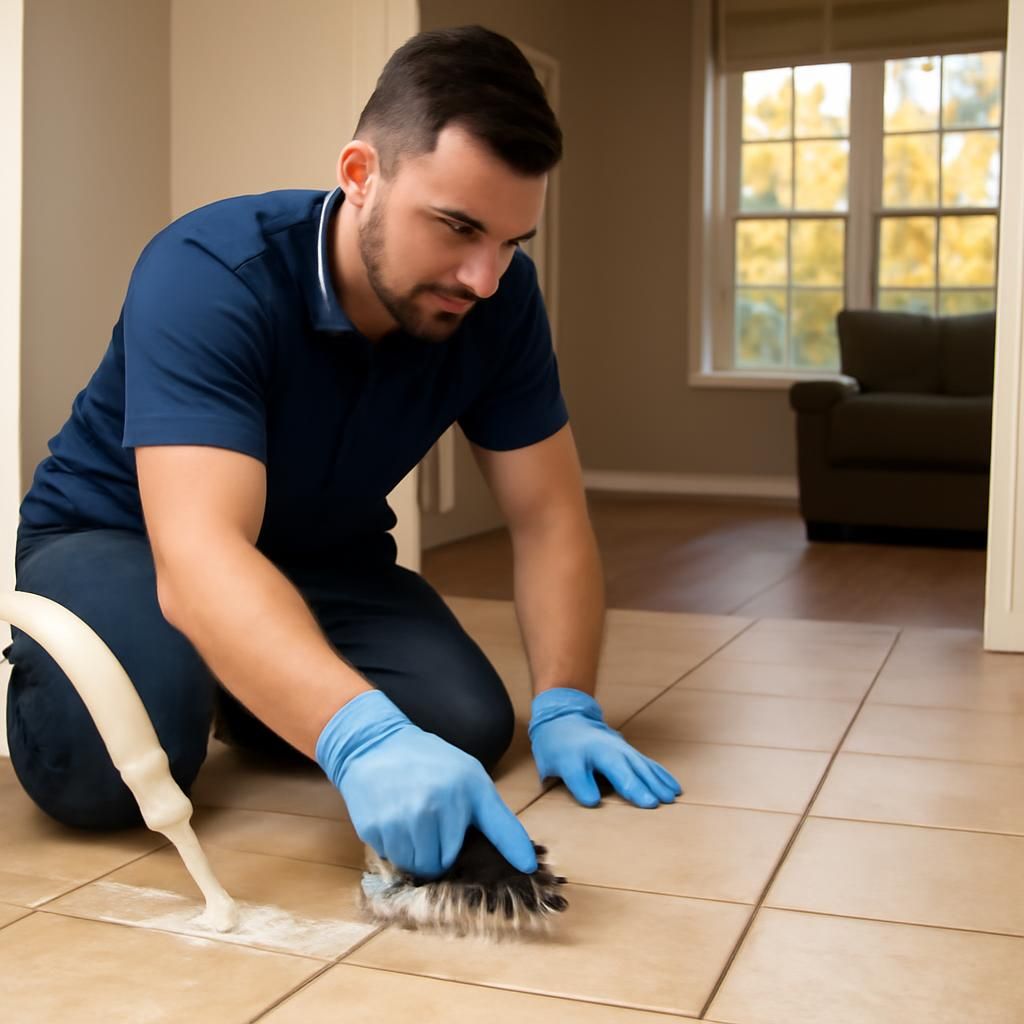
DIY cleaning with a stiff-bristle nylon brush and a pH-neutral cleaner is reasonable for routine monthly maintenance on ceramic or porcelain tile in low-traffic areas. It is NOT the right approach when:
Grout lines are cracked, missing, or crumbling (cleaning will not fix structural failure)
You hear hollow sounds when tapping tiles (adhesion failure — needs professional assessment)
You have natural stone surfaces of any kind
Black mold is visible in grout lines (surface scrubbing does not address the colony growing beneath)
The property is a commercial or rental space where tile condition affects liability and tenant health
Post-winter damage assessment reveals multiple problem areas — piecemeal DIY leaves gaps that worsen over time
Groutastic provides both residential and commercial surface cleaning and restoration services across the Brookville and Nassau County area, meaning one visit can cover a full property assessment — from entryway mudroom tile to basement flooring — rather than treating each room as a separate project. If you manage multiple units or buildings, our guide on commercial tile and grout cleaning for Long Island property managers covers what to look for when scheduling service across a portfolio.
Frequently Asked Questions: Tile and Grout Cleaning Near Brookville, NY
How often should tile and grout be professionally cleaned?
For most residential kitchens and bathrooms in Nassau County, professional cleaning every 12 to 18 months is appropriate. High-traffic commercial spaces — restaurants, retail, healthcare — typically need service every 3 to 6 months. After a Nassau County winter, a spring assessment is always worthwhile regardless of your last cleaning date.
How long does a professional tile cleaning take?
A standard bathroom (50–80 sq ft of tile) typically takes 2 to 3 hours including cleaning, repair, and sealing. A full kitchen floor or large entryway may take 4 to 6 hours. Commercial spaces are quoted by square footage. Surfaces must dry 24 hours before heavy foot traffic after sealing.
Does grout sealing really make a difference?
Yes — a penetrating grout sealer, applied after professional cleaning, significantly reduces moisture absorption and stain penetration. It does not make grout impervious, but it dramatically slows the rate at which dirt, mold, and mineral deposits re-accumulate. Think of it as sunscreen for your grout: it does not block everything, but it multiplies the time before damage sets in.
What is the difference between grout cleaning and grout restoration?
Grout cleaning removes surface and embedded contamination from structurally sound grout. Grout restoration goes further — it includes repairing or replacing cracked or missing grout, applying color sealers to restore uniform appearance, and addressing the underlying cause of deterioration (usually moisture). Cleaning is maintenance; restoration brings damaged grout back to serviceable condition. For a full breakdown of what restoration entails across different scenarios, our tile restoration guide for the Atlantic Beach area covers the process in detail.
Can tile be restored without replacement?
In most cases, yes. Cracked or chipped tiles can sometimes be repaired with color-matched epoxy filler. Hollow tiles — where the adhesive has failed — must be re-adhered or replaced; there is no surface-level fix for a de-bonded tile. A professional assessment determines which tiles can be saved and which need replacement before any cleaning begins. If you are weighing your options, see our comparison of tile resurfacing vs. replacement to understand which approach makes financial sense for your situation.
Conclusion: The Right Time to Act Is Before the Next Season Sets In
Commercial tile and grout cleaning is not a cosmetic luxury — for Brookville, NY homeowners, it is a practical response to the real seasonal stress that Nassau County's freeze-thaw cycles impose on tile surfaces every single year. The window between seasons is the ideal time to assess damage, restore grout integrity, and seal surfaces before the next round of humidity, temperature swings, or foot traffic compounds the problem.
Whether you are managing a residential home, a rental property, or a commercial space near Brookville or surrounding communities like Long Beach or Malverne, Groutastic offers the professional tile and grout restoration expertise to assess, clean, repair, and protect your surfaces correctly — the first time. Contact Groutastic today to schedule your seasonal tile assessment before small issues become expensive replacements.
This article is based on real published content from Groutastic, cites authoritative sources, and is reviewed before publication.
Comments