
Tile & Grout Cleaning in East Patchogue, NY: Local Guide

By Josh Kaplan
Key Takeaways
Professional tile and grout cleaning restores grout color and removes embedded dirt that mopping cannot reach.
East Patchogue homeowners should book 2–4 weeks ahead during spring and fall, when demand peaks.
Steam cleaning is effective but grout should be resealed afterward to prevent rapid re-soiling.
Mold in grout lines is a health concern — professional extraction and sealing addresses it more thoroughly than surface scrubbing.
Stone and grout restoration goes beyond cleaning to fix etching, staining, and damaged sealant on natural stone surfaces.
What Homeowners in East Patchogue, NY Can Realistically Expect from Tile & Grout Cleaning
Professional tile and grout cleaning removes the embedded soil, soap scum, mold, and mineral deposits that routine mopping pushes around rather than lifts out. For most households in East Patchogue and nearby communities like Flanders and Gordon Heights, a professional cleaning restores grout lines to close to their original color — something no amount of scrubbing with a household brush fully achieves on its own. The process typically takes two to four hours for an average bathroom and kitchen combined, and the floor is walkable within 30–60 minutes of completion.
This guide covers what local availability looks like, how professionals actually do the work, when DIY methods make sense (and when they don't), and how to plan your booking around the seasonal demand patterns common to Suffolk County.
Is Professional Tile and Grout Cleaning Worth It?
Yes — with one important qualifier. If your grout is lightly soiled and was sealed within the last two years, a targeted DIY effort may be enough to maintain it. But if grout lines have gone from white or beige to gray or brown, if there are dark spots that don't respond to household cleaners, or if the grout smells musty, professional cleaning delivers results that DIY cannot. The core reason is equipment: truck-mounted or high-powered portable extraction units generate water pressure and vacuum recovery far beyond what consumer steamers or scrub brushes produce.
For natural stone tile — travertine, marble, slate — professional cleaning also prevents the accidental etching and sealant damage that the wrong cleaner causes instantly and permanently.
How Professionals Actually Clean Tile and Grout
Understanding the process helps you set realistic expectations and evaluate quotes. A professional cleaning job follows these stages:
Pre-inspection: The technician identifies tile type (ceramic, porcelain, natural stone), grout condition, existing sealant, and problem areas like mold or heavy efflorescence.
Pre-treatment: A pH-appropriate cleaning solution is applied to the grout lines and allowed to dwell — typically 5 to 10 minutes — to break down grease, soap scum, and mineral deposits. For ceramic or porcelain, a mild alkaline cleaner is standard. For natural stone, only pH-neutral solutions are safe.
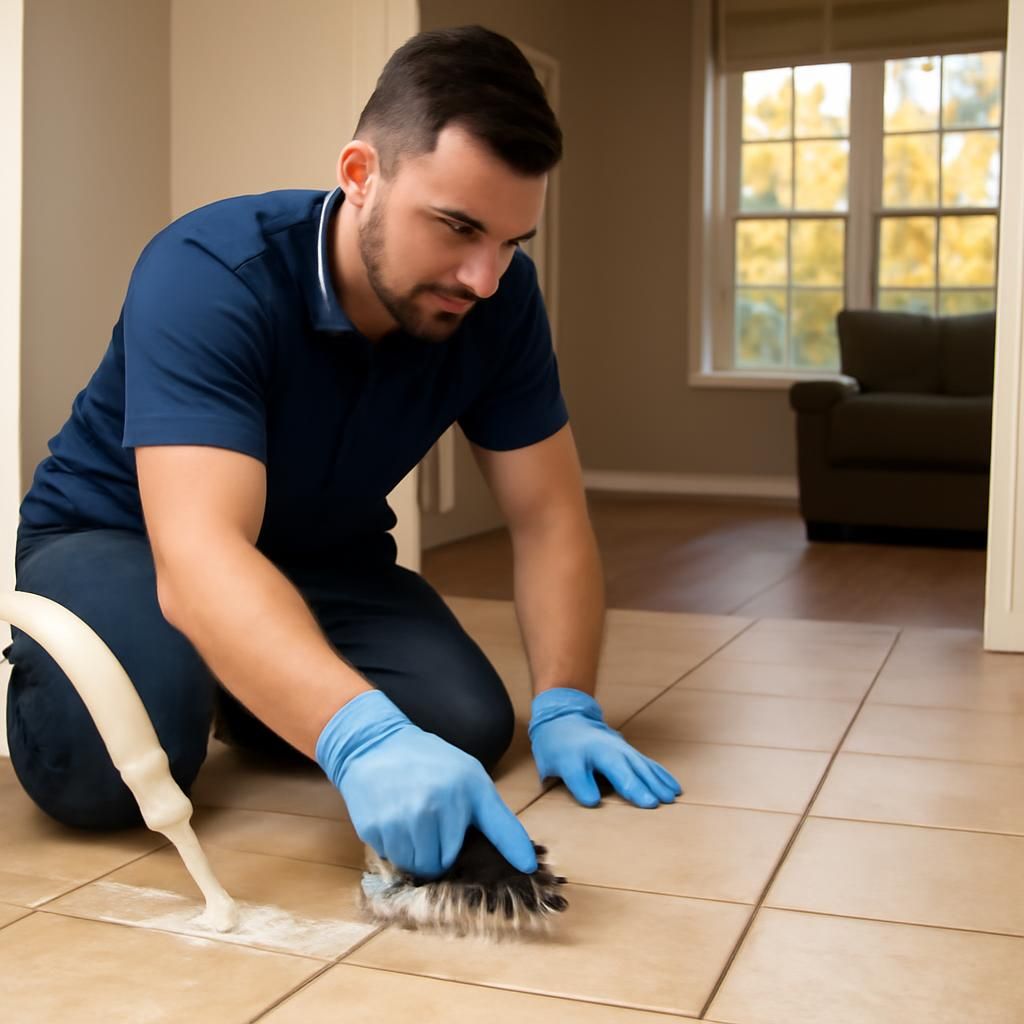
Mechanical agitation: A rotary or oscillating brush works the solution into the grout pores. This step is what separates professional results from surface-only cleaning.
High-pressure hot water extraction: A spinning-head tool (commonly called a "spinner" or "turbo tool") blasts hot water into the grout lines and simultaneously vacuums the dirty water away. This leaves grout visibly lighter and the tile surface free of residue.
Rinse and dry pass: Any remaining solution is flushed and extracted. A final dry pass speeds drying time.
Sealing (recommended): A penetrating sealer is applied to grout lines to slow future re-soiling and make routine maintenance effective again.
Technicians certified through the IICRC - Institute of Inspection Cleaning and Restoration Certification follow documented standards for solution selection, dwell time, and temperature control — details that meaningfully affect results on different tile types.
Do You Have to Reseal Grout After Steam Cleaning?
Yes, and this is the most commonly overlooked step. Steam cleaning and hot water extraction open the pores of grout and strip any remaining sealant residue. Unsealed grout re-soils faster than before because it is now fully porous. Resealing within 24–48 hours of professional cleaning locks in the results and can extend the interval between deep cleanings from one year to two or more, depending on foot traffic. A penetrating silicone- or fluoropolymer-based sealer is the correct choice for grout; topical coatings seal only the surface and chip over time.
Mold in Grout: More Than a Cleaning Problem
Shower grout in Long Island homes — particularly in bathrooms with limited ventilation — is one of the most common places for mold to establish itself. The issue is not just cosmetic. The EPA - Mold Cleanup in Your Home notes that mold growth on porous surfaces like grout should be treated aggressively, because surface cleaning alone does not eliminate mold that has penetrated the material. Professional extraction removes the biological matter more completely, and sealing afterward deprives mold of the moisture pathway it needs to return.
The American Lung Association - Healthy Home Tips also cautions that using strong chemical cleaners in enclosed bathrooms without adequate ventilation can irritate airways — a practical reason to consider professional service, where the technician manages both chemical selection and airflow, over aggressive DIY bleach scrubbing in a small shower stall.
Best Way to Deep Clean a Tile Floor and Grout at Home
When the soil level is moderate and professional service isn't the immediate plan, this approach gets the best DIY results:
Use a pH-neutral or mild alkaline cleaner appropriate to your tile type. Vinegar is effective on mineral deposits but will etch natural stone and degrade grout sealant over time — do not use it on marble, travertine, or limestone.
Apply and dwell: Spray the cleaner and let it sit for 5 minutes before scrubbing. Immediate scrubbing reduces effectiveness.
Use a stiff-bristled grout brush — not a metal wire brush, which damages grout. A dedicated narrow grout brush or an electric toothbrush-style scrubber works well for shower grout lines.
Rinse thoroughly: Cleaning solution left in grout lines attracts new dirt faster. Two rinse passes are better than one.
Dry the surface: Standing water in grout joints promotes mold. Wipe or squeegee shower walls and bathroom floors after each use.
Can You Use Dawn Dish Soap on Tile and Grout?
Dawn and similar dish soaps are gentle enough not to damage ceramic or porcelain tile and won't etch stone — but they leave a film that attracts soil if not rinsed completely. For routine light cleaning, a few drops diluted in warm water and rinsed well is acceptable. For deep cleaning, a purpose-made tile and grout cleaner is more effective because it is formulated to break down the specific soils (mineral scale, body oils, soap scum) that accumulate in grout lines.
Can You Steam Clean Shower Grout?
Yes — consumer steam cleaners do lift mold and soap scum from grout, and they avoid introducing chemical residue. The limitation is extraction: a consumer steamer applies steam but doesn't vacuum the loosened debris away. You still need to wipe or rinse it manually, which means redepositing some soil. Professional steam cleaning paired with simultaneous high-pressure extraction solves this. Also note: do not steam clean natural stone regularly, as repeated heat and moisture cycling can weaken the bond between stone and setting mortar over time.
Stone and Grout Restoration: When Cleaning Isn't Enough
Stone and grout restoration is a distinct service from cleaning, and the distinction matters for budgeting and expectations. Cleaning removes surface and embedded soil. Restoration addresses physical damage: etched marble that has lost its polish, travertine pitted by acidic cleaners, grout that is cracked or missing in sections, or tile with deep staining that has bonded chemically to the surface.
Restoration typically involves honing (grinding the stone surface flat), regrouting damaged sections, and applying a fresh protective finish. For East Patchogue homeowners with older homes that have original natural stone or ceramic tile floors, restoration can be dramatically more cost-effective than full tile replacement — and the result is a surface that looks newer than cleaning alone could achieve.
Local Availability and Scheduling in East Patchogue, NY
Suffolk County's seasonal patterns directly affect when you can get a tile and grout cleaning appointment — and how quickly.
Spring (April–June): The busiest window. Homeowners emerge from winter and notice what months of closed windows and tracked-in grime have done to floors and showers. Lead times of two to four weeks are common. Book early if you have a specific date in mind — pre-moving-in appointments especially fill fast.
Summer (July–August): Demand stays high but schedules open slightly mid-week. Rental properties in communities along the South Shore, including areas near East Patchogue, often need turnovers between tenants. Commercial kitchens and food-service businesses also schedule summer cleanings during slower periods.
Fall (September–October): A second demand spike as homeowners prepare for the holiday season and want kitchens and bathrooms cleaned before guests arrive. Similar two-to-three-week lead times as spring.
Winter (November–March): The easiest time to get a quick appointment — sometimes within the same week. If your schedule is flexible, booking during this window often means faster service and more scheduling options for multi-room jobs.
For commercial accounts — restaurants, medical offices, retail spaces in the area — scheduling flexibility is more constrained because cleaning typically needs to happen outside business hours. Communicating that requirement upfront when booking avoids delays.
What to Avoid: Mistakes That Damage Tile and Grout
Acidic cleaners on natural stone or sanded grout: Vinegar, lemon juice, and many "all-natural" bathroom cleaners are acidic enough to etch marble, dissolve the calcium carbonate in limestone and travertine, and degrade grout sealant. The damage is permanent without professional honing.
Bleach on colored grout: Chlorine bleach strips color from pigmented grout, leaving uneven, faded lines. It also does not address mold below the surface — it oxidizes the visible color while leaving the underlying root structure intact.
Pressure washing indoor tile: Outdoor-grade pressure washers drive water behind wall tiles and under floor tiles, compromising the adhesive and setting mortar. This creates tile delamination and eventual cracking — a far more expensive fix than the original cleaning problem.
Abrasive scrubbers on polished stone: Steel wool, green scrubbing pads, or stiff wire brushes scratch the finish from polished marble and porcelain instantly.
When to Call a Professional Instead of DIYing
DIY methods are appropriate for maintenance between professional cleanings — routine mopping, weekly grout brushing in showers, and prompt cleanup of spills. Move to professional service when:
Grout color has changed significantly and hasn't responded to two or more rounds of DIY cleaning.
There is visible mold, a persistent musty smell, or any black spotting in grout joints.
The tile surface is natural stone and you are uncertain which cleaners are safe.
The area is a commercial kitchen, medical facility, or any space with sanitation requirements.
You need stone and grout restoration — etching, deep staining, cracked grout, or missing sections — rather than routine cleaning.
Groutastic serves residential and commercial clients across East Patchogue and the surrounding Suffolk County area, including stone and grout restoration for surfaces where cleaning alone won't reverse existing damage. Getting an accurate scope — cleaning vs. restoration — before booking saves both time and money on any tile project.
Published by Groutastic.
Comments