
Tile & Grout Cleaning and Sealing: East Meadow Homeowners' Top Questions Answered

By Josh Kaplan
Key Takeaways
Seal grout within 48–72 hours of cleaning for maximum penetration and stain resistance.
Nassau County's humid summers and damp winters make annual grout sealing especially important for East Meadow homes.
Penetrating (impregnating) sealers outlast topical sealers on floor grout by two to three years.
Vinegar and bleach damage grout and sealers — use pH-neutral cleaners instead.
Professional cleaning is worth it when DIY scrubbing no longer lifts staining or when grout is visibly eroding.
Tile and Grout Cleaning & Sealing in East Meadow, NY — Your Questions Answered
Most tile surfaces look clean long after their grout has stopped protecting your floor or wall. East Meadow homeowners regularly contact Groutastic with the same handful of questions: How often should I seal? What cleaner won't wreck my grout? Why does my freshly mopped bathroom still look dingy? This page answers those questions directly, with enough detail to help you act — or know when to call a professional.
How Often Should I Clean and Seal Grout in an East Meadow Home?
For most residential tile floors in Nassau County, a professional deep clean and reseal is appropriate every 12 to 18 months. High-traffic areas — kitchen floors, mudroom entries, and shower stalls — benefit from annual attention. Low-traffic areas like a spare bathroom may go 24 months before needing professional service.
The local climate matters. East Meadow sits in a humid coastal climate where indoor humidity stays elevated through summer, and winter salt tracked in from driveways and sidewalks works into porous grout. That combination accelerates both staining and sealer breakdown compared with drier inland regions.
A simple field test tells you when it's time: drop a few water beads onto your grout line. If water absorbs within 30 seconds rather than beading up, the sealer is depleted and the grout is exposed.
What Is the Difference Between a Penetrating Sealer and a Topical Sealer?
This is one of the most common — and most consequential — questions homeowners ask, because choosing the wrong type is a hard mistake to undo.
Feature | Penetrating (Impregnating) Sealer | Topical (Surface) Sealer |
How it works | Absorbs into grout pores, repels moisture from within | Forms a coating on top of the grout surface |
Typical lifespan on floor grout | 3–5 years | 1–2 years |
Appearance change | None (natural look) or slight color enhancement | Can add sheen or gloss |
Best application | Floor grout, shower grout, high-traffic areas | Decorative backsplashes, very low-traffic walls |
Failure mode | Gradual depletion — easy to reapply | Peeling, flaking — must be stripped before reapplication |
For the vast majority of East Meadow residential applications, a penetrating sealer is the right choice. Topical sealers can trap moisture beneath the coating, especially in showers, which creates conditions favorable to mold growth — a concern the EPA - Mold Cleanup in Your Home guidance underscores when discussing the importance of controlling moisture at the surface level.
When Should I Apply Sealer After Cleaning?
Seal grout within 48 to 72 hours of a professional or thorough DIY cleaning. This window matters for two specific reasons:
The pores are open. Cleaning removes the biofilm, soap scum, and oxidized residue that partially close grout pores. While the pores are open, sealer penetrates deeper and bonds more effectively.
Recontamination is minimal. Within that 48–72-hour window, the clean grout hasn't yet absorbed new airborne grease or foot-traffic soil that would interfere with sealer adhesion.
Do not seal grout that is still damp. Grout must be completely dry — typically 24 hours after cleaning in normal indoor conditions — before sealer is applied. In Nassau County's humid summer months, allow extra drying time or run a dehumidifier.
What Cleaners Are Safe to Use on Grout Between Professional Visits?
Routine maintenance between professional cleanings is important, but the wrong product can silently strip sealer and etch grout.
Safe options:
pH-neutral tile and grout cleaners (look for a pH of 7 on the label)
Warm water with a small amount of dish soap for light soil
Steam cleaning with a low-moisture steam mop — effective and chemical-free for sealed surfaces
Avoid these — specifically:
White vinegar and citrus-based cleaners — their acidity (pH 2–3) slowly dissolves the calcium carbonate in cement-based grout, widening pores and shortening sealer life
Undiluted bleach — effective at whitening, but repeated use degrades grout binders and can discolor colored grout permanently
Ammonia-based cleaners — react with sealer chemistry and cause premature sealer breakdown
Abrasive scrubbing powders — physically erode the grout surface over time
The CDC - Cleaning and Disinfecting Your Home notes that effective surface cleaning doesn't require harsh chemicals — the right product for the surface matters more than chemical strength.
My Grout Looks Clean but Still Smells Musty — What's Going On?
This is a common scenario in East Meadow bathrooms and basement tile areas. Visually clean grout can harbor mold colonies that have penetrated below the surface — often because a topical sealer failed or was never applied, allowing moisture to wick into the grout body. Scrubbing removes the surface mold but not the embedded colony.
The solution is a professional cleaning that reaches below the surface, followed immediately by a penetrating sealer to block future moisture intrusion. If the mold has reached the substrate behind the tile, surface treatment alone won't resolve it. Poor indoor air quality from mold in grout is a genuine health concern, which is why the EPA - Indoor Air Quality program addresses moisture control as a primary indoor air quality strategy.
Can Grout Be Restored Without Replacing the Tile?
In most cases, yes. Grout restoration — through professional deep cleaning, color sealing, or regrout — can return heavily stained or lightly eroded grout to like-new condition without touching the tile itself. Here's how each option fits different situations:
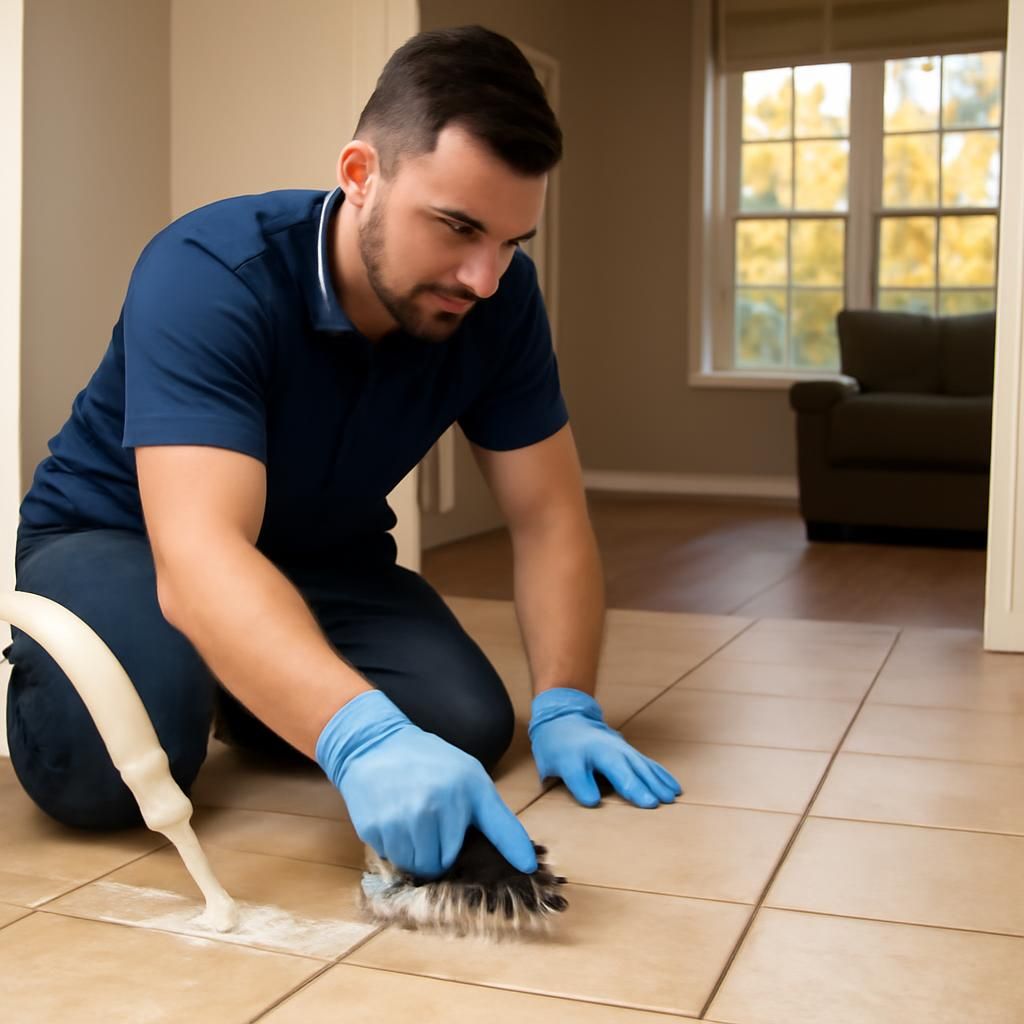
Professional deep cleaning: Right for grout that is heavily stained but structurally intact. Hot-water extraction or rotary machine cleaning removes embedded soil that no DIY scrubbing reaches.
Color sealing: A specialized pigmented penetrating sealer applied over cleaned grout. It seals and recolors simultaneously — useful when grout has faded unevenly or when homeowners want a uniform appearance without regrout. This is a non-obvious option that many homeowners don't know exists.
Regrout (repointing): Necessary when grout is crumbling, cracked, or missing in sections. Old grout is carefully removed to a consistent depth, and new grout is applied and then sealed. This is a labor-intensive process but far less disruptive and expensive than a full tile replacement.
Tile replacement becomes necessary only when tiles themselves are cracked, hollow (debonded from the substrate), or when water has damaged the substrate beneath — something a professional assessment can confirm.
Does Sealing Grout Really Make a Difference, or Is It Just Upselling?
It makes a measurable, practical difference — but with one important nuance: the sealer has to be the right type, applied correctly to clean, dry grout. A penetrating sealer applied over dirty or damp grout provides almost no benefit, which is likely where some homeowners develop skepticism.
When properly applied, a penetrating sealer reduces the rate at which pigmented liquids (coffee, red wine, cooking oil) absorb into grout — giving you time to wipe up spills before they stain. It also slows moisture intrusion in showers, reducing the conditions that support mold growth. The protection is real; it just isn't permanent, which is why reapplication on a schedule matters.
When Should I Stop DIYing and Call Groutastic?
Some situations clearly call for professional service rather than another weekend of scrubbing:
DIY cleaning no longer changes the appearance of the grout, even with fresh product and effort
Grout is visibly crumbling, cracked, or pulling away from tile edges
Musty odor persists after surface cleaning — possible subsurface mold
You're preparing to sell your home and want tile surfaces to show at their best
The tile area is large (full kitchen floor, whole-home restoration) and consistent results matter
You're in a rental property or commercial space where appearance and hygiene standards are non-negotiable
Groutastic serves East Meadow and surrounding Nassau County communities including West Hempstead, Woodbury, and Atlantic Beach with residential and commercial tile cleaning, grout sealing, color sealing, and regrout services. A professional assessment takes the guesswork out of which treatment your surface actually needs.
Frequently Asked Questions
How long does grout sealer last?
A penetrating sealer on floor grout typically lasts three to five years under normal household foot traffic. Shower grout, exposed to daily water, generally needs resealing every one to two years. Always confirm with the water-bead test rather than relying on a fixed schedule.
Can I seal grout myself, or does it require a professional?
Homeowners can apply a penetrating sealer themselves on small, accessible areas if the grout is already clean and completely dry. Professional application is worth the investment for large floor areas, shower enclosures, and any surface where the grout needed deep cleaning first — because sealing over inadequately cleaned grout locks in the problem rather than solving it.
Is sanded or unsanded grout sealed differently?
The sealer type is the same — penetrating sealers work on both. Sanded grout has larger pores and typically absorbs sealer faster, so a second coat is often applied. Unsanded grout (used in joints narrower than 1/8 inch, typical on wall tile) may require only one coat. Application technique doesn't differ, but quantity does.
What about natural stone tile — does sealing work the same way?
Natural stone (marble, travertine, slate, limestone) requires sealing of both the tile surface itself and the grout joints — unlike ceramic or porcelain tile, which is dense enough that only the grout needs sealing. Stone-specific penetrating sealers are formulated for the mineral porosity of each stone type. Using the wrong product can cloud or stain stone permanently, so professional application is strongly recommended for natural stone floors.
Published by Groutastic.
Comments