
Tile and Grout Cleaning Guide for East Northport, NY

By Josh Kaplan
Key Takeaways
Professional tile and grout cleaning removes embedded soil that mopping and brushing cannot reach.
DIY methods work for light maintenance but fail on porous, stained, or moldy grout that needs professional-grade extraction.
Skipping regular cleaning lets moisture penetrate grout, accelerating mold growth and costly tile damage.
IICRC-certified technicians use hot-water extraction and truck-mounted equipment that outperforms any consumer tool.
Resealing grout after a professional cleaning extends the clean for years — skipping this step wastes the investment.
The Short Answer for East Northport Homeowners
Professional tile and grout cleaning is worth it when grout has darkened noticeably, when scrubbing no longer restores the original color, or when mold has appeared in bathroom or kitchen grout lines. For routine maintenance between professional visits, targeted DIY cleaning works fine. The decision hinges on how deep the soil and moisture penetration has gone — and that is something you can assess yourself before spending a dollar.
Is Professional Tile and Grout Cleaning Actually Effective?
Yes — and the mechanism matters. Consumer mops and brushes clean the surface of grout but cannot reach the pores inside it. Cement-based grout is inherently porous, and over time oils, soap residue, hard-water minerals, and biological growth embed below the surface layer. Professional equipment — specifically hot-water extraction units that inject pressurized water and simultaneously vacuum the suspended debris — physically pulls that material out of the pores rather than redistributing it.
The Institute of Inspection, Cleaning and Restoration Certification (IICRC) sets the industry training standards that qualified tile and grout technicians follow, including protocols for temperature, dwell time of cleaning agents, and extraction pressure by surface type. When you hire a certified technician, those protocols are the difference between results you can see and a cleaning that fades within weeks.
What Do Professionals Use to Clean Grout?
The professional toolkit looks very different from anything sold at a hardware store:
Truck-mounted or portable hot-water extraction units — water heated to 200–230°F breaks down oils and biofilm far more effectively than room-temperature solutions. The simultaneous vacuum removes the loosened material in a single pass.
Alkaline pre-spray degreasers — applied and allowed to dwell on the surface for several minutes before extraction, these lift soap scum and body oils from porous grout without etching stone tile.
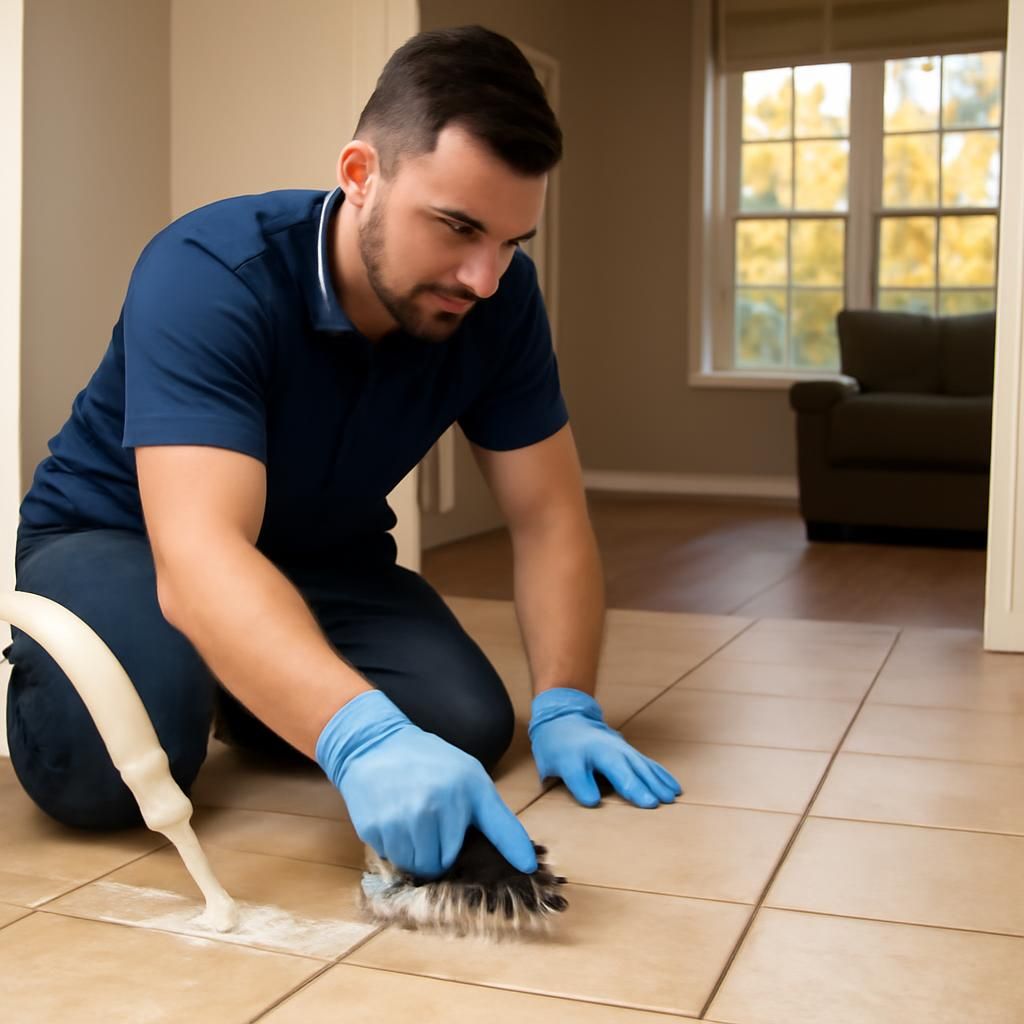
Rotary grout brushes with pressurized heads — for grout lines that need agitation before extraction, motorized rotating heads scrub at a consistent pressure humans cannot sustain manually.
Color-sealing or penetrating sealer — applied after cleaning to close pores and extend the clean. A penetrating silicone or fluoropolymer sealer bonds inside the grout rather than sitting on top, making the next cleaning far easier.
No consumer product replicates truck-mounted extraction pressure or professional-grade alkaline chemistry. That is not a sales pitch — it is a straightforward limitation of equipment size and chemical concentration.
DIY vs. Hiring Out: How to Decide
When DIY is the right call
If grout is lightly soiled — surface haze from regular mopping, minor soap film in a shower used by one person, or a kitchen floor cleaned every few months — DIY methods are appropriate and cost-effective. A pH-neutral cleaner, a stiff-bristle nylon brush (never metal, which erodes grout), and thorough rinsing will maintain already-clean grout between professional visits.
When hiring a professional saves money in the long run
Grout that has been neglected for more than two or three years, grout in a high-traffic entry or commercial kitchen floor, or any grout showing dark staining, pink or black mold, or a color that has shifted from its original tone are all situations where DIY cleaning creates the illusion of progress without solving the underlying problem. Spending two hours on a grout line that goes back to gray within a week is a sign that the soil is sub-surface.
The EPA - Mold and Moisture Control notes that mold in porous materials can be difficult to remove completely without addressing the moisture source and fully cleaning the affected material. Grout with embedded mold growth almost always requires professional-level extraction and, in some cases, grout removal and replacement — a job no amount of consumer scrubbing will fix.
What Is the Going Rate for Tile and Grout Cleaning?
Pricing varies by square footage, tile type, and condition of the grout. As a general reference point for homeowners in East Northport and surrounding areas like Kings Park and Lake Ronkonkoma:
Scenario | Typical price range | What drives the cost |
Single bathroom (floor + shower) | $150 – $300 | Surface area, mold presence, number of grout lines |
Kitchen floor (200–400 sq ft) | $200 – $400 | Grease saturation, tile type, access |
Full home (multiple rooms) | $400 – $900+ | Total square footage, condition, sealing included |
Grout resealing add-on | $0.50 – $1.50/sq ft | Type of sealer, surface porosity |
Always ask whether sealing is included or quoted separately. A cleaning without resealing on porous grout will re-stain significantly faster than one where the pores are closed afterward.
Repair vs. Replace: How to Tell Which You Need
This is the question most online guides skip, and it is genuinely important. Cleaning and sealing only work when the grout itself is structurally intact. Signs that you need grout repair or replacement rather than cleaning:
Crumbling or cracked grout lines — cleaning a cracked line drives water deeper into the subfloor. That grout needs to be ground out and replaced before any cleaning makes sense.
Hollow-sounding tiles — tap the tile surface; a hollow sound indicates the adhesive bond has failed. Cleaning cannot fix a delaminating tile.
Persistent mold that returns within days — if mold reappears rapidly after cleaning, the source is moisture from behind the wall or subfloor, not surface contamination. This is a waterproofing issue, not a cleaning issue.
Grout that has shifted color permanently — in some cases, grout can be color-sealed to restore a uniform appearance even when cleaning alone cannot reverse decades of staining. This is a professional service that bridges the gap between cleaning and full replacement.
What Not to Use on Grout
Several common household products cause real, permanent damage to grout and should be avoided entirely:
Vinegar and citrus-based cleaners — the acid in these products etches cement-based grout over time, widening pores and making future staining worse. On natural stone tile such as travertine or marble, acid causes irreversible surface etching.
Bleach used repeatedly — bleach can whiten surface stains on white grout but does not clean the pores. Repeated use degrades the grout binder, and on colored grout it strips pigment permanently.
Steam cleaners on cracked or older grout — high-temperature steam can force water into existing cracks, accelerating subfloor moisture damage.
Metal wire brushes — these scratch tile glazing and erode grout edges. Use nylon-bristle brushes only.
Magic Erasers (melamine foam) on polished stone tile — melamine foam is mildly abrasive and can dull the polish on polished porcelain or natural stone. It is generally safe on ceramic tile but should not be used on honed marble or high-gloss rectified porcelain.
Does Dawn Dish Soap Clean Grout?
Dawn and similar dish soaps are mild degreasers and are safe to use on tile and grout for light, surface-level soil. The limitation is that surfactant residue left in porous grout becomes a soil magnet — if you do not rinse thoroughly, the next layer of dirt bonds to the soap film. For light maintenance cleaning, a small amount of dish soap diluted in warm water, scrubbed with a nylon brush, and rinsed completely is fine. It is not effective on embedded staining or biological growth.
What Happens If You Skip Tile and Grout Cleaning?
Neglecting tile and grout cleaning is not just a cosmetic problem. The CDC - Cleaning and Disinfecting Your Home recommends regular cleaning of hard surfaces like tile to prevent the spread of pathogens and maintain sanitary conditions, particularly in bathrooms and kitchens. Beyond health, the practical consequences of skipping cleaning are:
Porous, unsealed grout absorbs moisture continuously, feeding mold colonies that spread behind wall tile and into grout joints.
Mineral deposits from hard water (common in Suffolk County's water supply) build up as a hard calcite layer that becomes progressively harder to remove and eventually requires mechanical removal.
Staining becomes permanent after long enough exposure, at which point cleaning is no longer an option and grout replacement is the only remedy.
When to Call Groutastic Instead of DIYing
East Northport homeowners dealing with any of the following should call a professional rather than continue with DIY methods:
Grout in a bathroom or shower that has not been professionally cleaned in more than three years
Grout that appears darker than its original color despite regular mopping
Visible black or pink mold in grout joints
A rental property, commercial kitchen, or high-traffic entry floor where appearance and hygiene standards matter
Natural stone tile (marble, travertine, slate) where the wrong DIY cleaner could etch the surface permanently
Groutastic provides residential and commercial tile and grout cleaning and restoration across East Northport and nearby communities including Laurel, Manorville, and Mastic. Professional cleaning paired with resealing on the same visit is the most cost-effective approach — it avoids repeat visits and protects the result for years rather than weeks.
FAQ
How long does grout take to dry after professional cleaning?
Most professionally cleaned and sealed grout is dry and ready for normal use within 24 hours. High-humidity conditions or thicker sealer applications may require up to 48 hours before the surface should be exposed to water again.
How often should tile and grout be professionally cleaned?
For residential bathrooms and kitchens with regular use, every 12 to 18 months is a reasonable interval. High-traffic commercial floors or homes with hard water and heavy use may benefit from annual cleaning. Light DIY maintenance in between extends the professional clean significantly.
Can grout be restored without replacing it?
Yes, in most cases. Color sealing — applying a pigmented sealer directly to the grout line — can restore a uniform appearance even when staining is too deep to clean out. This is a professional application and is typically far less expensive than re-grouting. It is not appropriate for cracked or structurally compromised grout.
Published by Groutastic.
Comments