
How to Maintain Your Shower Grout | Groutastic
By Josh Kaplan
Key Takeaways
Sealing shower grout every 1–2 years is the single most effective way to prevent staining and moisture damage.
Daily ventilation and a weekly wipe-down stop mold before it takes hold — cleaning products alone won't fix a moisture problem.
Unsanded grout joints under 1/8 inch wide are most vulnerable to cracking; check them seasonally and repoint early.
Regrouting over old grout only works when the existing grout is intact — crumbling or moldy grout must be fully removed first.
Professional restoration is worth it when DIY cleaning no longer lifts stains or when grout has begun to crack away from tile edges.
The Honest Guide to Keeping Shower Grout Clean and Lasting
Shower grout fails in a predictable sequence: moisture penetrates unsealed pores, soap scum and mineral deposits build up, mold takes root, and eventually the grout softens or cracks. Stopping that sequence early — through the right combination of sealing, routine cleaning, and timely repair — is far less expensive and disruptive than regrouting. This guide covers every stage, from daily habits to knowing when the job is beyond DIY.
How Long Will Grout Last in a Shower?
Well-maintained, properly sealed epoxy grout can last the life of the tile installation — often 20 years or more. Standard cement-based grout in a regularly used shower typically holds up for 8–15 years before it needs regrouting, provided it is sealed on schedule and kept free of prolonged moisture exposure. Grout that is never sealed, or that sits in a bathroom with poor ventilation, can begin deteriorating in as few as 3–5 years.
The width of the joint also matters. Narrow unsanded grout joints (under 1/8 inch) have less material mass, so small cracks open up faster when tile or substrate shifts slightly. Check them at the start of each season.
Should You Seal Shower Grout?
Yes — for cement-based grout, sealing is essential. Cement grout is porous by nature. Without a penetrating sealer, water, soap, and body oils soak in immediately, feeding mold and locking in stains that no surface cleaner can fully lift. A fluoropolymer-based penetrating sealer (products like Aqua Mix Sealer's Choice Gold or Miracle Sealants 511 are widely used in the tile trade) soaks into the grout pores and repels liquid rather than sitting on top of the surface.
How often to seal: Most cement-based shower grout needs resealing every 12–24 months depending on how heavily the shower is used. Test it by dripping water on the grout — if the water beads up, the sealer is still active. If it soaks in within a few seconds, it is time to reseal.
When sealing is NOT necessary: Epoxy grout is non-porous and does not require sealing. Applying a penetrating sealer to epoxy grout is harmless but pointless — it has nowhere to go. The Tile Council of North America provides installation and maintenance standards that distinguish these grout types clearly.
How to Clean Shower Grout — Step by Step
Routine cleaning prevents buildup; deeper cleaning lifts what has already settled in. Use the right method for each situation.
Weekly Maintenance Clean
After the last shower of the day, spray a pH-neutral tile and grout cleaner lightly across grout lines.
Let it sit for 2–3 minutes.
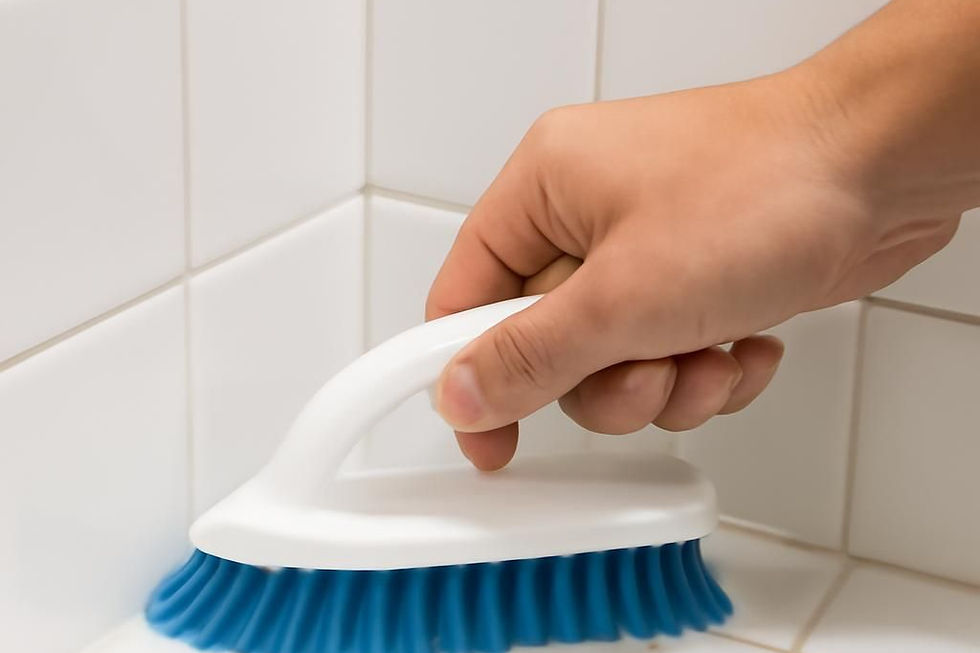
Wipe with a microfiber cloth or a soft-bristled grout brush — always scrub along the grout line, not across it.
Rinse with clean water and squeegee or wipe the surface dry.
Monthly Deep Clean
Mix a paste of baking soda and water (roughly 3:1) and apply it directly to stained grout lines.
Spray white vinegar diluted 1:1 with water over the paste — the mild fizzing reaction helps loosen mineral deposits and soap scum.
Scrub with a stiff-bristled nylon grout brush. A dedicated grout brush fits the joint width precisely and is far more effective than a toothbrush or general tile brush.
For stubborn stains, apply a small amount of hydrogen peroxide (3% solution, the standard drugstore concentration) directly to the grout line and let it sit for 10 minutes before scrubbing.
Rinse thoroughly with warm water and dry the surface.
How to Freshen Up Grout That Has Dulled
If grout looks gray or dingy rather than genuinely stained, a grout colorant or grout pen — products like Polyblend Grout Renew — can restore the original color and add a sealing layer at the same time. This works best on grout that is structurally sound but has faded or picked up surface discoloration. It will not fix soft, crumbling, or mold-saturated grout.
Is Dawn Dish Soap Bad for Grout?
Dawn and similar liquid dish soaps are not corrosive to grout, but they leave a residue that attracts dirt and soap scum faster than a neutral rinse would. Over time, routine use of dish soap in the shower creates a film that makes grout look perpetually grimy even after cleaning. Use dish soap as an occasional pre-treat for oily buildup rather than a regular grout cleaner, and always rinse extremely thoroughly afterward. For regular maintenance, a pH-neutral bathroom cleaner is a better fit, as recommended by the American Cleaning Institute.
What to Avoid When Cleaning Shower Grout
Certain common cleaning habits actively damage grout. Being specific about the mechanism helps you avoid them for the right reasons:
Acidic cleaners on cement grout: Undiluted vinegar, bleach-based bathroom sprays with high pH, and harsh tile descalers can etch the surface of cement grout over repeated use, widening pores and accelerating deterioration. A single use will not ruin grout, but weekly acidic scrubbing will.
Steel wool or metal brushes: These scratch ceramic tile glazing and leave behind metal particles that rust and stain grout lines. Use nylon bristles only.
Steam cleaners on old or cracked grout: Steam is effective on healthy grout but can force water into hairline cracks, freeze-thaw cycle effects in unheated bathrooms, and soften grout that is already weakened.
Bleach as a primary cleaner: Bleach whitens grout temporarily by oxidizing surface stains, but it does not seal pores or kill mold at the root. The EPA - Mold Remediation in Schools and Commercial Buildings notes that controlling moisture is the fundamental fix for mold — surface disinfectants alone are not sufficient if water continues to penetrate.
Daily Habits That Make a Measurable Difference
The best grout maintenance happens in the 60 seconds after a shower, not during a weekend cleaning session.
Run the bathroom fan during and for 15 minutes after every shower. In Nassau County homes — including many of the older split-levels and colonials common in Manhasset, NY — bathroom exhaust fans are often undersized for the room. If the mirror stays fogged for more than 10 minutes after you leave, the fan is not moving enough air.
Squeegee tile walls after each use. Removing standing water from tile and grout before it air-dries is the simplest way to reduce mineral deposits.
Leave the shower door or curtain open after use to allow air circulation to the corners and floor, which dry last and mold fastest.
Can You Put New Grout Over Old Grout?
Only in very specific circumstances. If existing grout is structurally sound — not crumbling, not hollow-sounding when tapped, not visibly cracked through — and you simply want to add a thin layer of new material in a joint that has worn slightly shallow, a grout overlay can work with proper preparation. However, adding new grout over old grout that is mold-saturated, crumbling, or pulling away from tile edges will fail within months. The new material has nothing solid to bond to, and any mold beneath it continues to grow. In those cases, the old grout must be removed mechanically — typically with an oscillating tool and a grout removal blade — before fresh material is applied.
How Often Should a Shower Be Regrouted?
There is no fixed schedule — condition, not calendar, drives the decision. Inspect your grout lines seasonally. Signs that regrouting is needed include: grout that crumbles when pressed, persistent dark staining that doesn't lift with cleaning, grout that has receded noticeably below the tile edge, or any section where water is visibly tracking behind tiles (which typically shows as loose tiles or a hollow tap sound).
Regrouting vs. Replacing Tile: Which Is Worth It?
Situation | Best Option | Why |
Grout stained or worn, tile intact and well-bonded | Regrout | Tile is the expensive part; regrouting restores appearance and waterproofing at a fraction of replacement cost |
Cracked or chipped tile alongside failing grout | Selective tile replacement + regrout | Fixing both at once avoids opening the wall twice |
Substrate damage (wet drywall, mold behind tile) | Full tile and substrate replacement | Regrouting over a compromised substrate will fail quickly and conceal ongoing water damage |
Tile style is outdated but structurally fine | Either — personal preference | Regrout + grout colorant can modernize the look; replacement gives complete control |
Regrouting is almost always less expensive than replacing tile. The cost differential depends heavily on the size of the shower and tile type, but labor and material for regrouting a standard shower is consistently a fraction of full tile replacement — which also involves demolition, substrate inspection, and potentially plumbing work.
When to Call a Professional Grout Cleaning or Restoration Service
DIY maintenance works well for prevention and moderate buildup. Move to professional service when:
Scrubbing no longer changes the color of the grout, indicating staining has penetrated below the surface layer.
Grout has begun to crack or recess and you are not comfortable with an oscillating tool near expensive tile.
There is visible mold in grout, and bathroom ventilation has already been corrected — surface mold that returns within weeks despite proper cleaning and ventilation signals deeper moisture intrusion.
You are preparing a home for sale and the shower is visibly aging — professional grout cleaning and sealing in Manhasset, NY and surrounding Nassau County communities like Port Washington or Oyster Bay can significantly improve first impressions without the disruption of full renovation.
Groutastic provides residential and commercial tile and grout cleaning, color sealing, and restoration services across Long Island. Professional-grade truck-mounted or rotary extraction equipment reaches contamination that consumer brushes and sprays physically cannot, and commercial sealers applied by experienced technicians outlast retail products considerably.
FAQ
How do I keep grout white long-term?
Start with proper sealing immediately after installation or regrouting, maintain weekly cleaning with a pH-neutral product, and reseal on schedule. Grout colorant in white can restore original tone to grout that has yellowed from soap scum or mineral deposits, provided the grout is structurally intact.
How often should shower grout be resealed?
Test annually with the water-bead test described above. Most cement-based shower grout needs resealing every 12–24 months. High-traffic or multi-person households should test closer to the 12-month mark.
What is the average cost to regrout a shower?
Cost varies by shower size, tile format, grout type, and whether old grout needs mechanical removal. Because material and labor rates differ significantly by region, get at least two written estimates from licensed contractors in your area before committing. The scope of work — removal versus overlay, standard versus epoxy grout — affects price as much as square footage does.
Published by Groutastic.


Comments