
Commercial Tile & Grout Cleaning Amityville NY: FAQs

By Josh Kaplan
Updated: September 8, 2026
Key Takeaways
Commercial tile and grout cleaning uses high-pressure steam and professional extractors that remove deep-set dirt DIY scrubbing leaves behind.
Grout in high-traffic or humid areas like kitchens and showers needs professional cleaning every 12–18 months to prevent permanent staining.
Sealing grout after professional cleaning extends protection for 2–3 years and is essential in Suffolk County's humid coastal climate.
Discolored, crumbling, or mold-blackened grout signals the need for grout repair or recaulking, not just cleaning.
Groutastic offers tile cleaning, grout repair, and shower caulking — the full-service options Amityville homeowners need most.
Commercial Tile and Grout Cleaning in Amityville: What Homeowners Really Want to Know
Commercial tile and grout cleaning refers to professional-grade cleaning that uses truck-mounted or portable steam extraction equipment, high-pressure rotary jets, and professional-strength cleaning agents to remove embedded soil, mold, grease, and staining that ordinary mopping and scrubbing cannot reach. For homeowners in Amityville, NY — where humid summers and older housing stock create ideal conditions for grout discoloration and mildew — understanding exactly what this service involves, what it costs, and when it is genuinely necessary can save you time, money, and a lot of unnecessary scrubbing.
What Is the Difference Between DIY Cleaning and Commercial Tile and Grout Cleaning?
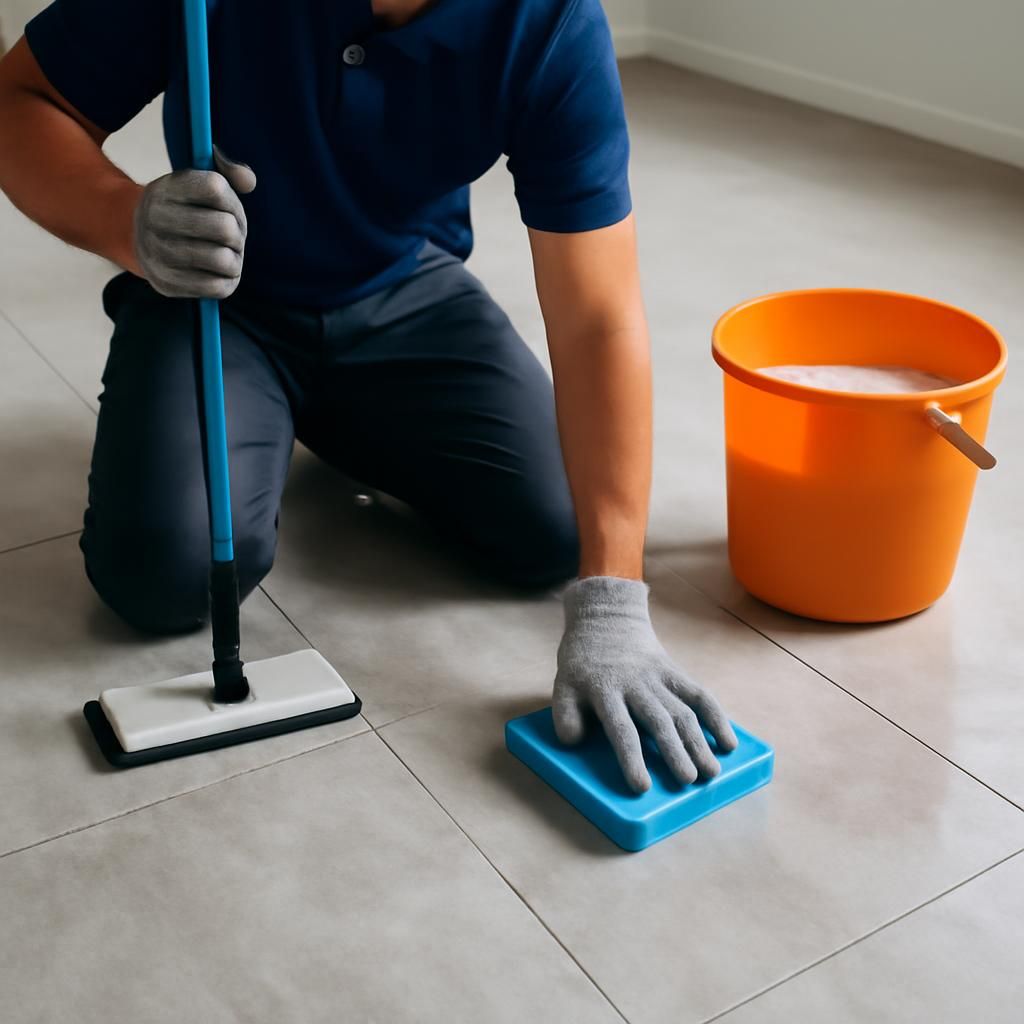
Consumer-grade scrub brushes and store-bought tile cleaners work at the surface only. They agitate and lift loose soil but have no mechanism for extracting the contaminated water and dissolved grime from within the grout pore structure. This means dirt is often redistributed rather than removed, and grout lines stay visually dull even after significant effort.
Professional commercial cleaning uses a different physical process:
High-pressure hot water injection: Water heated to 200–230°F is injected directly into grout pores at pressures between 500 and 1,200 PSI, breaking apart compacted soil, soap scum, and mold colonies.
Simultaneous vacuum extraction: A high-powered extractor pulls the emulsified contamination out of the grout before it can resettle, leaving the grout genuinely clean rather than surface-wiped.
Rotary or orbital cleaning heads: Specialized spinning jets scrub tile faces and grout lines in one pass, covering large floor areas efficiently without the fatigue of manual scrubbing.
pH-balanced or alkaline pre-treatment: Professional technicians select cleaning agents matched to the tile type (ceramic, porcelain, natural stone) and the specific contaminant (grease, mold, mineral deposits), preventing surface etching or color stripping.
When DIY is sufficient: if your grout lines are lightly soiled and were sealed within the past 12 months, a grout brush with an oxygen-bleach solution can maintain cleanliness between professional visits. When DIY is not sufficient: grout that is visibly gray or black despite regular cleaning, grout with embedded mold, or grout in high-traffic commercial-style entryways requires professional extraction to restore. If you're also noticing unusual discoloration beyond typical darkening, yellow, orange, and pink grout stains have distinct causes and fixes worth understanding before your appointment.
How Often Does Tile and Grout in an Amityville Home Actually Need Professional Cleaning?
The honest answer depends on location within the home, traffic, and whether the grout is sealed. Here is a practical frequency guide:
Area | Traffic / Exposure | Recommended Professional Cleaning |
Kitchen floor | Daily grease, foot traffic | Every 12–18 months |
Shower walls and floor | Daily moisture, soap scum, mold risk | Every 12 months; recaulk every 1–2 years |
Bathroom floor | Moderate moisture and traffic | Every 18–24 months |
Entryway / mudroom | Heavy foot traffic, outdoor soil | Every 12 months |
Living area tile | Light foot traffic, dry conditions | Every 2–3 years |
Amityville sits in a coastal section of Suffolk County where summer humidity regularly exceeds 75%. Tile areas with limited ventilation — enclosed shower stalls, basement bathrooms, galley kitchens — accumulate biological growth faster than the national average suggests. Homeowners in this part of Long Island should treat the lower end of these frequency ranges as their baseline.
What Does Professional Tile and Grout Cleaning Cost?
Pricing for professional tile and grout cleaning in the Amityville area is typically quoted per square foot, per room, or as a flat project rate. General market ranges (2024) are:
Basic tile cleaning only: $0.75–$1.50 per square foot
Cleaning plus grout sealing: $1.50–$3.00 per square foot
Grout repair (regrouting damaged lines): $5–$25 per linear foot, depending on depth and accessibility
Shower recaulking: $150–$350 per shower, depending on size and caulk removal complexity
Full bathroom tile restoration (clean + repair + seal): $300–$700 for an average bathroom
Factors that raise the cost include heavily soiled grout that requires extended dwell time, natural stone tile that needs gentler low-pressure methods, and grout that has never been sealed (requiring more chemical pre-treatment). Factors that lower the cost are large open floor areas with simple rectangular grout patterns and recently maintained grout that only needs a maintenance clean. For a detailed breakdown of what to expect to pay across different service types, see this Long Island tile and grout cleaning cost guide for 2025.
Is There Anything That Looks Like Dirty Grout but Actually Needs Repair, Not Cleaning?
Yes — and confusing the two is one of the most common and costly mistakes homeowners make. Cleaning cannot fix structural grout problems. Here is how to tell them apart:
Cracked or crumbling grout: Cleaning will dislodge more material and open the joint to water infiltration. The grout line must be ground out and repacked with fresh grout — a grout repair service, not a cleaning.
Missing caulk at the shower pan perimeter: This joint is designed to flex as the structure moves. Grout should never be used here; if it is cracked or absent, shower caulking replacement is the correct fix before water migrates behind the tile.
Deep black mold that has penetrated the grout body: Surface mold responds to professional cleaning. Mold that has colonized through the full depth of the grout joint, or that has caused the grout to soften, requires full grout removal and replacement.
Efflorescence (white chalky deposits): This is dissolved mineral salts migrating through the grout from moisture behind the tile — a sign of a water intrusion problem. Cleaning removes the surface deposit temporarily; the underlying cause must be addressed or it will return within weeks.
What Should I Avoid Before and After Professional Tile Cleaning?
Specific preparation and aftercare errors can undermine professional results or damage your tile.
Before the appointment
Do not apply any wax-based or oil-based surface sealers in the weeks before cleaning — they seal contaminants into the grout and interfere with hot-water extraction.
Do not use bleach-based DIY products on colored grout within 48 hours of the appointment; residual bleach can react with professional alkaline cleaners and produce noxious fumes.
Do clear the area of furniture, rugs, and floor mats so the technician has full access without interruption.
After the appointment
Allow grout to dry completely (typically 24 hours) before walking on cleaned floors or running water in a cleaned shower. Grout that is still damp cannot absorb sealer correctly.
Do not apply generic hardware-store sealers over natural stone tile — use only stone-specific impregnating sealers to avoid surface hazing.
Avoid steam mops on freshly sealed grout for at least 30 days; the heat degrades penetrating sealers before they fully cure.
When Is It Worth Calling a Professional Instead of Doing It Yourself?
DIY maintenance is reasonable and cost-effective for lightly soiled, recently sealed grout. Call a professional when:
Grout has not been professionally cleaned in more than two years and is visibly discolored.
Black or pink mold is recurring in your shower despite regular household cleaning.
Grout lines are cracked, hollow-sounding when tapped, or showing gaps at caulk joints. Knowing the key signs that grout needs professional repair can help you decide before the damage worsens.
You are preparing a home for sale — clean, intact grout meaningfully improves buyer perception of a bathroom or kitchen.
The tile is natural stone (travertine, marble, slate) — these surfaces are easily damaged by incorrect pH cleaners or excessive pressure that DIY machines commonly deliver.
Groutastic provides tile and grout cleaning, grout repair, and shower caulking for homeowners throughout the Amityville area and surrounding Suffolk County communities including Islip, Kings Park, and Lake Ronkonkoma. The combination of cleaning, repair, and recaulking in a single visit is almost always more cost-effective than addressing each problem separately over multiple service calls.
Frequently Asked Questions
Does professional tile cleaning damage the tile itself?
No — when the technician selects the correct pressure and temperature for the tile type. Glazed ceramic and porcelain can tolerate high-pressure hot-water extraction without risk. Unglazed natural stone requires lower pressure and pH-neutral chemistry. Always confirm your tile type with the technician before work begins.
How long does the cleaning take for an average bathroom?
A standard bathroom (approximately 50–80 square feet of tile) takes 1–2 hours for cleaning and sealing. A full shower restoration that includes caulk removal and reapplication adds another 30–60 minutes.
Will grout sealing prevent all future staining?
Sealer dramatically reduces staining by repelling liquids before they penetrate the grout pore structure, but it does not make grout stain-proof indefinitely. Penetrating sealers — the professional-grade standard — typically last 2–3 years in kitchen and bathroom environments before reapplication is needed.
Can I have my shower recaulked at the same time as grout cleaning?
Yes, and this is the recommended approach. Old caulk is removed, the joint is cleaned and dried as part of the tile cleaning process, and fresh silicone or sanded caulk is applied before the technician leaves. Combining services avoids a return visit and ensures the new caulk is applied to a clean, prepared surface.
What is the difference between regrouting and grout repair?
Grout repair targets specific damaged or missing sections — cracked lines, corners that have separated, isolated joints that have shrunk. Full regrouting removes and replaces all grout across an entire tiled surface, which is only necessary when damage is widespread or the grout color needs a complete change. A professional assessment will tell you which approach is appropriate for your situation.
The Bottom Line for Amityville Homeowners
Commercial tile and grout cleaning is not just a cosmetic service — it is preventive maintenance that protects the waterproofing integrity of your showers, extends the life of grout, and keeps bathroom and kitchen tile looking the way it was designed to. For Amityville homeowners dealing with the area's humid coastal conditions, staying on a 12–18 month professional cleaning schedule for high-exposure tile areas is the most cost-effective strategy available. When cleaning alone is not enough, Groutastic's grout repair and shower caulking services address the structural problems that cleaning cannot fix — giving you a genuinely restored result. Homeowners in nearby communities can also find local guidance in our Babylon NY tile and grout cleaning local guide.
Published by Groutastic.
Comments