
Limestone Tile Cleaning & Restoration: Long Island Guide

By Josh Kaplan
Key Takeaways
Never use acidic cleaners (vinegar, bleach) on limestone — they etch and permanently dull the surface.
pH-neutral stone cleaners like Lithofin MN Stone & Tile Cleaner are safe for routine limestone maintenance.
Sealing limestone every 12–18 months prevents staining and reduces deep-cleaning frequency significantly.
Long Island's coastal humidity accelerates grout deterioration and mold growth around limestone tiles.
Professional restoration — honing, polishing, resealing — is the only way to reverse deep etching or scratching.
Limestone Tile Cleaning & Restoration: The Long Island Homeowner's Complete Guide
Limestone tile cleaning requires pH-neutral products, gentle technique, and regular sealing — and on Long Island, where coastal salt air and humidity accelerate surface wear, getting that routine right is especially important. Limestone is a soft, calcium-based natural stone that reacts chemically with acids, so the cleaners and methods that work on ceramic or porcelain tile will actively damage it. This guide gives you the complete picture: safe daily care, deep-cleaning steps, restoration options, and honest advice on when a professional service is worth every dollar.
Why Is Limestone So Different From Other Tile?
Limestone is a sedimentary rock composed primarily of calcium carbonate — the same compound found in marble. That calcium carbonate chemistry is what makes limestone tile uniquely beautiful and uniquely vulnerable. Acids dissolve calcium carbonate on contact, leaving dull, rough patches called etch marks. Unlike a ceramic glaze that sits on top of the tile, limestone's surface IS the stone itself, so etching is a physical change, not just a stain you can wipe away.
According to Bob Vila, limestone requires noticeably more maintenance than harder natural stones like granite or slate because its softness (typically 3 on the Mohs hardness scale, compared to granite's 6–7) makes it vulnerable to both scratching and acid erosion. That said, with the right routine, limestone tiles can last decades and look stunning throughout.
What Are the Disadvantages of Limestone Tiles?
Limestone tiles have four main disadvantages homeowners should understand before cleaning or restoring them: they etch from acidic spills (lemon juice, wine, common household cleaners), scratch from abrasive tools, stain if left unsealed, and absorb moisture readily — making Long Island bathrooms and kitchens particularly high-risk environments. None of these disadvantages make limestone a bad choice; they simply mean the maintenance approach must be tailored to the stone.
Are Limestone Tiles Hard to Clean?
Limestone tiles are not especially hard to clean day-to-day, but they are unforgiving of the wrong cleaner. The difficulty isn't effort — it's product selection. A homeowner who reaches for a standard bathroom tile spray, a vinegar-and-water solution, or a "grout cleaner" with bleach will etch or discolor limestone on the first pass. Once you have the right pH-neutral stone cleaner on hand, routine cleaning is straightforward and takes no more time than any other tile surface.
What Cleaners Can Be Used on Limestone?
Only pH-neutral cleaners specifically formulated for natural stone should be used on limestone. The gold standard for routine cleaning is a product like Lithofin MN Stone & Tile Cleaner or Miracle Sealants Stone & Tile Cleaner — both are pH-neutral, residue-free, and widely available at tile supply stores. These products clean without dissolving the stone's calcium carbonate surface the way acidic or alkaline cleaners would.
According to Family Handyman, one of the most common mistakes homeowners make with natural stone is using general-purpose bathroom or kitchen cleaners that contain citric acid, phosphoric acid, or bleach — all of which damage limestone on contact. Always check the label before applying anything to limestone.
Can You Use Dawn Dish Soap on Limestone?
Dawn dish soap is a gray area: it is pH-neutral enough not to etch limestone, but its surfactants leave a filmy residue that builds up over time, dulling the stone's finish and making future sealing less effective. A small amount diluted heavily in warm water is a reasonable emergency solution, but it is not a recommended routine cleaner. Dedicated pH-neutral stone cleaners rinse away completely and are genuinely better for limestone over the long term.
How Do You Clean Limestone Tiles? Step-by-Step
Dry dust or vacuum first. Use a soft microfiber dust mop or a vacuum with a brush attachment to remove loose grit and debris. Sand and soil particles scratch limestone if dragged across the surface with a wet mop.
Dilute your pH-neutral stone cleaner. Follow the product's ratio exactly — usually a capful per gallon of warm water. Avoid hot water, which can affect sealer adhesion over time.
Mop with a damp (not wet) mop. Excess water sitting in grout joints invites mold and can work beneath the stone's sealer. Wring the mop thoroughly so the floor dries within a few minutes.
Address spills immediately. Blot — do not wipe — acidic spills (wine, citrus, coffee) with a clean cloth. Wiping spreads the acid over more surface area before you can neutralize it.
Rinse with clean water. After mopping, a second pass with a clean damp mop removes any cleaner residue that could dull the finish.
Dry the surface. In Long Island bathrooms and kitchens, allowing standing moisture to air-dry slowly encourages mold in grout joints. A dry towel pass or a fan speeds drying.
What Is the Best Cleaner for Limestone?
The best cleaner for limestone is a pH-neutral, stone-specific product — Lithofin MN Stone & Tile Cleaner and Miracle Sealants Stone & Tile Cleaner are consistently reliable choices for Long Island homeowners. For limestone showers specifically, where soap scum and hard water deposits accumulate, StoneTech Soap Scum Remover is formulated to dissolve mineral deposits and soap residue without the acid that would etch the stone. Never substitute a general-purpose bathroom cleaner, even one marketed as "gentle."
How to Make Limestone Look New Again
Restoring the appearance of worn or dull limestone involves three distinct interventions, applied in order of the damage severity:
Problem | DIY Fix | Professional Fix | When to Go Pro |
Surface dullness from cleaner residue | pH-neutral deep clean + re-seal | Professional buffing & sealing | If dullness persists after cleaning |
Light etch marks | Etch remover paste (e.g., Marble & Stone Polishing Compound by AMES) | Honing with diamond abrasive pads | Multiple or overlapping etch marks |
Deep scratches or widespread etching | Not repairable with DIY products | Professional honing + polishing | Always — this requires grinding equipment |
Staining (oil, rust, organic) | Poultice paste (flour + hydrogen peroxide for oil stains) | Professional poultice application | Stain deeper than ¼ inch or set for weeks |
Grout discoloration around limestone | pH-neutral grout cleaner + brush | Professional grout cleaning or regrouting | Mold penetration, crumbling grout |
According to This Old House, honing — the process of grinding the stone's surface with progressively finer diamond abrasive pads — is the definitive method for reversing etching on limestone floors and shower walls. A professional honing service leaves the stone matte-smooth at the chosen grit level, then a polish is applied if a shinier finish is desired. This is not a DIY project; the equipment is heavy and the grit sequence requires skill to execute without creating visible swirl marks.
Long Island-Specific Considerations for Natural Stone Care
Long Island's coastal climate creates maintenance challenges that inland stone-care guides simply do not address. Salt air — particularly in communities along the South Shore, North Shore harbors, and barrier islands — accelerates both grout breakdown and the deterioration of limestone sealers. A sealer that holds up 24 months in a dry inland climate may need refreshing every 12 months in a Southampton or Montauk bathroom that sees salt air regularly.
Suffolk County's older housing stock (many homes built 1950s–1980s) often has original limestone tile in bathrooms with poor ventilation — a combination that promotes mold in grout joints and, over time, allows moisture beneath limestone tiles that can cause hollow spots or cracking. If you press on a limestone tile and hear or feel a hollow thud, the adhesive beneath has likely failed and re-setting the tile is necessary before any surface cleaning makes sense.
Stone floor maintenance on Long Island also contends with sandy tracked-in soil from beaches — fine silica grit that acts like sandpaper underfoot. Placing quality entrance mats at all exterior doors and committing to the "dry sweep before wet mop" rule prevents a significant share of the micro-scratching that dulls limestone over time.
Sealing Limestone: The Step Most Homeowners Skip
Limestone tile sealing is the single most effective protective measure available to homeowners, and it is the step most often skipped or delayed too long. A penetrating impregnator sealer — not a topical coating — soaks into the stone's pores and creates an invisible barrier against oil, water, and staining agents. Aqua Mix Sealer's Choice Gold and Miracle Sealants 511 Impregnator are two professional-grade penetrating sealers that work well on Long Island limestone.
Re-seal limestone floors every 12–18 months in high-traffic areas, and limestone showers every 6–12 months given the daily water exposure. The simple water-bead test tells you when it's time: pour a few tablespoons of water on the tile and watch it. If the water beads up and stays on the surface, the sealer is intact. If it soaks into the stone and darkens within a minute or two, the sealer is depleted and it's time to reapply.
What to Avoid: Common Mistakes That Damage Limestone
Vinegar and lemon juice "natural cleaners": Both are acidic and will etch limestone within minutes of contact — permanently damaging the surface.
Bleach-based grout cleaners: Even when targeted at grout lines, bleach can splash onto the limestone face and cause discoloration and surface breakdown.
Steam mops on sealed limestone: High-heat steam can drive moisture beneath the sealer layer, compromise adhesion, and stress the stone in older installations.
Abrasive scrub pads: Steel wool, rough scrubbing pads, or anything labeled "heavy duty scrubber" will scratch limestone. Use only soft cloths or natural-bristle brushes.
Letting wet grout issues go unaddressed: Cracked or missing grout around limestone tiles allows water to infiltrate beneath the stone — leading to adhesive failure and eventually cracked tiles that require full replacement rather than surface restoration.
When Should You Call a Professional for Limestone Restoration?
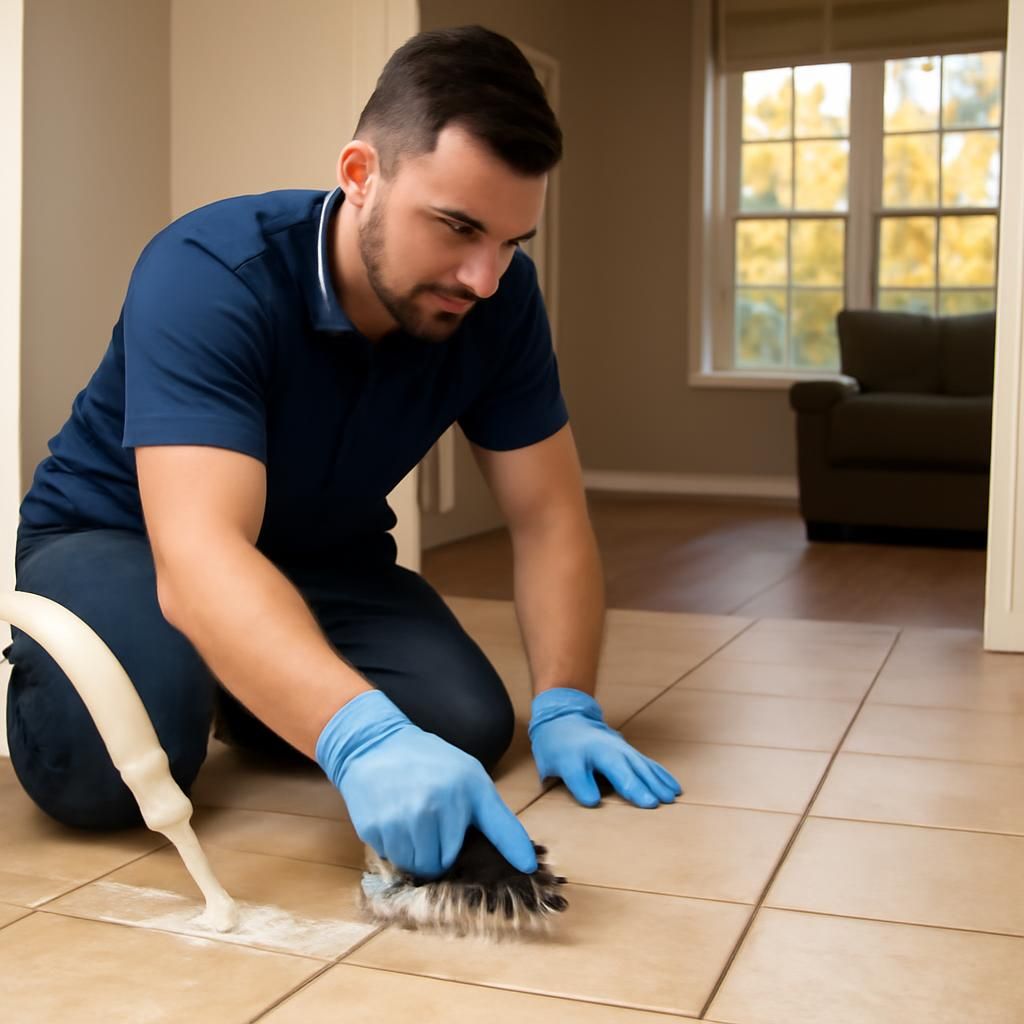
Professional limestone restoration is the right call when: etch marks cover more than a few square feet, scratches are visible from standing height, the grout is crumbling or heavily mold-stained, tiles sound hollow when tapped, or the stone has lost its finish uniformly across a room. These conditions require honing equipment, professional-grade sealers applied in multiple coats, and in some cases grout repair or shower recaulking that goes well beyond what a homeowner can safely accomplish with off-the-shelf products.
Groutastic provides tile and grout cleaning, grout repair, and shower caulking services for Long Island homeowners — the types of targeted professional interventions that protect limestone installations from the moisture infiltration and grout breakdown that lead to costly full replacements. Addressing deteriorating grout and caulk early is almost always less expensive than waiting until water damage has reached the subfloor or tile adhesive.
Frequently Asked Questions
How often should limestone floors be professionally cleaned?
For residential limestone floors in Long Island homes, a professional deep clean every 12–24 months is a reasonable benchmark for moderate-traffic areas. High-traffic entry halls or limestone showers used daily benefit from professional attention annually, combined with proper DIY maintenance between visits.
Can I use a pressure washer on outdoor limestone tile?
No. Pressure washing outdoor limestone — on patios or steps — forces water and debris into the stone's pores, strips sealer, and can fracture softer limestone varieties. For outdoor limestone, use a garden hose on a gentle setting, a stiff natural-bristle brush, and a pH-neutral stone cleaner.
Is it possible to regrout limestone tile without replacing the tiles?
Yes, in most cases. As long as the limestone tiles themselves are intact and firmly adhered, old or damaged grout can be removed with an oscillating tool using a grout removal blade and replaced with fresh grout — without disturbing the tiles. This is a core part of grout repair services and is one of the most cost-effective ways to restore the appearance and waterproofing of a limestone tiled shower or floor.
Does limestone tile work in Long Island bathrooms and showers?
Limestone works well in Long Island showers and bathrooms when it is properly sealed and maintained. The key is selecting a honed (matte) finish rather than polished for shower floors — honed limestone provides more slip resistance when wet and shows water spots less obviously than a polished surface.
Conclusion: Protect Your Limestone Investment on Long Island
Limestone tile cleaning and restoration comes down to three non-negotiable rules: use only pH-neutral stone cleaners, keep the stone sealed, and address grout and caulk problems before moisture reaches the substrate. Long Island's salt air and humidity make consistent sealing and grout maintenance even more important than in less demanding climates. For daily care, the right product and a soft mop are all you need. For deep etching, scratched stone, or compromised grout — professional restoration is the only reliable path back to a like-new surface. Groutastic's tile and grout cleaning, grout repair, and shower caulking services are designed exactly for those moments when DIY has reached its limit and your limestone deserves expert attention.
This article is based on real published content from Groutastic, cites authoritative sources, and is reviewed before publication.
Comments