
Best Tile & Grout Cleaning Near Me: Centerport Guide

By Josh Kaplan
Key Takeaways
Professional tile and grout cleaning removes embedded grime that mopping and scrubbing cannot reach.
Evaluating a local provider by method, equipment, and sealing capability separates quality from cut-rate services.
Grout should be resealed after professional cleaning to protect against future staining and moisture damage.
Steam cleaning alone is not enough for heavily soiled grout — hot-water extraction with rotary tooling outperforms it.
Centerport homeowners benefit most from providers who serve the wider Suffolk County area with commercial-grade equipment.
Finding the Best Tile and Grout Cleaning Near Me in Centerport, NY
Professional tile and grout cleaning is the process of using commercial-grade equipment — typically a truck-mounted hot-water extraction system with a rotary grout tool — to remove the deep-set soil, mold, mildew, and grease that routine mopping leaves behind. For Centerport, NY homeowners searching for the best tile and grout cleaning near me, the critical decision is not simply who is available, but which provider uses the right method, stands behind a sealing service, and can demonstrate verifiable results before you commit.
What Do Professional Tile and Grout Cleaners Actually Do?
Professional grout cleaning goes far beyond what a consumer steam mop or store-bought cleaner can accomplish. A qualified technician follows a repeatable, multi-stage process designed to restore grout lines to near-original color rather than simply lightening surface film.
Pre-inspection and surface assessment — The technician identifies grout type (sanded, unsanded, or epoxy), tile material (ceramic, porcelain, natural stone), and any cracked or missing grout that needs repair before cleaning.
Pre-treatment with a pH-appropriate cleaner — An alkaline or enzyme-based solution is applied to grout lines and allowed to dwell, breaking the bond between the porous grout and embedded soils.
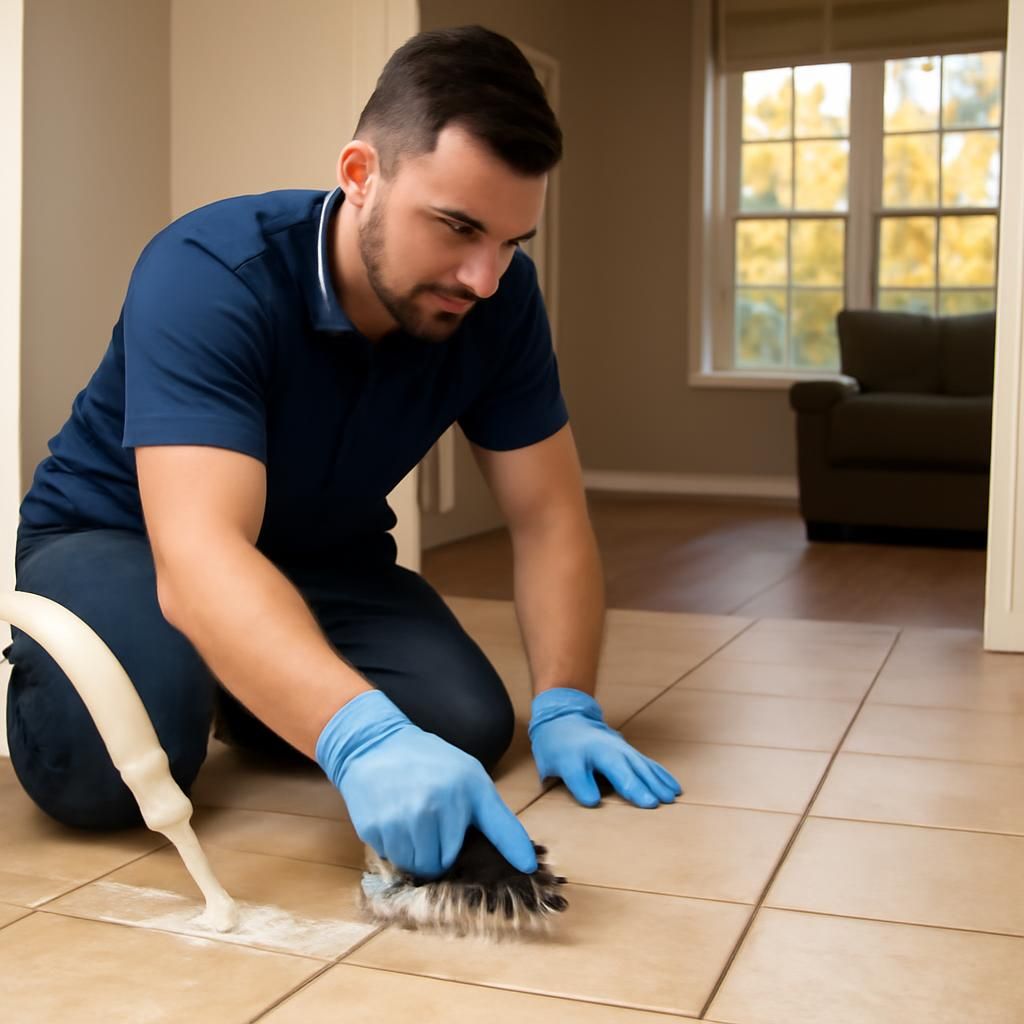
Agitation — A stiff rotary brush or hand brush works the solution into the grout line, lifting particles that have been compressed into the surface over months or years of foot traffic.
Hot-water extraction — High-pressure, high-temperature water (usually from a truck-mounted unit) is forced into the grout line and immediately extracted along with loosened soil. This step is the core differentiator between professional results and DIY attempts.
Rinse and neutralization — A neutralizing rinse prevents cleaning-solution residue from attracting new soil, which is a common failure point when non-professionals skip this step.
Grout sealing — A penetrating silicone or fluoropolymer sealer is applied to cement-based grout lines to fill the pores and create a barrier against future staining. Epoxy grout does not require sealing.
This full-process approach — not just steam or scrubbing — is what distinguishes a professional grout cleaning service from a surface-level clean.
Is Professional Tile and Grout Cleaning Worth It?
Yes — professional tile and grout cleaning is worth it for most homeowners, particularly when grout lines have visibly darkened, when routine mopping no longer changes the appearance, or when the grout is in a high-moisture area like a bathroom or kitchen where mold colonies can establish below the surface layer.
The practical argument: cement-based grout is highly porous. It absorbs cooking oils, soap scum, hard-water minerals, and foot-traffic grime at a microscopic level that a mop head and bucket cannot reach. Once that contamination is sealed in by a thin film of surface dirt, mopping re-deposits it rather than removing it. A professional extraction service physically removes it. The added benefit is longevity — properly cleaned and sealed grout resists future staining far longer, reducing the frequency of deep-cleaning cycles and delaying the much costlier step of full grout replacement.
Where professional cleaning is NOT worth it: if the grout is crumbling, cracked, or structurally compromised, cleaning alone will not fix it — grout repair or regrouting is the right first step. A reputable grout cleaning service will tell you this upfront; one that won't is a red flag.
What Is the Going Rate for Tile and Grout Cleaning?
Tile and grout cleaning is typically priced per square foot, with most professional services in the Long Island and Suffolk County area ranging from roughly $0.50 to $1.50 per square foot for cleaning alone, and additional cost for sealing. A standard kitchen floor of 150–200 sq ft might run $100–$250 for cleaning; a full bathroom with floor and shower surround adds to the total. Pricing varies based on tile type, soil level, and whether grout repair is included.
Regarding Stanley Steemer specifically: Stanley Steemer is a national franchise that offers tile and grout cleaning. Their pricing is quote-based and depends on square footage and location — they do not publish a flat rate. For a local Centerport homeowner, getting a written, itemized quote from any provider (local or national) before scheduling is always the right move, since "grout cleaning" can mean different service scopes at very different price points.
Why does grout cleaning sometimes feel expensive? Because the equipment investment is significant. Truck-mounted hot-water extraction units, rotary grout tools, and commercial-grade sealers are capital-intensive. Services that quote unusually low prices often skip the extraction step entirely (using only scrubbing and surface rinsing) or apply a topical sealer that wears off within weeks rather than a penetrating sealer that lasts years.
Are Steam Cleaners Worth It for Grout — and Do You Need to Reseal Afterward?
Consumer steam cleaners can loosen light surface soiling from grout, but they are not worth relying on for deeply stained or high-traffic grout lines. The fundamental limitation is that a handheld or upright steam cleaner cannot generate the extraction force needed to pull loosened particles out of a porous grout line — it heats and agitates, but the dirty water remains on the surface and redeposits as the tile dries. For routine maintenance between professional visits, they are useful; as a substitute for professional cleaning, they fall short.
On resealing: yes, you should reseal cement-based grout after any professional cleaning, whether done by steam or hot-water extraction. The cleaning process opens the pores of the grout to remove soil — and those same open pores will re-absorb stains rapidly if not sealed. Most professional services include sealing as part of a complete package, or offer it as an add-on. If a provider does not mention sealing at all, ask directly — it matters more than the cleaning itself for long-term results.
What Is the Best Way to Clean Really Dirty Grout?
For heavily soiled grout, the most effective method is professional hot-water extraction with a dedicated rotary grout cleaning tool — not steam alone, and not scrubbing with household cleaners. At home, a pre-treatment of oxygen bleach (such as sodium percarbonate mixed with warm water) applied to dry grout and allowed to dwell for 15–30 minutes, followed by stiff-bristle scrubbing and thorough rinsing, is the strongest realistic DIY approach. Avoid chlorine bleach on colored grout, as it can strip pigment; avoid acidic cleaners like vinegar on natural stone tiles, as they etch the surface. For grout that does not respond to two or three DIY attempts, professional extraction is the correct next step — not stronger chemicals.
How to Evaluate Tile and Grout Cleaning Providers Near Centerport, NY
The existing options serving Centerport and the broader Suffolk County area range from national franchises to local independent operators. Here is how to separate a quality provider from a mediocre one before you book:
Ask specifically what equipment they use. Truck-mounted hot-water extraction is the professional standard. If a provider uses only portable steam units or hand tools, the result will be limited.
Confirm they seal after cleaning. A grout cleaning service that does not offer sealing is delivering an incomplete job. Ask what sealer they apply — a penetrating fluoropolymer or silicone sealer is preferable to a surface-coat topical sealer.
Request before-and-after photos from comparable jobs. Bathroom tile, kitchen floors, and commercial entryways all present different challenges. Photos from a job similar to yours are far more useful than generic testimonials.
Verify they assess grout condition before quoting. Any provider that quotes a flat price without asking about grout type, tile material, and current condition is not doing a proper assessment. Damaged or missing grout needs repair, not just cleaning.
Check for services in your area. Providers that also serve nearby communities in Suffolk County — from Northville and Noyack to Oak Beach and Northwest Harbor — typically maintain commercial-grade equipment year-round, making them more reliable than providers who only occasionally visit the area.
Provider Type | Equipment Used | Sealing Included? | Best For | Limitation |
Local specialist (e.g., Groutastic) | Truck-mounted extraction + rotary grout tool | Yes, typically included or add-on | Heavy soiling, restoration, repair + clean | May book out further in advance |
National franchise | Truck-mounted (varies by location) | Sometimes, as paid add-on | Routine cleaning, familiar brand comfort | Franchise quality varies by owner |
Carpet cleaner add-on service | Portable unit, steam wand | Rarely | Light maintenance, budget-conscious | Not optimized for grout; results vary widely |
DIY consumer steam cleaner | Handheld or upright steam unit | No | Light surface maintenance between pro visits | Cannot extract — dirt redeposits on drying |
When Should You Call a Professional Instead of DIYing It?
DIY grout cleaning is reasonable for light maintenance on recently sealed, lightly soiled tile in low-traffic areas. Move to a professional grout cleaning service when:
Grout lines remain visibly dark or discolored after two or more thorough DIY cleaning attempts.
The grout is in a shower, around a tub surround, or in any area with chronic moisture — mold can grow below the visible surface layer, requiring extraction to fully remove.
The tile is natural stone (marble, travertine, slate) — these materials require pH-neutral, stone-safe cleaning chemistry and specific equipment settings that consumer products rarely match.
Grout is cracked, missing in sections, or crumbling — cleaning before repair makes no sense and a professional can assess and address both.
You are preparing a home for sale, renovation, or inspection and need a verifiably clean, restored result rather than a surface refresh.
Groutastic offers professional tile and grout cleaning and restoration services for both residential and commercial properties across Centerport and the greater Suffolk County area. If your tile and grout has reached the point where cleaning alone is not the full answer, the team can assess restoration and regrouting options as part of the same visit.
Frequently Asked Questions
How long does professional tile and grout cleaning take?
Most residential jobs — a kitchen floor or a bathroom — take between one and three hours depending on square footage, soil level, and whether sealing is included. Large commercial floors or heavily damaged grout requiring partial repair will take longer. The tile can typically be walked on within a few hours of sealing.
How often should grout be professionally cleaned?
For most households, professional cleaning every 12 to 18 months in high-use areas (kitchens, entry halls, bathrooms) keeps grout in good condition. Sealed grout extends the interval; unsealed or heavily trafficked grout may need attention annually or more frequently in commercial settings.
Does professional cleaning damage tile or grout?
When performed correctly on appropriate surfaces with calibrated pressure settings, professional hot-water extraction does not damage sound tile or grout. Natural stone requires lower pressure and stone-safe chemistry — a qualified provider will adjust accordingly. Cleaning does not damage grout; it only reveals existing cracks or voids that were obscured by soil.
What is the difference between grout cleaning and grout restoration?
Grout cleaning removes soil and contamination from existing grout. Grout restoration encompasses cleaning plus repair of cracked or missing grout, recoloring with a grout stain or colorant, and sealing — returning grout to a uniform, protected appearance rather than simply a clean one. Restoration is the right choice when grout is discolored beyond what cleaning can fix, or when color consistency across the floor has been lost.
The Bottom Line for Centerport Homeowners
The best tile and grout cleaning near me is not the cheapest quote or the first name that appears in a search — it is the provider who uses truck-mounted hot-water extraction, seals after cleaning, assesses grout condition honestly, and can show results from comparable jobs. In Centerport, NY and across Suffolk County, Groutastic brings that combination of professional equipment, surface expertise, and restoration capability to both residential and commercial tile. If your grout has crossed the line from "due for a clean" to "needs professional intervention," contact Groutastic to schedule an assessment and get an honest evaluation before you decide on next steps.
This article is based on real published content from Groutastic, cites authoritative sources, and is reviewed before publication.
Comments