
How to Clean Travertine Tile & Grout Without Damage
By Groutastic
What Is Travertine Tile and Why Does It Need Special Care?
Travertine tile is a natural limestone-based stone formed by mineral deposits from hot springs, characterized by its porous surface, warm tones, and distinctive pitted texture. Because travertine is calcium carbonate, it reacts chemically with acidic or alkaline cleaners, causing irreversible etching, discoloration, and surface erosion — making pH-neutral cleaning methods absolutely essential for safe maintenance.
According to Wikipedia, travertine is a form of limestone deposited by mineral springs, with a fibrous or concentric appearance and a porous, sponge-like structure. This porosity means liquids, stains, and cleaning agents penetrate the surface quickly — giving homeowners very little margin for error when choosing cleaning products. In Suffolk County and Nassau County, NY, travertine is widely used in bathrooms, kitchens, entryways, and outdoor patios, where it adds undeniable elegance but demands consistent, careful maintenance.
According to Realtor.com, travertine flooring is among the most sought-after natural stone features in upscale Long Island homes, regularly listed as a premium selling point in real estate listings across Suffolk and Nassau Counties. Protecting that investment starts with knowing exactly how to clean it — and just as importantly, what never to use on it.
Why Are Standard Cleaners Dangerous for Travertine Grout?
Standard household cleaners destroy travertine because they fall outside the pH 6–8 "safe zone" required for calcium carbonate stone. Acidic cleaners (pH below 6) — including vinegar, lemon juice, most bathroom tile sprays, and grout removers — dissolve the stone's surface on contact. Alkaline cleaners (pH above 8) — including bleach, ammonia, and many multi-surface sprays — break down sealants and cause grout discoloration over time.
The consequences of using the wrong cleaner include:
Etching: Dull, rough patches on the stone surface caused by acid erosion
Pitting: Deepening of the stone's natural holes, trapping more dirt and bacteria
Grout breakdown: Weakened grout joints that crumble, crack, or discolor
Sealant stripping: Removal of the protective sealant layer, accelerating future damage
Staining: Permanent discoloration from tannins, iron, or minerals reacting with the stone
According to Statista, the natural stone flooring market is growing steadily, with homeowner investment in premium stone surfaces projected to increase significantly through 2027. Protecting that investment requires understanding the chemistry of your stone — not just grabbing the nearest spray bottle.
What Supplies Do You Need to Clean Travertine Safely?
Gathering the correct supplies before you begin prevents accidental damage from substituting an unsafe product mid-clean. Use only the following:
pH-neutral stone cleaner (specifically labeled safe for travertine or natural stone)
Warm — not hot — distilled or filtered water
Soft microfiber mop or cloth (avoid abrasive scrubbers)
Soft-bristle nylon brush for grout lines (never metal or stiff wire)
Dry microfiber towels for immediate drying
Natural stone sealant (for post-cleaning reapplication)
Wet/dry vacuum or absorbent mop for excess moisture
Never use: vinegar, bleach, ammonia, hydrogen peroxide, steam cleaners at high heat, or any cleaner not explicitly labeled pH-neutral or safe for natural stone.
How to Clean Travertine Tile Step by Step
Follow this process in exact order to clean travertine tile and grout without causing damage:
Dry sweep or vacuum first. Remove all loose dirt, dust, and debris before introducing any moisture. Grit particles act as sandpaper underfoot and can scratch the stone surface.
Mix your pH-neutral cleaner. Dilute according to the manufacturer's instructions — typically one capful per gallon of warm water. Never apply concentrate directly to travertine.
Apply solution with a damp microfiber mop. Work in small 4×4 foot sections. The mop should be damp, not soaking wet — excess water penetrates porous travertine and promotes subsurface mold, mineral deposits, and efflorescence.
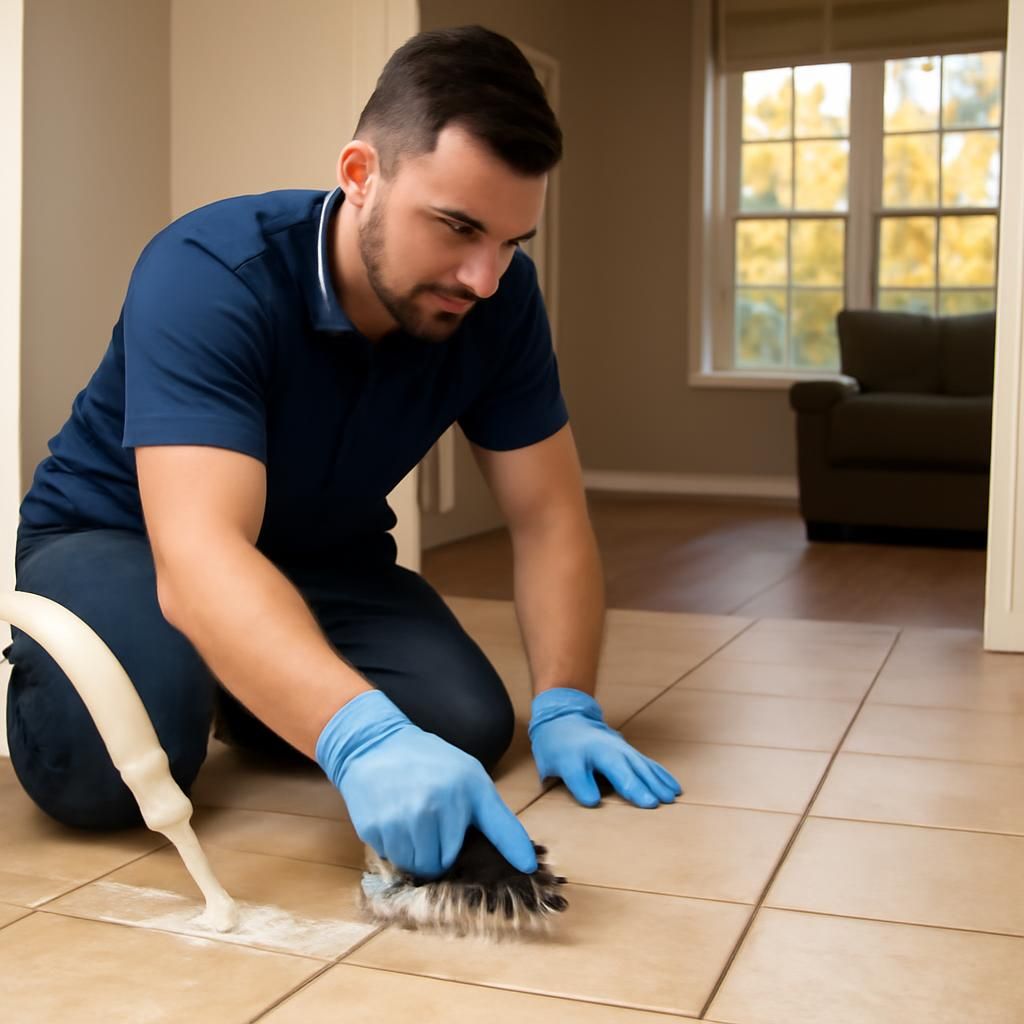
Gently scrub grout lines. Use a soft-bristle nylon brush on grout joints using light, circular motions. Do not scrub the stone surface itself with the brush.
Rinse with clean water. Use a fresh microfiber mop dampened with plain distilled water to remove all cleaner residue. Soap residue left on travertine attracts dirt and dulls the finish.
Dry immediately and thoroughly. Use dry microfiber towels or a wet/dry vacuum to remove all surface moisture. Never let water sit on travertine.
Inspect and reseal. After cleaning, check whether water beads on the surface. If it absorbs instead, your sealant has worn down and the stone needs resealing before use.
How to Clean Travertine Grout Without Scratching the Stone
Travertine grout cleaning requires a gentler approach than standard ceramic tile grout because the stone surrounding each grout joint is vulnerable to abrasion and chemical splash. Apply pH-neutral cleaner directly to grout lines using a small applicator brush, allow it to dwell for 3–5 minutes, then scrub gently with a soft nylon grout brush. Rinse immediately and dry completely.
For stubborn grout discoloration or embedded grime, a professional tile and grout cleaning service using low-pressure steam calibrated for natural stone is the safest solution. High-pressure steam or chemical grout cleaners will damage surrounding travertine and should never be used on this stone type.
Travertine Cleaner Comparison: Safe vs. Unsafe Products
Product Type
pH Range
Safe for Travertine?
Risk
pH-Neutral Stone Cleaner
6–8
✅ Yes
None when used correctly
White Vinegar
2–3
❌ No
Immediate etching and surface erosion
Bleach
12–13
❌ No
Grout discoloration, sealant stripping
Dish Soap (diluted)
7–9
⚠️ Use with caution
Residue buildup; rinse thoroughly
Hydrogen Peroxide
4–5
❌ No
Oxidation and surface damage
Ammonia-Based Cleaners
11–12
❌ No
Breaks down sealant, dulls finish
How Often Should You Clean and Reseal Travertine?
Travertine tile should be dry-swept or vacuumed daily in high-traffic areas and damp-mopped with a pH-neutral cleaner weekly. Deep cleaning of grout lines should occur every 3–6 months depending on usage. Resealing travertine is required every 12–24 months for interior surfaces and every 12 months for outdoor or shower applications, where moisture exposure accelerates sealant breakdown.
Signs your travertine needs immediate professional attention include:
Water absorbing into the stone rather than beading on the surface
White, chalky deposits (efflorescence) appearing on the surface
Grout joints that are crumbling, cracking, or turning dark
Dull patches or visible etch marks on the stone
Mold or mildew growth in grout lines
Can You Repair Etched or Damaged Travertine Without Replacing It?
Yes — mild travertine etching can be repaired using a marble polishing powder or travertine-specific honing compound applied with a soft cloth in circular motions, which mechanically resurfaces the top layer of stone. Deep etching, significant pitting, or widespread grout damage requires professional honing, grinding, or grout repair to restore the surface without full tile replacement. The key is addressing damage early before it worsens.
For homeowners across Suffolk County and Nassau County, NY dealing with etched shower travertine, failed caulking around tub surrounds, or deteriorated grout lines, professional grout repair and shower caulking services restore the surface safely without the cost of full tile replacement.
Keeping Travertine Beautiful Long-Term
Travertine is one of the most beautiful — and most demanding — natural stone surfaces in any home. Its porosity, acid sensitivity, and sealant requirements set it apart from ceramic or porcelain tile, and standard cleaning habits that work on other surfaces will actively destroy it. Using only pH-neutral cleaners, drying the surface thoroughly after every clean, and maintaining a consistent resealing schedule are the three non-negotiable pillars of travertine care.
For homeowners throughout Suffolk County and Nassau County, NY who want professional tile and grout cleaning, grout repair, or shower caulking on travertine surfaces, Groutastic's trained technicians understand the precise techniques required to deep-clean and restore natural stone without causing damage. Whether your travertine needs routine maintenance or full grout restoration, professional care ensures your stone stays protected, sealed, and stunning for years to come.
This article is based on real published content from Groutastic, cites authoritative sources, and is reviewed before publication.
Comments