
DIY vs Professional Tile Cleaning in Laurel Hollow, NY

By Josh Kaplan
Key Takeaways
DIY tile cleaning works for routine maintenance but rarely restores deeply stained or discolored grout effectively.
Professional hot-water extraction and steam equipment removes embedded dirt that consumer tools cannot reach.
Skipping regular grout cleaning accelerates mold growth in humid spaces like bathrooms and kitchens.
IICRC-certified professionals follow verifiable standards — worth confirming before hiring any Long Island cleaner.
Repair vs. replace is the real cost question: professional cleaning often avoids expensive re-tiling.
DIY vs. Professional Tile Cleaning: The Short Answer
For light surface grime and weekly upkeep, DIY tile cleaning is perfectly effective. For grout that has darkened, grown mold, or stopped responding to household cleaners, professional cleaning — using truck-mounted or commercial steam equipment — delivers results that no consumer-grade product can replicate. The decision hinges on how deep the problem goes, not just how much elbow grease you apply.
Factor | DIY Cleaning | Professional Cleaning |
Cost (upfront) | Low ($10–$40 in supplies) | Higher (professional service fee) |
Equipment | Scrub brush, spray bottle, consumer steamer | Truck-mount or commercial rotary extractor |
Deep grout stains | Rarely effective | Highly effective |
Mold in grout | Surface treatment only | Deeper extraction + appropriate treatment |
Sealing after cleaning | DIY sealers available but uneven | Professional-grade penetrating sealers applied evenly |
Time investment | High (physical scrubbing) | Low (for the homeowner) |
Risk to tile/grout | Medium (wrong products can etch) | Low (trained technicians match method to material) |
Longevity of result | Short (weeks to months) | Long (12–24 months with sealing) |
Is DIY Tile Cleaning Worth It in Laurel Hollow?
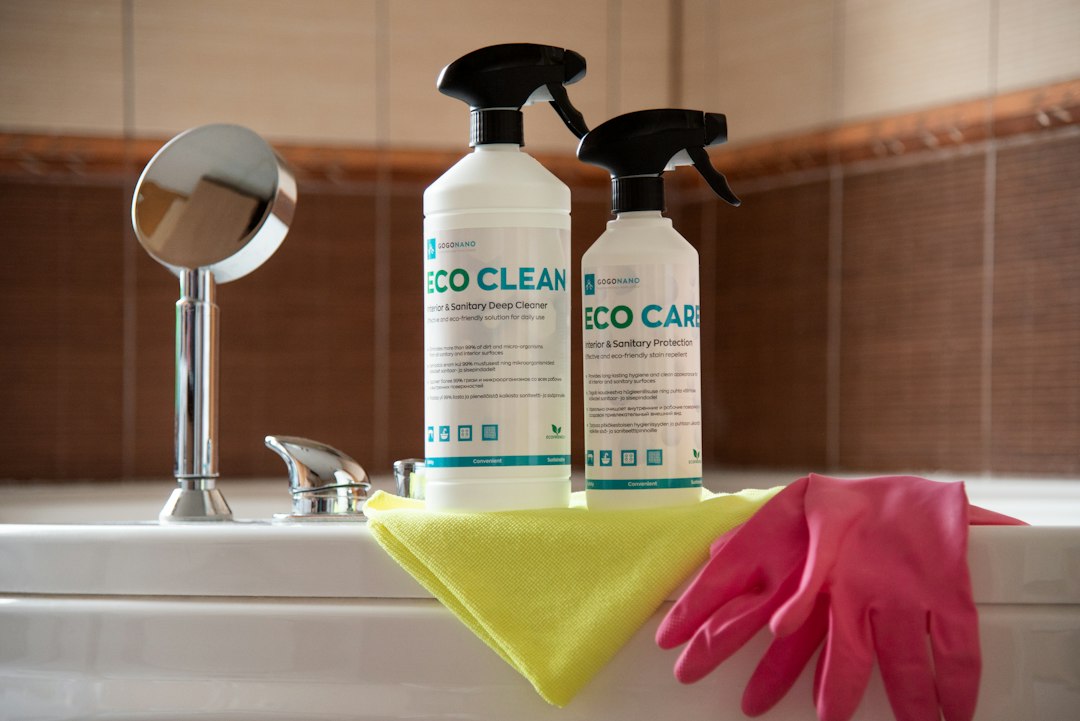
Homes in Laurel Hollow, NY tend to feature larger footprints with multiple tiled bathrooms, mudrooms, and kitchen floors — surfaces that accumulate grime at different rates. DIY cleaning is genuinely worth it as part of a regular maintenance routine: a pH-neutral cleaner applied weekly prevents the mineral buildup and soap scum that eventually discolor grout permanently.
Where DIY falls short is the grout line itself. Grout is a cement-based, porous material. Over months, cooking oils, soap residue, hard water minerals, and organic matter work below the surface layer. A stiff-bristled brush with baking soda and vinegar — the most common home remedy — addresses the top layer but cannot draw out what has migrated into the grout's pores. Once the color has shifted from its original tone, scrubbing alone will not restore it.
A useful self-test: apply your best DIY cleaner to one grout line, scrub for two full minutes, and compare the result to an untouched line. If there is no visible difference, the staining is subsurface and beyond DIY reach.
What Professional Equipment Actually Does Differently
The meaningful difference is not the cleaning solution — it is the pressure and extraction. Professional technicians use rotary tile cleaning tools connected to truck-mounted hot-water extraction systems. These tools spin pressurized hot water (typically 200–230°F) directly into the grout while simultaneously vacuuming the loosened debris. The combination of heat, pressure, and extraction pulls embedded contamination out rather than pushing it further in.
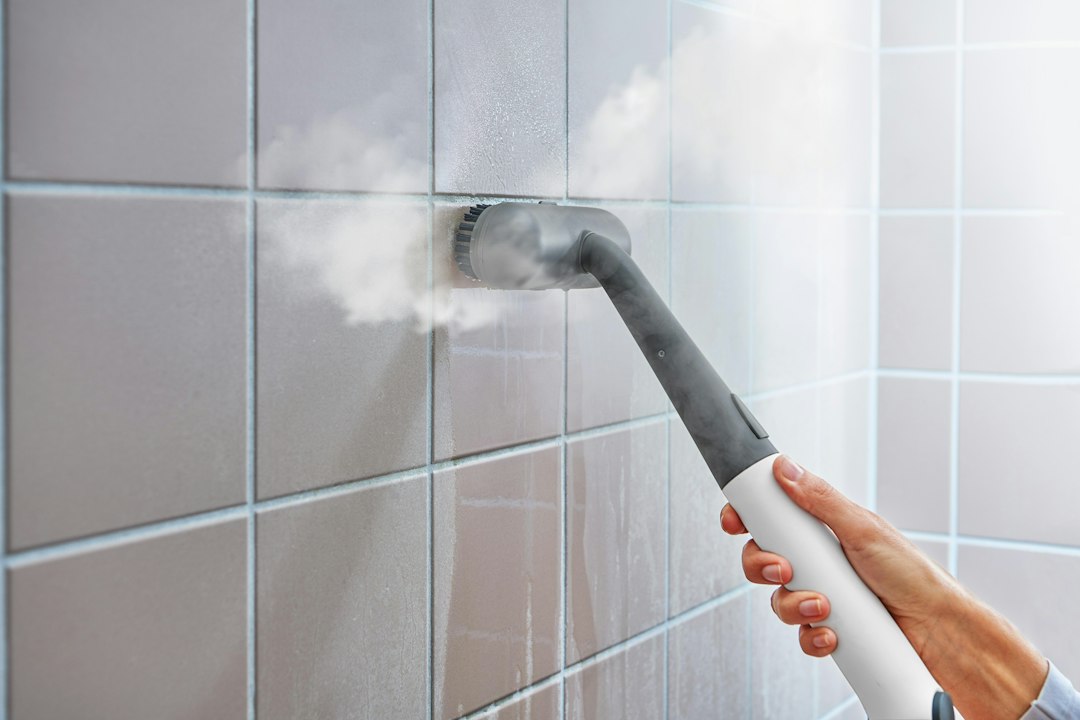
A consumer steam mop, even a good one, operates at lower pressure and has no simultaneous extraction. It softens surface grime effectively but cannot replicate the flush-and-extract cycle that professional equipment performs. This is the concrete mechanical reason professional results look so different — not marketing, not experience alone.
Professionals certified through the Institute of Inspection, Cleaning and Restoration Certification (IICRC) are trained to match their method and chemistry to specific tile types — ceramic, porcelain, natural stone, and saltillo each behave differently under heat and acidic cleaners. That material-matching prevents damage that DIY approaches can cause accidentally.
The Mold Question: When DIY Is Not Enough
Mold in bathroom grout is common in the New York area, where older homes retain humidity and ventilation in tiled spaces is often inadequate. Surface mold — the black or pinkish discoloration visible on the grout face — can be addressed with a dilute bleach solution (one cup bleach per gallon of water) and a stiff brush, which the CDC - Cleaning and Disinfecting Your Home guidelines support for hard, non-porous surfaces.
The problem is that grout is porous, not non-porous. Mold hyphae (the root-like filaments) penetrate below the surface. Bleach applied topically kills what it contacts but does not extract the embedded organic matter that feeds regrowth. Within weeks, the mold returns. If a bathroom grout line keeps returning to black despite repeated bleaching, the contamination is below the surface layer and should be treated professionally — or the grout may need to be removed and replaced entirely.
The EPA - Mold Cleanup in Your Home recommends professional help when mold covers more than 10 square feet or when it keeps returning after cleaning — both conditions that commonly apply to neglected bathroom tile grout.
Repair vs. Replace: The Real Cost Question
Homeowners in communities like Laurel Hollow, Brookville, and Centre Island frequently face a choice that goes beyond cleaning: is the grout and tile worth restoring, or is replacement the smarter investment?
Professional cleaning with sealing is the right choice when:
The tile itself is intact and undamaged
The grout is discolored but structurally sound (not crumbling or cracked)
The staining is consistent across the surface rather than concentrated in a few broken areas
Replacement is worth considering when:
Grout is crumbling, hollow-sounding when tapped, or pulling away from tile edges
Individual tiles are cracked, chipped, or loose
Water has infiltrated behind the tile (often signaled by soft drywall or subfloor near the tiled area)
The tile style is dated and a renovation is already planned
A professional assessment — not a sales pitch, but a genuine inspection — can tell you which situation you are in before you commit money in either direction. Cleaning a floor that needs re-grouting wastes the service fee; replacing tile that only needed professional cleaning wastes far more.
What to Avoid: Products and Mistakes That Cause Real Damage
Wrong products are a genuine risk. Specific warnings for common DIY mistakes:
Acidic cleaners on natural stone: Vinegar, lemon juice, and many bathroom tile sprays contain acids that etch marble, travertine, and limestone permanently. If your floor is natural stone rather than ceramic or porcelain, avoid any acid-based cleaner entirely.
Bleach on colored grout: Undiluted bleach strips pigment from colored or pre-dyed grout, leaving it patchy and faded. Use diluted solutions only, and test in a hidden area first.
Wire brushes on sanded grout: Metal bristles scratch and erode grout surfaces, creating more surface area for future staining. Use nylon-bristled grout brushes instead.
Steam mopping unsealed stone: Repeated steam on porous natural stone without a sealer drives moisture into the stone body, accelerating internal cracking over time.
Sealing dirty grout: A common DIY error. Applying a grout sealer before cleaning locks contamination in permanently. Always clean first, confirm the grout is dry, then seal.
When to Call Groutastic
Routine weekly cleaning with the right pH-neutral product is genuinely a DIY task. But if any of these apply to your home — whether in Laurel Hollow, Cedarhurst, Cove Neck, or anywhere else on Long Island — professional restoration is the more cost-effective path:
Grout that has not returned to its original color after multiple deep-cleaning attempts
Recurring mold or mildew that comes back within weeks of cleaning
Tile floors or shower walls that look dull, hazy, or uneven in color across a large area
Grout that has never been sealed since installation
A home going on the market, where first impressions on tile surfaces matter
Groutastic serves residential and commercial clients across the Long Island area with tile and grout cleaning, regrouting, and surface restoration. A professional assessment takes the guesswork out of the repair-vs.-replace question and can often restore surfaces homeowners assumed were beyond saving.
Frequently Asked Questions
How often should grout be professionally cleaned?
For most households, once every 12 to 18 months is a reasonable interval for high-traffic or wet areas like bathrooms and kitchens. Low-traffic areas like a formal dining room tile floor may only need professional attention every two to three years if maintained consistently between visits.
Does professional cleaning work on dark or black grout stains?
Yes, in most cases. Hot-water extraction removes embedded organic material, oils, and mineral deposits that darken grout over time. Severely neglected grout may require color sealing — a process where a pigmented sealer is applied after cleaning to restore a uniform appearance — rather than cleaning alone.
Can I clean tile myself right after a professional cleaning to maintain the results?
Yes, and you should. The best way to extend a professional cleaning is regular maintenance with a pH-neutral floor cleaner. Avoid wax-based or oil-based "mop and shine" products on grout — they build up over time and attract more dirt, undoing the professional result faster.
How do I know if a tile cleaning company on Long Island is qualified?
Look for IICRC certification, which indicates training in industry-standard cleaning methods and chemistry. Ask specifically what equipment they use — truck-mounted extraction is a meaningful differentiator from portable units for large or heavily soiled jobs. Before-and-after photos from similar tile types are also a useful indicator of real results.
Published by Groutastic.
Comments